Will Bangura Phoenix Dog Training Schedule a Consultation 602-769-1411
Dog Anxiety Training Phoenix | Fear & Phobias | Will Bangura
Phoenix Dog Training®
602-769-1411 Schedule a Consultation
Canine Anxiety & Behavior Specialist

Dog Anxiety Training in Phoenix for Fearful Dogs

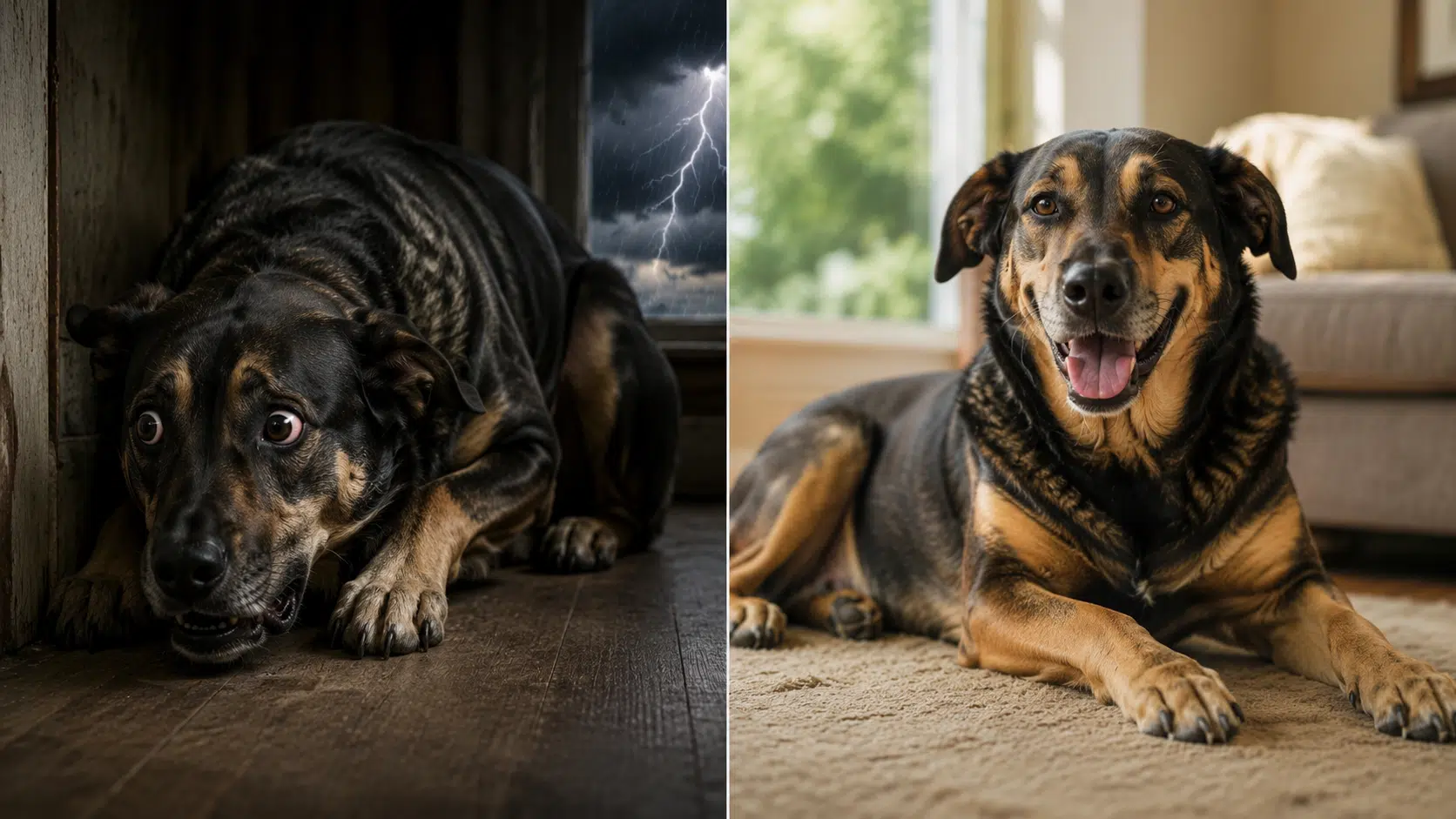
Before and after dog anxiety training in Phoenix, showing a fearful dog becoming calmer and more relaxed.

Specialized, force-free behavior modification for dogs overwhelmed by fear, anxiety, and panic. This is evidence-based emotional rehabilitation rather than ordinary obedience training, available in-home throughout greater Phoenix and virtually worldwide.

If this has worn you down, you are not failing your dog. This is simply the kind of case a behavior specialist is meant for.

Areas of Specialized Focus
Anxiety Fear & Phobias Panic Behaviors Emotional Overwhelm Obsessive-Compulsive Behaviors
Schedule a Behavior Consultation Free 15-Minute Call If you would rather talk things through first, the free 15-minute call is a calm, no-pressure place to start.
35+ Years of Specialized Practice  ·  Phoenix, Arizona  ·  Virtual Consultations Worldwide
A calm, relaxed dog resting at ease in soft natural window light
Anxiety in dogs is real, and it is treatable.

Living with an anxious or fearful dog can quietly take over your life. It rarely starts that way. At first it feels manageable: your dog shadows you from room to room, barks at sounds outside, comes apart a little during storms. Then walks get harder. Visitors get harder. And slowly, without quite deciding to, you begin living a smaller life.

You stop inviting people over. You map your walks around the streets, the dogs, the trash trucks, and the hours that set your dog off. You turn down invitations, skip the appointments you can, and brace for the ones you cannot. Somewhere in there you may have started to feel some mix of exhausted, embarrassed, guilty, and quietly heartbroken, because you love this dog, and you can see that something is genuinely wrong, and the ordinary advice has not been enough.

I want to say two things to you before anything else.

Your dog is not broken, and you are not failing them. A frightened or anxious dog is not being stubborn, dominant, spiteful, or disobedient. A dog who barks and lunges at strangers is not staging a takeover. A dog who panics when left alone is not punishing you. A dog who trembles, paces, scans the room, refuses food, or shuts down is not being difficult for its own sake. Far more often, these dogs are doing the only thing a nervous system under threat knows how to do, which is to try, by whatever means it has, to feel safe.

My name is Will Bangura. I am a certified canine behaviorist and professional dog trainer, and for more than thirty-five years my work has concentrated on exactly these cases: severe anxiety, fear, phobias, panic, separation anxiety, reactivity, fear-based aggression, and compulsive behaviors. I work with pet parents in person across Phoenix, Scottsdale, Paradise Valley, Mesa, Chandler, Gilbert, Tempe, and the surrounding communities, and virtually with families across the United States and internationally.

Real behavior modification is not about pressuring a frightened dog into looking quiet while they still feel terrified underneath. It is about helping the dog's emotional system genuinely change, so they can feel safer, steadier, more resilient, and more able to cope with ordinary life. That is a different goal than obedience, and it calls for a different kind of work. Let me show you how it works, starting with the distinction that everything else depends on.

Not sure where your dog falls, or where to begin? A behavior consultation is a calm, unhurried way to talk through what is happening.

Who This Is For

You Are Likely in the Right Place

This kind of behavior work is built for emotional and fear-driven cases rather than basic obedience. It tends to be the right fit when you recognize your own dog in some of the following:

  • Your dog panics, barks, howls, or destroys things when left alone
  • Your dog trembles, hides, or comes apart during thunderstorms or fireworks
  • Your dog lunges, barks, or growls at people or other dogs on walks
  • Your dog never seems able to truly relax, even at home with nothing wrong
  • Your dog freezes, shuts down, or refuses food in new or stressful situations
  • Your dog has shown fear-based aggression, and you are genuinely worried about safety
  • You have already tried obedience classes, board-and-train, or correction-based methods, and the fear is still there
  • You have been told your dog is dominant, stubborn, or spiteful, and it never quite sat right with you

If any of that feels familiar, you are not in the wrong place, and you are not out of options. Your dog can be helped, and the rest of this page will show you how.

First, Understand It

What Your Dog Is Actually Experiencing

Fear and anxiety are closely related, but they are not the same thing, and the difference shapes everything that follows.

The Distinction

The Difference Between Fear and Anxiety

A wiry terrier-mix dog standing alert and watchful, showing subtle early signs of canine anxiety
Two different emotional states, often mistaken for one.

Pet parents, and unfortunately many trainers, tend to use the words fear and anxiety interchangeably. In behavior work they describe two genuinely different states, and telling them apart is the first real clinical decision in any case.

Fear is a response to a specific, present, identifiable trigger. A fearful dog can be relaxed and emotionally settled right up until the moment something they perceive as threatening enters the picture. The trigger might be another dog, an unfamiliar man, a thunderclap, the parking lot of the veterinary clinic, a skateboard, or the sound of grooming clippers. Once it appears, the nervous system shifts, within a fraction of a second, into a defensive survival state. The dog may bark, lunge, growl, freeze, flee, hide, tremble, or shut down. Whatever the response looks like, it is aimed at a thing the dog can point to.

Anxiety is different. Anxiety is anticipatory. It is the distress of what might happen, not the alarm of what is happening. An anxious dog often has no single trigger you can identify, because the feeling does not depend on one. These dogs live with a nervous system that stays partially activated even in familiar, objectively safe surroundings. They struggle to fully power down. They scan. They wait. They brace.

A dog with generalized anxiety may pace through a quiet house, pant in a cool room, startle at small sounds, sleep lightly and poorly, follow you from room to room, and never quite arrive at rest. Nothing is wrong, and yet the dog cannot convince its own body of that.

The two states overlap, and this is where careful assessment matters. Some chronically anxious dogs go on to develop specific fears and phobias layered on top of the baseline unease. But the reverse is not automatic. A dog can carry an intense, focused phobia of fireworks and otherwise be steady, social, and content. Fear does not require anxiety, and anxiety does not always announce itself through an obvious fear.

This distinction is not academic hair-splitting. The emotional state driving the behavior determines the treatment plan, the management strategy, the realistic prognosis, and whether a conversation with your veterinarian about medical or pharmacological support belongs in the picture. It is also one of the main reasons generic training so often fails these dogs: when every emotional response is treated as disobedience, the barking gets interrupted and the lunging gets suppressed, but the distress underneath is never touched, and it tends to return, or to resurface in a harder form. Naming what your dog is actually experiencing, accurately, is the first thing that has to happen. Everything useful follows from it.

The Core Distinction

Fear has an address. It is the nervous system reacting to a specific thing it can see, hear, or smell. Anxiety has no fixed address. It is the nervous system braced for a threat that has not arrived, and may never arrive at all.

Recognizing It

How Fear and Anxiety Show Up

Emotional distress rarely arrives with a label. It shows up as behavior, and a great deal of that behavior is misread. Some signs are loud and impossible to ignore. Others are so quiet, or so easily explained away as a personality quirk, that they go unrecognized for years.

The signs below are not a diagnosis. They are a starting point: a way of seeing your dog's behavior through the lens of emotion rather than obedience.

Signs that are hard to miss

  • Excessive barking, whining, or other vocalization
  • Destructive behavior, especially when left alone
  • Trembling, shaking, or visible panic
  • Pacing and an inability to settle
  • Lunging, growling, or reactivity toward people, dogs, sounds, or movement
  • Hiding, cowering, escape attempts, or frantic efforts to flee
  • House soiling in an otherwise reliably trained dog

Signs that often go unrecognized as anxiety

  • Hypervigilance and constant scanning of the environment
  • Panting that has nothing to do with heat or exercise
  • An exaggerated startle response to ordinary sounds or movement
  • Clinginess, shadowing, and an inability to relax unless you are within reach
  • Compulsive licking, spinning, pacing, or other repetitive behaviors
  • Restlessness and disrupted, fragmented sleep
  • Sensitivity to touch, handling, grooming, or restraint
  • Difficulty learning, or appearing to "not listen," specifically in stressful situations
  • Emotional shutdown, withdrawal, or a dog who has simply gone quiet and still
  • Reluctance around new surfaces, unfamiliar places, or changes in routine

What matters is not only what a dog does, but the pattern underneath it. Does your dog recover quickly after something startling, or stay activated for hours? Do they relax all the way down, or sleep light and monitor the room? Does the behavior appear only with specific triggers, or hum along most of the day? Those patterns are the real information.

It is worth pausing on that second list, because the quiet signs are the ones that cost dogs the most time. A dog who shuts down is often described as "well behaved" or "calm." A dog who cannot be left alone is called "loyal." A dog who scans constantly is called "alert" or "protective." These reframings are gentle, and they are usually wrong. They describe a struggling dog in flattering language, and they delay the help that dog needs. If you are recognizing your own dog here, that recognition is the hardest and most important step, and it is not something you have to interpret alone.

Why It Takes Specialized Work

Why Fear and Anxiety Are Different Work

Many of the families I work with arrive having already done a great deal. Group obedience classes. Private trainers. Sometimes a board-and-train program. Their dog may sit, stay, and walk on a loose leash beautifully, and still come apart at the sight of another dog, or panic the moment the front door closes. They often arrive quietly certain they did something wrong. Almost always, they did not.

Obedience training is genuinely valuable, and good trainers do good and important work. But obedience training is built to answer one particular question: what should the dog do. It teaches skills, cues, and household manners. At its heart, it is education, and a well-trained dog is a wonderful thing to live with.

Fear, anxiety, panic, reactivity, and fear-based aggression are not gaps in a dog's education. They are emotional states. A dog who lunges at strangers is not missing a command. A dog who cannot be left alone has not failed to study hard enough. These dogs are having an emotional response, one generated by the nervous system faster than conscious thought, and no amount of better-rehearsed obedience reaches down to change the feeling underneath it.

Obedience training teaches a dog what to do. Behavior work changes how a dog feels.

This is why so many of these families have a beautifully trained dog who is still frightened. The training worked exactly as designed. It simply was not aimed at the problem. Changing an emotional response is a different discipline. It works at the level of the nervous system, through careful assessment, desensitization, counterconditioning, sub-threshold learning, and thoughtful management, and it begins from a different question altogether: not what should this dog do, but why does this dog feel this way, and how do we change that. It is, in the end, closer to emotional rehabilitation than to instruction.

None of this means obedience training is wrong, or that the trainers you worked with failed you. It means the help your dog needed and the help that was available were two different things. When the problem is emotional, it takes emotional behavior work. That is the entire focus of this practice.

Behavior work is a different discipline from obedience training. It asks how a dog feels, why a nervous system learned to expect danger, and what it takes to change that. It is the work of a behaviorist.

Will Bangura, M.S., CAB-ICB, CBCC-KA, CPDT-KA, FDM, FFCP Certified Canine Behaviorist  ·  35+ Years in Complex Behavior Cases  ·  Force-Free & Evidence-Based
The Conditions

The Many Faces of Canine Anxiety

Anxiety, fear, and phobias take many different forms. Most of the dogs I work with carry more than one.

What follows is not a checklist to self-diagnose from, and it is not exhaustive. It is a map of the territory: a sense of the most common ways that fear and anxiety organize themselves in a dog's life. Many dogs sit in more than one of these categories at once, which is part of why generic, one-size training so often fails them. A dog with separation anxiety may also be hypervigilant. A dog with stranger fear may also show fear-based aggression. The dog in front of you is specific, and the plan has to be specific too.

The Conditions

Separation Anxiety

An anxious dog watching at the window for its pet parent beside a room damaged during a separation anxiety episode.
Separation anxiety is panic, not misbehavior. Destruction is often its aftermath.

A dog with separation anxiety experiences real distress, often genuine panic, when separated from the person or people they are bonded to. This is not the dog being dramatic, manipulative, or "getting back at you." It is much closer to a panic attack than to misbehavior, and treating it as misbehavior almost always makes it worse.

The signs can include barking and howling that begins within minutes of your leaving, scratching or chewing at doors and windows, drooling, pacing, house soiling, frantic escape attempts, and, in serious cases, self-injury. Many pet parents only learn the full picture after a neighbor complains, or after a camera shows them what their dog does the moment the door closes.

Separation anxiety rarely resolves on its own, and it often deepens when left untreated, because every distressing departure rehearses the panic again. It is not solved by letting a dog "cry it out," and it is not solved by punishment. The encouraging news is that it responds well to structured, gradual behavior modification built specifically around your individual dog's threshold, teaching them, at a pace their nervous system can actually tolerate, that being alone is safe.

Phoenix Dog Training offers dedicated behavior modification for separation-related distress. You can learn more about our approach to separation anxiety and how a structured plan is built.

The Conditions

Generalized Anxiety

Some dogs live in a near-constant state of low-grade unease. There is no single trigger to point to and no obvious crisis, yet the dog never fully relaxes, never quite exhales. People who live with these dogs often describe them as always being "on," always a little wound, never able to simply be a dog in a room.

Generalized anxiety tends to show itself through hypervigilance, pacing, chronic panting, muscle tension, an outsized startle response, fragmented sleep, and a persistent scanning of the environment for something the dog cannot name. Because there is no dramatic trigger, this is one of the most under-recognized conditions I see. The dog is not in visible crisis, so the suffering stays quiet, and quiet suffering is easy to live alongside without ever addressing it.

A chronically activated nervous system also has less capacity left over for everything else, which is why anxious dogs can seem unpredictable. The outburst looks sudden, but the stress load has often been building for hours or days. Effective work here is rarely about a single exercise. It usually combines environmental and lifestyle adjustments, predictability and routine, decompression, confidence-building, structured relaxation, appropriate enrichment, and, in some cases, a collaborative conversation with your veterinarian about whether medication could give the dog enough relief to actually learn. The aim is a nervous system that can finally settle to a calmer baseline.

The Conditions

Noise Phobias and Sound Sensitivity

A frightened dog hiding low to the floor during a thunderstorm or fireworks, showing fearful body language from noise phobia.

Noise phobias are among the most common fear disorders in dogs, and here in Arizona, monsoon thunderstorms and holiday fireworks make them especially visible. Thunder, fireworks, gunshots, construction, smoke alarms, and other loud or unpredictable sounds can trigger genuine panic in a sensitive dog.

Some dogs try to escape, occasionally injuring themselves against crates, doors, or windows in the attempt. Others tremble, hide, pant, drool, or cling. Many develop anticipatory anxiety, reading the drop in air pressure before a storm, or the early dusk of a holiday evening, and beginning to come apart well before the first sound.

Left unaddressed, noise phobias usually worsen, because each frightening event sensitizes the dog further rather than habituating them to it. This is one of the clearest examples of why "they will get used to it" is not a strategy. Some dogs never get used to it, they simply become more frightened each time the nervous system is overwhelmed. Thoughtful treatment pairs management that protects the dog during events with systematic desensitization and counterconditioning between them.

The Conditions

Stranger Fear and Social Anxiety

A fearful dog leaning away and showing anxious body language as an unfamiliar person approaches, an example of stranger fear and social anxiety in dogs.

Some dogs become fearful around unfamiliar people, or in unfamiliar social situations. They may bark, retreat, freeze, avoid contact, growl, or lunge when a stranger approaches or reaches for them. In a home, this often looks like a dog who cannot settle when guests arrive.

This is one of the most consistently misread conditions in all of dog behavior. Fear-driven social behavior is regularly described as the dog being "protective," "dominant," or "territorial," when the emotional reality underneath is insecurity and a wish for more distance. The mislabel matters, because it points pet parents toward correction and control, which deepen the fear, instead of toward changing how the dog actually feels.

A dog who is afraid of strangers does not need to be forced to "say hello," with an unfamiliar hand reaching over their head while they are trapped on a leash. Effective treatment works to change the dog's underlying emotional association with strangers through structured desensitization and counterconditioning, always keeping the dog under threshold, at a distance and intensity where learning is still possible. The goal is not to force interaction. It is to help the dog feel genuinely safer, so that interaction, when it happens, becomes the dog's own choice.

The Conditions

Fear-Based Aggression

A fearful dog reacting with defensive aggression toward a calm dog passing by on a neighborhood walk, an example of fear-based aggression in dogs.

Aggression rooted in fear is one of the most common forms of aggression in dogs, and one of the most misunderstood. A frightened dog who feels cornered, who has learned that retreat is unavailable or has not worked, may turn to aggression as a survival strategy: a way to create distance from something they cannot otherwise escape.

Growling, snarling, barking, lunging, snapping, and biting are, in this context, communication. They are a dog saying, as clearly as a dog can, that it feels unsafe and needs the threat to move away. Punishing those signals is genuinely dangerous. It does not remove the fear. It removes the warning, and teaches the dog that growling brings consequences, which is precisely how a dog learns to "bite without warning."

Aggression is not the opposite of fear. It is often fear that has run out of other options.

Behavior modification for fear-based aggression has to put safety and management first, then change the emotional response to triggers gradually and carefully, then rebuild the dog's trust over time. This is detailed, serious work, and it overlaps closely with dog aggression and leash reactivity. If your dog's fear has begun to express itself this way, please treat it as the priority it is.

Our Pitbull Sasha suffered from debilitating separation anxiety and reactivity. We were at our wits' end until we found Will Bangura at Phoenix Dog Training. Will's expertise in positive reinforcement was exactly what she needed. He taught us how to create a safe and calm environment for Sasha, reducing her anxiety significantly. She was able to stay alone without panic, and her reactive behavior has diminished greatly. Will is a certified dog behaviorist who truly cares about the dogs he works with. We can't thank him enough.

Yolanda Smith
The Conditions

Veterinary and Grooming Fear

A frightened dog showing fearful body language on a veterinary exam table while a calm veterinarian gently examines it.

Many dogs develop intense fear around veterinary visits, grooming, nail trims, handling, restraint, and medical procedures. These dogs are not being difficult. Their nervous systems have learned, often from a small number of frightening or painful experiences, to associate these specific situations with discomfort and a loss of control.

This kind of fear carries real welfare consequences beyond the behavior itself. A dog who is terrified of the clinic is a dog whose health care becomes harder to deliver, which can mean problems caught later than they should be. Addressing the fear is not only a behavior goal. It is part of keeping the dog physically well.

The work here centers on cooperative care: teaching the dog, gradually and without force, that handling and procedures are predictable, that they have some genuine agency in the process, and that good things are reliably attached to them. Done well, it shifts the dog's emotional experience of care from dread toward tolerance, and sometimes toward real ease.

The Conditions

Car and Travel Anxiety

An anxious dog drooling and showing fearful body language beside a parked car while its pet parent calmly reassures it.

For some dogs, the car is its own source of distress. They may tremble, pant, drool, vocalize, refuse to get in, or fall apart somewhere along the drive. Sometimes the root is motion-related nausea, sometimes it is fear of the vehicle itself, and often, after enough difficult trips, it is both braided together.

Because car travel is so frequently the road to other frightening destinations, the clinic, the groomer, the boarding facility, many dogs come to dread the car by association alone. Treatment works to separate the car from those associations, rebuild a positive and predictable relationship with the vehicle in small, manageable steps, and, where nausea is involved, loop in your veterinarian. The result is a dog who can travel without the trip costing them so much.

The Conditions

Rescue Dogs, Trauma, and the Sensitized Nervous System

Dogs who have lived through neglect, harsh punishment, chaotic or unstable environments, inadequate early socialization, or frightening experiences can carry the effects long after the circumstances themselves have changed. Some rescue dogs arrive with histories no one can fully reconstruct. What they show us is the result.

Trauma and chronic early stress can genuinely change how a nervous system processes threat. The system becomes more easily triggered, slower to recover, and quicker to assume the worst. This is not stubbornness, and it is not a character flaw. It is a nervous system that adapted, sensibly, to a world that was once unsafe, and has not yet learned that the world has changed.

These dogs do best with patient, carefully structured work that prioritizes decompression, predictability, emotional safety, and gradual confidence-building, on the dog's timeline rather than ours. Progress is real here, but it is earned slowly, and it is built on trust before anything else.

The Conditions

Compulsive and Obsessive-Compulsive Behaviors

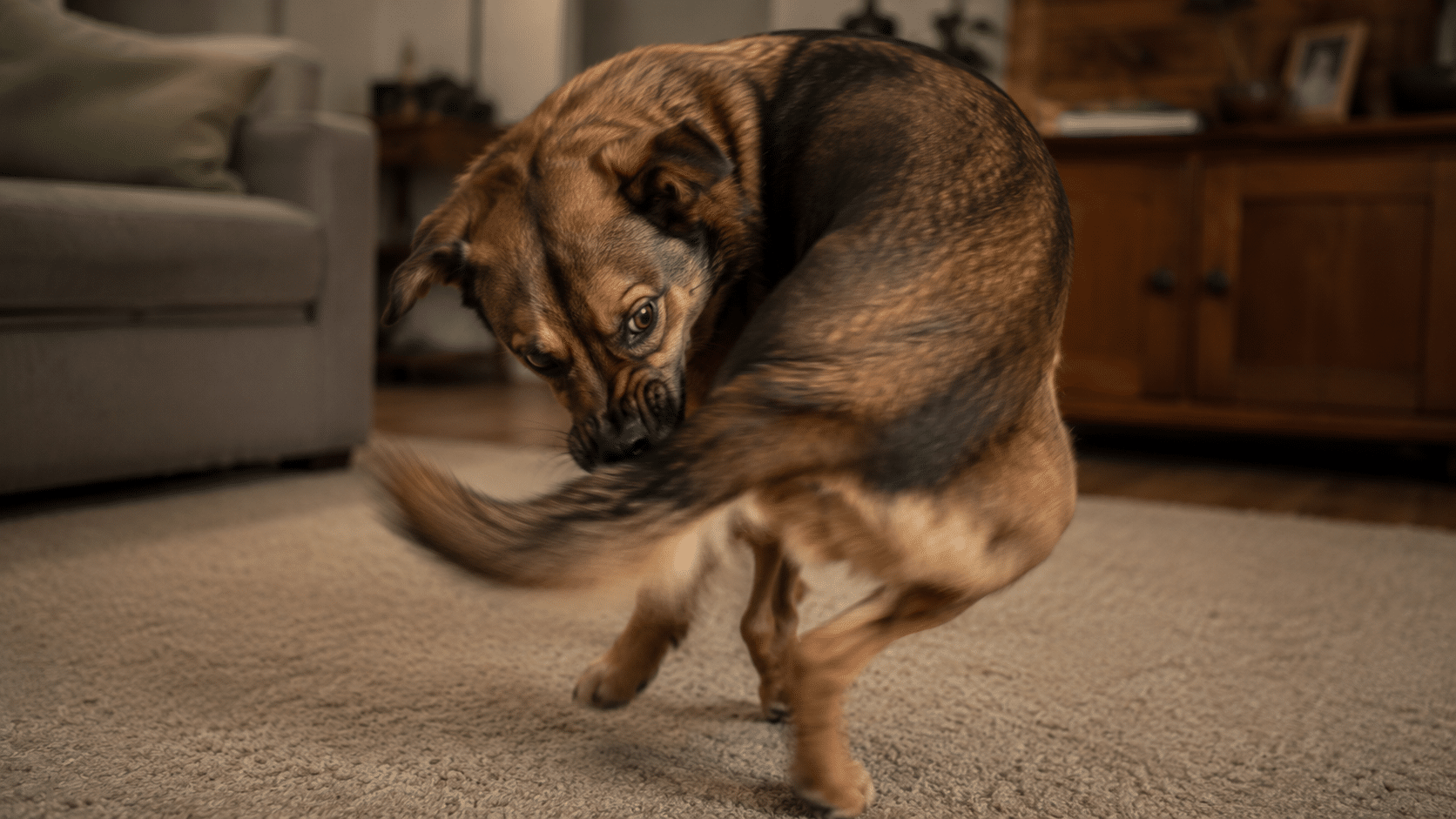
A dog caught mid-spin in repetitive, fixated tail chasing, an example of compulsive behavior in dogs.

Some dogs develop repetitive behaviors that become difficult for them to interrupt or regulate: spinning, tail chasing, shadow or light chasing, flank sucking, persistent licking sometimes to the point of skin damage, snapping at nothing, pacing fixed paths, or repetitive vocalizing.

These behaviors are often tied to chronic stress, frustration, anxiety, genetic predisposition, or underlying neurological dysregulation, and they sometimes carry a medical component that needs to be ruled out or treated. They are not habits a dog can simply be told to stop, and interrupting the behavior without addressing what drives it tends to displace it rather than resolve it.

Meaningful help usually combines a veterinary workup, reduction of the underlying stress load, thoughtful environmental and enrichment changes, behavior modification, and, in many cases, medication as part of the plan. Compulsive behavior is one of the clearest signals that a dog's emotional system is overloaded, and it deserves to be taken seriously.

A Note Before We Continue

If you have recognized your dog somewhere in these pages, please know two things: what you are seeing is treatable, and you do not have to work out which condition is which on your own. Identifying what is actually driving the behavior is the first thing we do together, and it is often a relief in itself.

If you have seen your dog in these pages, the next step does not have to feel overwhelming. It can simply be a conversation about what is going on.

Help & Recovery

The Path Forward

How dogs actually recover, what working together looks like, and how to begin.

Severe and Complex Cases

If You Have Been Told There Is No Hope

Some pet parents arrive here after a much harder conversation than the rest. They have been told their dog is dangerous, untrainable, beyond help, or a liability. Some have been told, gently or otherwise, that the kindest option left is to let the dog go. If that is where you are, I want to speak to you plainly.

Severe is not a synonym for hopeless. Those are two different words, and they are confused constantly. A great many dogs labeled as lost causes were never actually assessed for the emotional condition driving the behavior, and were never given a behavior modification plan built for that condition. They were handed obedience training, or correction, or a tool, and when that did not resolve what was, at its root, a fear problem, the dog was blamed for failing.

Severe behavior cases, including serious fear-based aggression and complex, layered anxiety, are the center of this practice, not the exception to it. That said, honesty matters more than reassurance here. A thorough behavior assessment is what tells us what is genuinely possible for your individual dog. Where there are real safety concerns, they are taken seriously and addressed directly, never minimized. And where there is a realistic path forward, which for most dogs there is, we will map it out together.

You deserve a clear, informed, professional answer before you make any decision you cannot take back. Very often, that answer is considerably more hopeful than the one you were given.

Why Suppression Fails

Why Punishment Often Makes Anxiety Worse

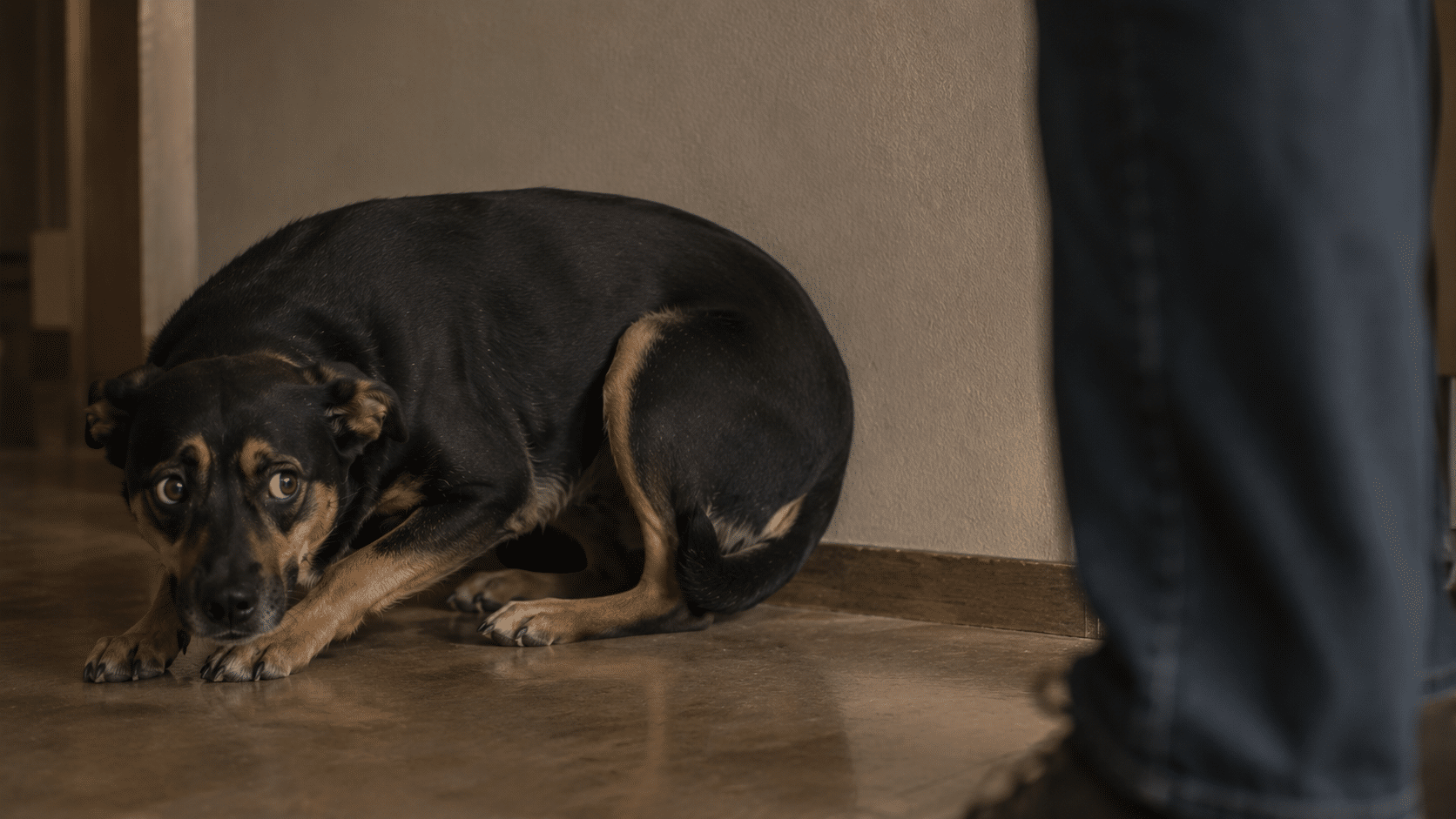
A cowering, emotionally shut-down dog showing fearful body language, illustrating how punishment can deepen a dog's anxiety.

One of the most persistent misconceptions in dog training is the belief that punishment resolves emotional behavior problems. It is worth being precise about why it does not.

Punishment can sometimes suppress a visible behavior, at least for a while. But suppression is not the same thing as resolution. A dog experiencing fear, anxiety, or panic is already inside an activated stress response. Adding intimidation, pain, startle, or force to that state does not teach the dog to feel safe. It teaches the dog that the trigger now predicts something else unpleasant, which deepens exactly the negative association you were hoping to undo.

There is a more specific danger, and it matters most in cases of fear-based aggression. When you punish a dog for growling or for showing other warning signs, you do not change how the dog feels about the trigger. You teach the dog that warnings are not safe to give. The fear remains, fully intact, but the dog's early-warning system has been switched off. This is the mechanism behind the dog who appears to bite "out of nowhere." The warnings were trained away.

Tools and methods built on fear, pain, or coercion can buy short-term, outward compliance while the underlying emotional condition quietly worsens. A great many pet parents come to me precisely because a punishment-based approach left their dog more anxious, more reactive, or less predictable than before. If that is your story, you are not alone, and it is not where the story has to end. You can read more about Will's force-free, evidence-based approach and why it has become the standard of care in modern behavior practice.

How Recovery Works

How Behavior Modification Helps Dogs Recover

A relaxed dog foraging for scattered food with its nose, a calm enrichment activity for anxiety recovery
Recovery is built on safety, predictability, and the experience of choice.

Effective anxiety treatment is not about forcing a dog to "face their fears." Flooding a frightened dog with the thing that terrifies them, and waiting for them to give up reacting, does not produce a calm dog. It produces a shut-down one. Genuine behavior modification works in the opposite direction, at the level where learning is still possible.

That usually means working below threshold: the dog notices the trigger but is not overwhelmed by it, and can still eat, think, disengage, and recover. In that zone, the emotional meaning of the trigger can begin to change. Two well-established processes do much of the work. Desensitization and counterconditioning together teach the nervous system that the old trigger now predicts something good and safe rather than something threatening. A dog who once read strangers as danger can begin to learn that a stranger at a distance predicts food and space. A dog who panicked at being left can begin to learn that small, brief separations are safe.

Around that core, an individualized plan may also draw on:

  • Thoughtful trigger management, so the dog stops rehearsing panic while they learn
  • Predictability and routine, which lower a nervous system's baseline load
  • Confidence-building exercises that give the dog a felt sense of competence
  • Structured relaxation and settling protocols
  • Cooperative care, so that handling and procedures stop being frightening
  • Enrichment and structured scent work for anxious, fearful, and reactive dogs, which let a dog use its nose and brain in calming, regulating ways
  • Body language education, so you can read your dog's stress and recovery in real time
  • Collaboration with your veterinarian on medication when distress is high enough to block learning

The work is often gradual, but gradual does not mean weak. It means the plan respects how emotional learning actually happens. And none of it is about obedience. A dog can be perfectly obedient and still be miserable. The goal of this work is emotional resilience: a dog who copes better, recovers faster, and meets the world from a steadier baseline. This is the work itself, and a behavior consultation is simply where it begins. For a great many families, it is the first time the plan has actually matched the problem.

What to Expect

What Working Together Looks Like

A canine behavior consultant and a pet parent talking calmly at home while a relaxed dog rests nearby
Individualized, collaborative, and built around your specific dog.

Every case begins with understanding the dog in front of us, not with technique. Before any plan is built, we look closely at your dog's history, triggers, environment, daily routine, body language, stress patterns, recovery time, learning history, any medical considerations, safety concerns, and your own goals for your household. A dog with separation anxiety does not need the same plan as a dog with noise phobia, and a dog with fear-based aggression does not need the same plan as a dog with generalized anxiety. The plan has to fit the dog.

From there, the work is genuinely collaborative. You are not handed a generic program and left to decode it alone. During the consultation, I help identify the emotional and behavioral patterns driving the problem, explain what is most likely happening in plain language, and build a customized behavior modification plan for your dog, your home, and your life. Then you are coached through it, so you understand not just what to do between sessions, but why each piece matters.

It is worth saying what that actually feels like, because the words behavior consultation can sound clinical, and the experience is not. There is no judgment in this work. Whatever you have tried before, whatever advice you were given, whatever you quietly wish you had done differently, none of it is held against you or your dog. You did the best you could with what you knew. Most families tell me the first session is, more than anything, a relief. Someone is finally explaining, calmly and without alarm, what has been happening, and laying out a path that feels manageable instead of overwhelming. You will not be lectured. You will not be handed more than you can carry. The pace is yours, and you will not be walking it alone.

This work is available in whichever form genuinely fits your situation and your dog.

In-home behavior consultations

Conducted in your own home throughout Phoenix, Scottsdale, Paradise Valley, Mesa, Chandler, Gilbert, Tempe, and the surrounding communities. Working on site lets me assess your dog in the exact environment where the behavior happens, and see the household routines, spaces, and triggers that a description alone can miss.

Virtual behavior consultations

Available to pet parents across the United States and internationally. For many anxiety cases this is not a lesser option at all. We are able to observe your dog calm and unguarded in their own space, rather than braced by a stranger arriving, and the coaching, plan, and follow-up are every bit as detailed as in-home work.

Why Pet Parents Reach Out

Why Families Choose This Work

Most pet parents contact Phoenix Dog Training after they have already tried something else. Some worked with obedience trainers but felt the deeper emotional issue was never addressed. Some were told their dog was dominant, stubborn, spoiled, or dramatic. Some were steered toward corrections, intimidation, or tools that made the dog look quieter while the anxiety underneath stayed exactly where it was. Many are simply tired, and want someone who genuinely understands severe behavior cases.

Will Bangura is a certified canine behaviorist and professional dog trainer, and one of the most experienced and credentialed canine behavior professionals in Arizona. For more than thirty-five years his work has concentrated on the difficult end of the spectrum: severe fear, anxiety, phobias, panic, separation distress, compulsive behavior, and aggression.

The approach is consistent, and it is the reason families seek it out. The work is grounded in current behavioral science rather than tradition or guesswork, and it is force-free throughout, with no fear, pain, intimidation, or coercion at any point. It concentrates on the emotional and neurological drivers underneath the behavior rather than the visible symptom alone, which is a large part of why the change tends to hold. Every plan is built for the specific dog and the specific household, never pulled from a template. And the guidance you receive is honest, including honest about prognosis, timelines, and what recovery will realistically ask of you and your family.

Will holds a Master of Science degree and the CAB-ICB, CBCC-KA, CPDT-KA, FDM, and FFCP credentials. He is the host of the Dog Training Today podcast and the author of numerous articles and books on canine behavior and behavior modification. You can read more about Will Bangura's background and credentials.

I can't recommend Will Bangura enough! My dog had severe fear aggression, as well as crippling anxiety and separation anxiety. After trying several other trainers with no success, I found Will, a certified dog behaviorist, and our lives have changed completely. He truly understands the complexities of dog aggression and anxiety and works from a science-based approach that made all the difference.

Within just a few sessions, Will helped my dog feel more confident and less reactive. He taught me how to read my dog's signals and how to manage situations that would usually trigger fear or anxiety. Now, my dog is much calmer and happier, and the fear-based aggression is significantly reduced. His separation anxiety, which used to cause so much stress for both of us, is no longer a major issue.

Will's expertise in dealing with aggressive dogs with anxiety is unparalleled, and I'm so grateful for his guidance. If you're dealing with dog aggression or a dog with anxiety, I highly recommend working with Will Bangura. His professionalism, knowledge, and care for both the dog and the pet parent are outstanding.

Dillion Denney
Hope, Honestly

What Recovery Can Look Like

A relaxed dog resting against its pet parent in warm evening light, a calm moment of trust
A steadier dog, and a calmer home, are realistic goals.

Most pet parents reach out feeling some mix of overwhelmed, discouraged, and quietly afraid that this is simply who their dog is now. I want to be honest with you about what to expect, because false promises help no one.

Not every dog reaches the same destination. Some dogs, with the right plan and consistency, recover to the point where the original problem is no longer part of daily life. Others arrive at a place of reliable, comfortable management, where the condition is real but no longer runs the household. The outcome depends on genetics, history, severity, environment, and consistency, and an honest behavior plan tells you that from the start.

But here is what I have watched happen for thirty-five years, across thousands of cases. Dogs who arrived frightened, frantic, or shut down became calmer, steadier, more confident, and far more able to move through the world without panic. Pet parents who arrived braced for bad news got their dog, and their home, back. Progress is not always linear, and it is rarely instant, but for the great majority of anxious and fearful dogs, meaningful change is genuinely possible.

Your dog is not broken. Their nervous system is doing what a mammalian nervous system does under stress. The work ahead is to give them a steady accumulation of safer, better experiences, until their baseline becomes calm rather than braced. That is achievable, and you do not have to do it alone.

What Happens Next

How to Begin

Reaching out is often the hardest part, so it helps to know exactly what it leads to. There is no pressure at any step, and nothing is decided until you decide it. For many families, this is simply the point where they have learned enough to stop guessing, and would rather talk it through with someone who works with these cases every day.

  1. A free 15-minute call

    We talk through what is happening with your dog and whether a behavior consultation is the right next step. No cost, no pressure, and no obligation to continue.

  2. The behavior consultation

    A thorough assessment of your dog's history, triggers, environment, body language, and emotional patterns. This is where we identify what is actually driving the behavior, in person across the Phoenix metro or virtually from anywhere.

  3. Your individualized plan

    A behavior modification plan built specifically for your dog, your household, and your goals, with clear, practical steps you can carry out between sessions. Not a template.

  4. Coaching and support

    You are guided through the plan, supported as you put it into practice, and the plan is adjusted as your dog responds. Behavior change happens in the days between sessions, with you, and you are not left to manage it alone.

Begin When You Are Ready

Help for Your Anxious or Fearful Dog

If your dog is struggling with anxiety, fear, phobias, panic, separation distress, reactivity, fear-based aggression, or compulsive behavior, you do not have to keep guessing your way through it. Severe cases, aggression cases, and dogs who have not improved elsewhere, or who were made worse by harsher methods, are exactly who this practice was built for. Earlier help genuinely changes outcomes, and the simplest next step is a conversation about what your dog needs.

Schedule a Behavior Consultation Free 15-Minute Call Prefer to talk things through first? The free 15-minute call is a calm, no-pressure place to begin.
Common Questions

Frequently Asked Questions

What is the difference between fear and anxiety in dogs?

Fear is a response to a specific, identifiable trigger that is present right now, such as a thunderclap, a stranger, or the vet clinic. Anxiety is anticipatory and more diffuse: a chronic, low-level state of unease and hypervigilance that does not depend on any single trigger. The two often overlap, but they are not the same, and accurate behavior work depends on telling them apart.

Can anxious dogs get better?

Yes. Many dogs improve significantly with proper behavior modification, management, emotional safety, and consistency. Some recover to the point where the original problem no longer affects daily life. Others reach a place of comfortable, reliable management. Genetics, history, severity, environment, and consistency all shape the outcome, and an honest behavior plan will tell you early what is realistic for your specific dog.

Can anxiety cause aggression in dogs?

Yes. Fear and anxiety are among the most common contributors to aggressive behavior. When a frightened dog feels cornered and cannot create distance any other way, aggression can become its survival strategy. Most aggression of this kind is rooted in fear and the need to feel safe, which is why it responds to behavior modification rather than to force.

Should I use punishment for an anxious dog?

Punishment tends to make anxiety worse. It adds stress and threat to a nervous system that is already activated, which deepens the negative associations driving the behavior. In fear-based aggression it carries a specific danger: punishing warning signals like growling can suppress the warning while leaving the fear fully intact, which is how dogs come to bite with little visible warning.

Can medication help dogs with anxiety?

In many cases, yes. For dogs whose distress is high, behavioral medication prescribed by a veterinarian can lower the nervous system's baseline enough that the dog can actually learn from a behavior modification plan. Medication is not a replacement for behavior work, and it is not right for every dog, but for the right case it can be the difference between a plan that works and one that cannot get traction.

How long does behavior modification take?

Every dog is different. Some show meaningful improvement quickly, while others, especially dogs with trauma histories or severe, long-standing anxiety, need months of consistent work. Progress is rarely perfectly linear. What matters more than speed is direction, and a good plan gives you clear markers so you can see the change as it happens.

Do you work with severe behavior cases?

Yes. Severe and complex cases are the focus of this practice: intense anxiety, fear-based aggression, panic behaviors, reactivity, separation distress, phobias, and compulsive behaviors. If you have been told that your dog's case is too difficult, or you have not found help elsewhere, this is exactly the work I do.

Do you offer virtual behavior consultations?

Yes. Virtual behavior consultations are available to pet parents throughout the United States and internationally. For many anxiety cases this format works exceptionally well, because we are able to observe your dog relaxed and unguarded in their own home rather than in an unfamiliar and stressful setting.

Meet Will Bangura, Certified Canine Behaviorist
Will Bangura, M.S., CAB-ICB, Certified Canine Behaviorist and founder of Phoenix Dog Training in Phoenix, Arizona. Professional headshot.
Will Bangura, M.S.

Will Bangura, M.S., CAB-ICB, CBCC-KA, CPDT-KA, FDM, FFCP, is a Clinical Animal Behaviorist and Certified Canine Behaviorist, published author, expert witness, and founder of Phoenix Dog Training®. He is one of only three Clinical Animal Behaviorists in the United States and the only Clinical Animal Behaviorist in Arizona. Will is also certified and accredited as a Certified Canine Behaviorist through International Canine Behaviourists.

With more than 35 years of professional experience, Will specializes in severe dog aggression training in Phoenix, leash reactivity, fear-based behavior, anxiety disorders, phobias, separation anxiety, obsessive-compulsive behaviors, resource guarding, intra-dog aggression, and complex canine behavior cases involving emotional dysregulation, chronic stress, maladaptive learning, and underlying medical or environmental contributors.

Will has helped thousands of dogs and pet parents throughout Phoenix, Arizona, across the United States, and internationally through both in-home and virtual behavior consultations. His work focuses on identifying and changing the underlying emotional, neurological, environmental, and behavioral drivers of behavior rather than merely suppressing outward symptoms. Drawing from behavioral psychology, applied ethology, affective neuroscience, canine cognition, learning theory, stress physiology, and applied behavior analysis, Will integrates modern interdisciplinary science into humane, practical behavior modification programs designed to create long-term emotional and behavioral change.

Will holds a Master of Science degree in Behavioral Psychology and has completed advanced coursework in canine cognition and behavioral science. He is certified in Applied Ethology through Kim Brophy's Family Dog Mediation® LEGS® Applied Ethology program and also holds the CBCC-KA and CPDT-KA credentials through the Certification Council for Professional Dog Trainers. He is also a Fear Free Certified Professional.

Will is the author of multiple books and more than 100 published articles on canine behavior, aggression, anxiety, learning theory, and behavior modification. He is the host of Dog Training Today and previously hosted Pet Talk Today on 1100 KFYI in Phoenix. He has also served as an expert witness and consultant in dog bite and canine behavior cases.

His work emphasizes compassionate, science-based behavior modification that prioritizes emotional safety, trust, resilience, predictability, and long-term behavioral wellness without fear, intimidation, pain, shock collars, prong collars, or choke collars.

To learn more or get help, visit Will Bangura's biography or schedule a dog behavior consultation.

Phoenix Dog Training®

Science. Compassion. Real Results.

Dog anxiety, fear, and behavior help by Will Bangura, M.S., CAB-ICB · Phoenix, Arizona · phoenixdogtraining.com · 602-769-1411

© 2026 Will Bangura and Phoenix Dog Training. All rights reserved.

Schedule a Behavior Consultation