
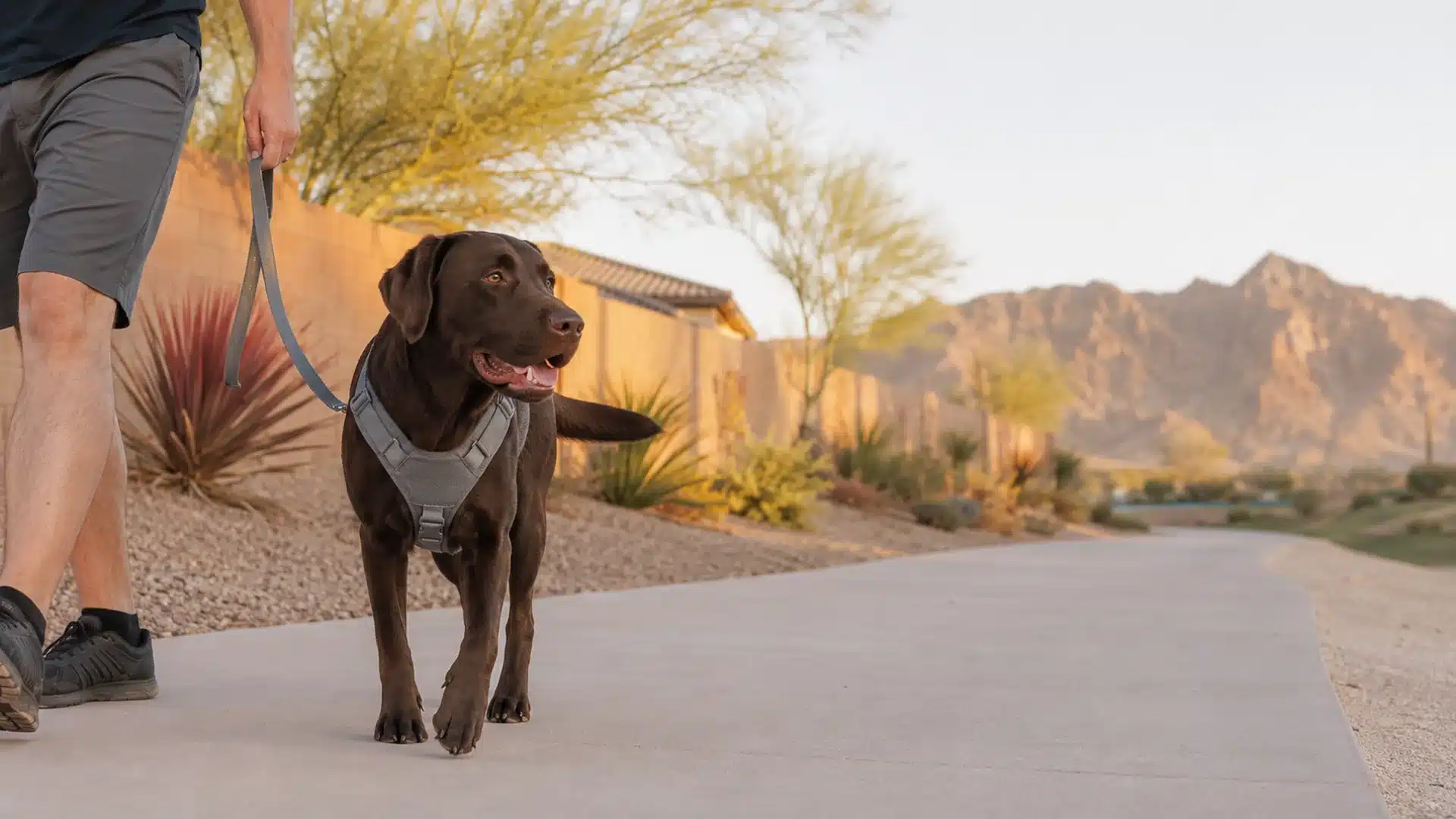
Dog Behaviorist in Queen Creek, AZ for Aggression, Anxiety, and Reactivity
Maybe it is the growling when guests walk in, the explosions at other dogs on the sidewalk, the panic when the garage door closes behind you, or two dogs you love who can no longer be in the same room. Whatever brought you here, the pattern is the same: these are not training problems, and no obedience class was ever going to fix them, because they are driven by what your dog feels, not by what your dog knows.
I am Will Bangura, a Certified Canine Behaviorist with a Master's Degree in Psychology and more than 35 years in the most serious end of dog behavior. I work with Queen Creek families on aggression, reactivity, anxiety, fears, phobias, and separation anxiety, using force-free, evidence-based behavior modification that treats the emotion driving the behavior.
No shock. No prong. No fear.

Will Bangura is a Certified Canine Behaviorist accredited through International Canine Behaviorists, a Certified Behavior Consultant Canine and Certified Professional Dog Trainer through the CCPDT, a Family Dog Mediator, and a Fear Free Certified Professional.
He is the author of Sniff to Soothe, host of the Dog Training Today podcast, and has spent more than 35 years working with severe aggression, reactivity, anxiety, and complex behavior cases. He works with Queen Creek families in their homes and with pet parents nationwide by virtual consultation.
M.S.
Psychology, Behavioral Focus
CAB-ICB
Certified Canine Behaviorist
CBCC-KA
Certified Behavior Consultant Canine
CPDT-KA
Certified Professional Dog Trainer
FDM
Applied Ethology / Family Dog Mediation
FFCP
Fear Free Certified Professional
What People Are Saying


A Certified Dog Behaviorist for Complex Behavior Cases in Queen Creek
The families who call me have usually already tried something: a group class, a board-and-train, an app, sometimes an e-collar trainer who promised fast results. The problem is still here because aggression, reactivity, anxiety, phobias, and separation anxiety are not training problems. They are emotional and behavioral conditions, and they respond to clinical treatment: a functional behavior assessment to identify what is actually driving the behavior, immediate management so the behavior stops being rehearsed, and systematic desensitization and counterconditioning carried out below your dog's stress threshold, where real learning can happen.
I work with Queen Creek families in their homes, including Encanterra, Meridian, Hastings Farms, Charleston Estates, Whitewing, and Montelena, and homes along Ocotillo Road, Ellsworth Road, and Rittenhouse Road, as well as nearby San Tan Valley and the Gilbert and Mesa borders. Virtual behavior consultations are available to families everywhere.
Behavior Problems I Specialize In
If one of these cards feels like it was written about your dog, it probably was.

Aggression Toward People
Stiffening at the window when the doorbell rings, growling at guests, snapping at strangers, or a bite that changed everything. Aggression toward people is almost always fear or conflict wearing a scary mask, and it responds to structured, force-free treatment.

Aggression Toward Other Dogs
Hard stares across the street, explosive charges at the fence line, fights at the park or the vet. Whether the driver is fear, frustration, or learning history, dog-directed aggression needs assessment and systematic behavior change, not corrections.

Fear Aggression
Weight shifted back, ears pinned, whale eye, a growl that says stay away. A fear-aggressive dog is defending itself from a threat it perceives, and punishment confirms the threat. Changing the emotion is the treatment.

Dogs Fighting in the Home
Feeding time, doorways, and greetings have become flashpoints, and you are living in a house divided. Housemate aggression is a relationship and environment problem that requires assessing both dogs, and it is one of my core specialties.

Resource Guarding
A freeze over the food bowl, a growl near the bone, teeth over a stolen sock or a spot on the couch. Guarding is anxiety about loss, and modern protocols resolve it without ever taking things away by force.

Leash Reactivity
The barking, spinning, lunging dog at the end of the leash is not giving you a hard time. They are having a hard time. Reactivity is emotional overload, and it changes when the emotion changes.

Anxiety
Pacing, panting, hypervigilance, a dog who orbits the house but never truly rests. Chronic anxiety is a nervous system stuck on alert, and it deserves real clinical treatment, not just more exercise.

Fears and Phobias
Monsoon thunder, fireworks, the vacuum, strangers, car rides: when fear tips into phobia, dogs do not habituate on their own. Systematic desensitization rebuilds the sense of safety one sub-threshold step at a time.

Separation Anxiety
The panic starts with your keys and does not end until you return: howling, destroyed doorframes, accidents, escape attempts. Separation anxiety is treatable with a structured alone-time protocol built on your dog's actual tolerance.

Obsessive Compulsive Behavior
Spinning, tail chasing, shadow and light chasing, fly snapping, licking that cannot be interrupted. Compulsive behavior is a genuine disorder, and effective treatment pairs behavior modification with veterinary collaboration.
We Also Help With

When Previous Training Has Failed
Board-and-train did not hold. The e-collar made things worse. The obedience class never touched the real problem. None of that is your failure: behavior problems are emotional, and they need treatment, not more commands.

Vet and Grooming Fear
If exams, grooming, and nail trims have become wrestling matches, cooperative care changes the game. Your dog learns to opt in to handling instead of enduring it, and care stops being a battle.

Puppy Behavior Concerns
A puppy who freezes, hides, growls, or panics is waving a flag worth taking seriously. Early behavioral intervention during the developmental window is the cheapest, fastest behavior work you will ever invest in.

Blind and Deaf Dog Behavior
Blind, deaf, and double-merle dogs are not harder to teach, they simply learn through different channels. Touch cues, hand signals, and scent work open up communication most families never knew was possible.

Senior Dogs and Cognitive Dysfunction
New nighttime pacing, staring at walls, getting stuck in corners, sudden anxiety in a dog who was always steady. These can be signs of canine cognitive dysfunction, and behavioral support coordinated with your veterinarian helps.
Dog Aggression Training in Queen Creek

Start with what aggression is not: it is not dominance, and your dog is not trying to run your household. Decades of behavioral science are clear that aggression in pet dogs is overwhelmingly a distance-increasing strategy driven by fear, conflict, frustration, or pain, and it is maintained by one simple fact: it works. The delivery driver always leaves. The stranger always backs up. Every rehearsal strengthens the behavior, which is why aggression rarely improves on its own and often escalates instead.
Treatment follows the same clinical sequence I use in every serious case. A functional behavior assessment identifies the triggers, the warning sequence, and the consequences maintaining the behavior, with medical factors ruled out alongside your veterinarian when pain or illness may be contributing. A management and safety plan stops the rehearsals immediately. Then desensitization and counterconditioning go to work on the emotion itself, at distances and intensities where your dog can stay calm enough to learn, so the trigger gradually stops predicting threat. What I will not do is silence the warning system with punishment: a dog who has learned that growling is dangerous does not become safer. It becomes quieter, right up until it bites.
Aggression is maintained by success and driven by emotion. Take away the rehearsals, change the emotion, and the aggression loses both its fuel and its function.
Types of Aggression I Work With
- Fear-based aggression
- Aggression toward strangers and visitors
- Aggression toward family members
- Dog-to-dog aggression
- Dogs fighting in the same household
- Leash aggression
- Territorial aggression
- Barrier aggression at fences, gates, and windows
- Resource guarding of food, toys, and spaces
- Guarding of resting places and furniture
- Redirected aggression
- Frustration-based aggression
- Pain-related and medically influenced aggression
- Handling and grooming related aggression
- Aggression around children, with careful safety assessment
- Predatory chase concerns
If your dog has bitten, or you can feel a bite coming, do not wait for the escalation to prove you right. Early intervention is faster, safer, and less expensive than crisis intervention, and my full framework is on the main dog aggression training page.
Dogs Fighting in the Home

When the dogs who share your home start fighting each other, the stress is unlike anything else in behavior work. You are managing rotations and baby gates, reading every glance, bracing at every doorway, and grieving a household that used to be easy. The fights themselves usually erupt over predictable pressure: food, chews, resting spots, narrow hallways, arousal at the front door or the fence, and attention from a favorite person. Age changes, pain, and a maturing younger dog frequently sit underneath the shift.
I treat housemate aggression as a two-patient case. Both dogs get assessed, because the question is never which dog is the problem but what is happening between them and around them. You get a management structure that ends the rehearsals on day one, built to lower stress for both dogs rather than punish either. Then we recondition how each dog feels about the other and reintroduce them in deliberate, sub-threshold stages, with clear criteria met before each step forward. Where pain or anxiety is contributing, your veterinarian joins the plan.
Every fight the dogs rehearse makes the next one more likely. Management is not the cure, but nothing cures while the fighting continues.
Reactive Dog Training in Queen Creek

A reactive explosion looks willful from the outside, and it is anything but. When your dog erupts at another dog, a cyclist, or a jogger, their sympathetic nervous system has fired, stress hormones are surging, and the thinking parts of the brain are effectively offline. That is why yelling, leash pops, and corrections accomplish nothing useful: you cannot train a brain in fight-or-flight, and pairing the trigger with pain teaches exactly the wrong lesson about what that trigger predicts.
Treatment starts where your dog can still think. We find the distance at which your dog notices the trigger without exploding, and at that distance the trigger starts predicting good things, over and over, until the emotional response itself changes. Queen Creek gives us good working conditions for this: quiet subdivision streets, wide sidewalks, and the multi-use paths along the washes make it easy to control distance, and distance is the first tool of behavior change. The goal is not a dog who never notices the world. It is a dog who notices and stays okay.
Dog Anxiety Training in Queen Creek

An anxious dog can be perfectly obedient and profoundly unwell at the same time, because anxiety is not a behavior problem in the ordinary sense. It is a nervous system running threat detection around the clock. The pacing at sunset, the trembling under the desk when monsoon thunder rolls in over the San Tans, the dog who scans the room instead of sleeping: none of that yields to commands, because commands change what a dog does, not what a dog feels.
Changing what a dog feels is the actual work. Systematic desensitization presents the scary thing at an intensity your dog can tolerate, counterconditioning pairs it with something your dog values, and progression happens only as the emotional response genuinely improves, never on a calendar. Around that core we build predictability, safe retreat spaces, and real relaxation skills. For severe anxiety, phobias, and compulsive behavior, I bring your veterinarian into the plan, because medical factors and, where indicated, medication support can determine how far and how fast behavior modification can go. The complete framework is on my dog anxiety training page.
Dog Separation Anxiety Training in Queen Creek

Separation anxiety is not boredom, spite, or poor manners. It is panic, the canine equivalent of a panic attack, triggered by being left alone. If your dog shows several of these signs, separation anxiety belongs on the table:
- Howling, barking, or whining after you leave
- Destruction focused at doors, windows, and exit points
- Pacing, drooling, and heavy panting
- House soiling that only happens when alone
- Refusing to eat when left by themselves
- Escape attempts, sometimes with injury
- Shadowing you from room to room
- Distress at departure cues like keys, shoes, or the garage door
Because the driver is panic, the popular fixes fail predictably: the frozen Kong goes untouched, the crate becomes a trap, a second dog comforts no one, and letting them cry it out floods an already panicking animal. What works is unglamorous: a structured alone-time protocol that starts at the duration your dog can genuinely handle, even if that is thirty seconds, and expands it systematically with your dog's body language on video as the deciding vote. This is also the problem I most often treat entirely by virtual consultation, because the behavior only happens when no one is home and the work runs on video anyway. My structured program is detailed on the separation anxiety training page.
Dog Trainer or Dog Behaviorist: What Your Dog Actually Needs
A good dog trainer teaches skills: sit, stay, recall, loose-leash walking, manners. I teach those too when a behavior plan needs them. But if your dog lunges at other dogs out of fear, no amount of sit fixes the fear, for the same reason that teaching a person with a spider phobia to stand still does not treat the phobia. Skills and emotions are different systems, and serious behavior problems live in the emotional one.
That is the work of a behaviorist: identifying the emotional driver through functional assessment, coordinating with your veterinarian when pain or illness is in the mix, and treating the root cause with desensitization, counterconditioning, and reinforcement-based skill building measured against clear criteria. One caution as you compare professionals: behaviorist is not a legally protected title, so anyone can use it. Independent certification is how you separate the claim from the credential. Mine include CAB-ICB through International Canine Behaviorists and CBCC-KA and CPDT-KA through the CCPDT, and I would encourage you to ask any professional you are considering about their certifications, their methods, and what happens when their first approach does not work.
Force-Free, Evidence-Based Behavior Modification
Force-free is not a preference I hold loosely. It is a conclusion drawn from how behavior change actually works. Shock, prong, and choke tools change behavior through one of two mechanisms: positive punishment, where the dog works to avoid pain, or negative reinforcement, where the dog works to escape it. There is no third option. Either the tool is aversive, which carries documented welfare costs and fallout risks, or it is not aversive, in which case it is not what changed the behavior. The marketing cannot have it both ways.
For dogs who are already fearful, anxious, or aggressive, those tools do their damage precisely where it matters most: they suppress the visible behavior while intensifying the emotion underneath, and they routinely punish the warning signals that keep families safe. The convergence of evidence across studies, countries, and disciplines points the same direction, which is why reward-based methods are the consensus recommendation of the major veterinary and behavior organizations for treating behavior problems. My work uses management to stop rehearsals, desensitization and counterconditioning to change the emotional response, and positive reinforcement to build the behavior you want instead. It is not the fast-looking fix. It is the one that holds.
Suppression is not resolution. A quiet dog and a calm dog can look identical for weeks, and only one of them is safe.
Working With Your Veterinarian
Behavior never happens in a body-free vacuum. Pain is one of the most common hidden drivers of new aggression, thyroid and gastrointestinal disease can masquerade as behavior problems, and sensory decline changes how a dog experiences the world. When your dog's history suggests a medical thread, I ask your veterinarian to be part of the case, and with your permission I share my assessment and progress notes so the medical and behavioral sides of your dog's care pull in the same direction. In severe anxiety, panic, and compulsive cases, your veterinarian may also discuss medication support, which can lower your dog's baseline distress enough for behavior modification to gain traction. Complex cases deserve a team, and this is how the team works.
Schedule a Behavior Consultation in Queen Creek
Every Queen Creek case starts with an initial behavior consultation, usually one to two hours, and it is a working session, not a sales pitch. I take a complete history, evaluate your dog and the environment where the behavior lives, put safety and management in place that day, and begin the behavior modification plan, so you end the first session knowing exactly what we are doing and why. Follow-ups run on written steps and measurable criteria. If you are unsure where to begin, begin with the free call.
In-Home Behavior Consultation
Aggression, reactivity, and dogs fighting in the home are best assessed where they happen. In your home I see the actual fence line, the actual front window, the actual hallway where the tension builds, and your dog's triggers exactly as your dog experiences them. Serving all of Queen Creek and the surrounding communities.
Schedule an In-Home ConsultationVirtual Behavior Consultation
Virtual consultations deliver the same assessment, written plan, and follow-up structure, and for some cases they are the better tool: fearful dogs show me their true baseline without a stranger in the room, and separation anxiety work is built on video by nature. Available to families everywhere.
Schedule a Virtual ConsultationLiving With Dogs in Queen Creek

Queen Creek is one of the fastest growing family towns in Arizona, and its environment shapes the behavior cases I see here. New subdivisions put homes close together behind shared block walls, which means many dogs spend their days hearing, smelling, and fence-running with neighbor dogs they can never actually meet, and that barrier frustration is a common ingredient in the reactivity and aggression cases I treat. Add the daily rhythm of a growing town (construction crews, landscapers, deliveries, and streets full of kids on bikes and scooters) and a territorial or fearful dog gets dozens of rehearsals a week right through the front window.
Queen Creek also keeps its agricultural and equestrian roots. Horse properties sit alongside new neighborhoods, events fill Horseshoe Park and Equestrian Centre, and dogs here routinely encounter horses, goats, and backyard chickens their city cousins never see. The trail network adds its own layer: the multi-use paths along the washes and the trails at San Tan Mountain Regional Park bring runners, cyclists, and off-leash dogs toward you at speed, while coyotes travel the washes at dawn and dusk. And every summer, monsoon dust storms and thunder drive a wave of noise phobia cases in my practice. None of this makes Queen Creek a hard place for dogs. It makes context-aware behavior work essential, and it is exactly why the in-home consultation exists.
Queen Creek Dog Behaviorist FAQ
Do you offer dog behaviorist services in Queen Creek, AZ?
Yes. I provide in-home behavior consultations across Queen Creek, including Encanterra, Meridian, Hastings Farms, Charleston Estates, Whitewing, and Montelena, plus nearby San Tan Valley and the Gilbert and Mesa borders. Virtual consultations are available to families anywhere.
What is the difference between a dog trainer and a certified dog behaviorist?
A trainer teaches skills. A behaviorist treats the emotional conditions underneath serious problems: aggression, reactivity, anxiety, phobias, and separation anxiety. Skills training cannot fix fear, which is why so many families come to me after a class or program did not solve the problem.
Do you offer aggressive dog training in Queen Creek?
Yes. Aggression, including dogs with bite histories, is the center of my practice. Cases begin with a functional behavior assessment and a same-day safety and management plan, followed by desensitization and counterconditioning. I never use shock, prong, or intimidation, because suppressing warnings makes dogs more dangerous, not less.
My dogs are fighting with each other in our home. Can this be fixed?
Very often, yes. Both dogs are assessed, the fighting is stopped through structured management so it cannot be rehearsed, and the dogs are reconditioned and reintroduced in staged, sub-threshold steps. Severity and history shape the plan and the outlook, which is exactly what the assessment establishes.
Can leash reactivity be treated without a prong or shock collar?
Yes, and the science is unambiguous about why. Reactivity is emotional overload, and corrections add threat to an already overloaded nervous system. Working below threshold and changing what the trigger predicts resolves the emotion driving the display.
Do you help with dog separation anxiety in Queen Creek?
Yes. It is one of my core specialties, treated through a gradual alone-time protocol built on video evidence of what your dog can actually tolerate. Panic cannot be crated away or waited out, but it responds very well to systematic treatment.
Do you offer in-home behavior consultations in Queen Creek?
Yes. In-home is my primary format in Queen Creek, and for aggression, fence fighting, territorial behavior, and household dog conflicts it is the fastest route to an accurate plan, because I assess the exact environment where the behavior occurs.
Do virtual behavior consultations work for serious behavior problems?
Yes. Virtual consultations carry the same assessment, written plans, and structured follow-up, and for fearful dogs and separation anxiety they are often the ideal format. Distance is no barrier to good behavior work.
Will you work with my veterinarian?
Yes, and in complex cases I actively encourage it. Pain and medical conditions drive more behavior problems than most people expect, and with your permission I coordinate assessments and progress notes with your veterinarian directly.
My dog already went through a board-and-train or e-collar program and the problem came back. Can you still help?
Yes, and you are in the majority. Suppression-based programs quiet behavior temporarily while leaving the emotion intact, so the problem returns where the triggers live: at home. We reassess from scratch and treat the cause this time.
How long does behavior modification take?
The honest answer: it depends on the problem, the history, and the dog. What you get from me is a structured plan with written steps, measurable criteria, and visible milestones. Meaningful change often shows early, and durable change is built over weeks to months.
Is my dog trying to be dominant?
No. The dominance model came from flawed captive-wolf research and has been rejected by modern behavioral science. Problem behavior in pet dogs is driven by fear, anxiety, frustration, pain, or learning history, and dominance-based methods make fearful dogs worse.
What happens during the first behavior consultation?
One to two hours of real work: a complete history, direct assessment of your dog and the environment, identification of triggers, immediate safety and management steps, and the start of your behavior modification plan, with everything documented in writing.
Do you use shock collars, prong collars, or punishment?
No, never. All of my work is force-free: management, desensitization, counterconditioning, and positive reinforcement. Tools that work through pain or startle suppress warning signs while increasing the fear and stress driving the behavior, and that trade is never worth it.
About Will Bangura, M.S.
Will Bangura, M.S., CAB-ICB, CBCC-KA, CPDT-KA, FDM, FFCP, is a Certified Canine Behaviorist, behavior consultant, author of Sniff to Soothe, and host of the Dog Training Today podcast. With a Master's Degree in Psychology and more than 35 years of experience, he specializes in severe aggression, reactivity, anxiety, fears, phobias, separation anxiety, and compulsive behavior, serving Queen Creek and the Phoenix metro in home and pet parents nationwide by virtual consultation. He also serves families in nearby Phoenix, Gilbert, and Tempe.
Your Dog Is Not a Lost Cause
Aggression, reactivity, and anxiety do not resolve by waiting, and living on high alert is no way for you or your dog to spend another year. The families with the best outcomes share one trait: they started. Start with a conversation.
Prefer to talk now? Call (602) 769-1411