

Dog Obedience Training in Phoenix, AZ
If your dog listens beautifully in the kitchen but seems to forget everything the moment a squirrel, guest, or another dog appears, you are not dealing with a stubborn dog. You are dealing with a dog who has not yet been taught how to respond when real life gets distracting.
Whether your dog pulls on the leash, jumps on guests, barks for attention, or tunes you out around distractions, the goal is the same: clear, reliable behavior your dog understands and can perform in real life. Private, in-home dog obedience training, built around your dog, your home, and your family.
No shock. No prong. No fear.

Will Bangura, M.S., CAB-ICB
CBCC-KA, CPDT-KA, FDM, FFCP
A Certified Professional Dog Trainer with more than 35 years of experience, Will Bangura helps pet parents across the Phoenix metro raise calmer, better-mannered dogs through private, in-home obedience training.
You work directly with Will, never a junior trainer, using science-based, force-free methods that teach your dog what to do and build skills that hold up in real life. No shock collars, prong collars, or intimidation.
M.S.
Psychology
CAB-ICB
Certified Canine Behaviorist
CBCC-KA
Certified Behavior Consultant Canine
CPDT-KA
Certified Professional Dog Trainer
FDM
Applied Ethology / Family Dog Mediation
FFCP
Fear Free Certified Professional
Dog Obedience Training Built for Real Life
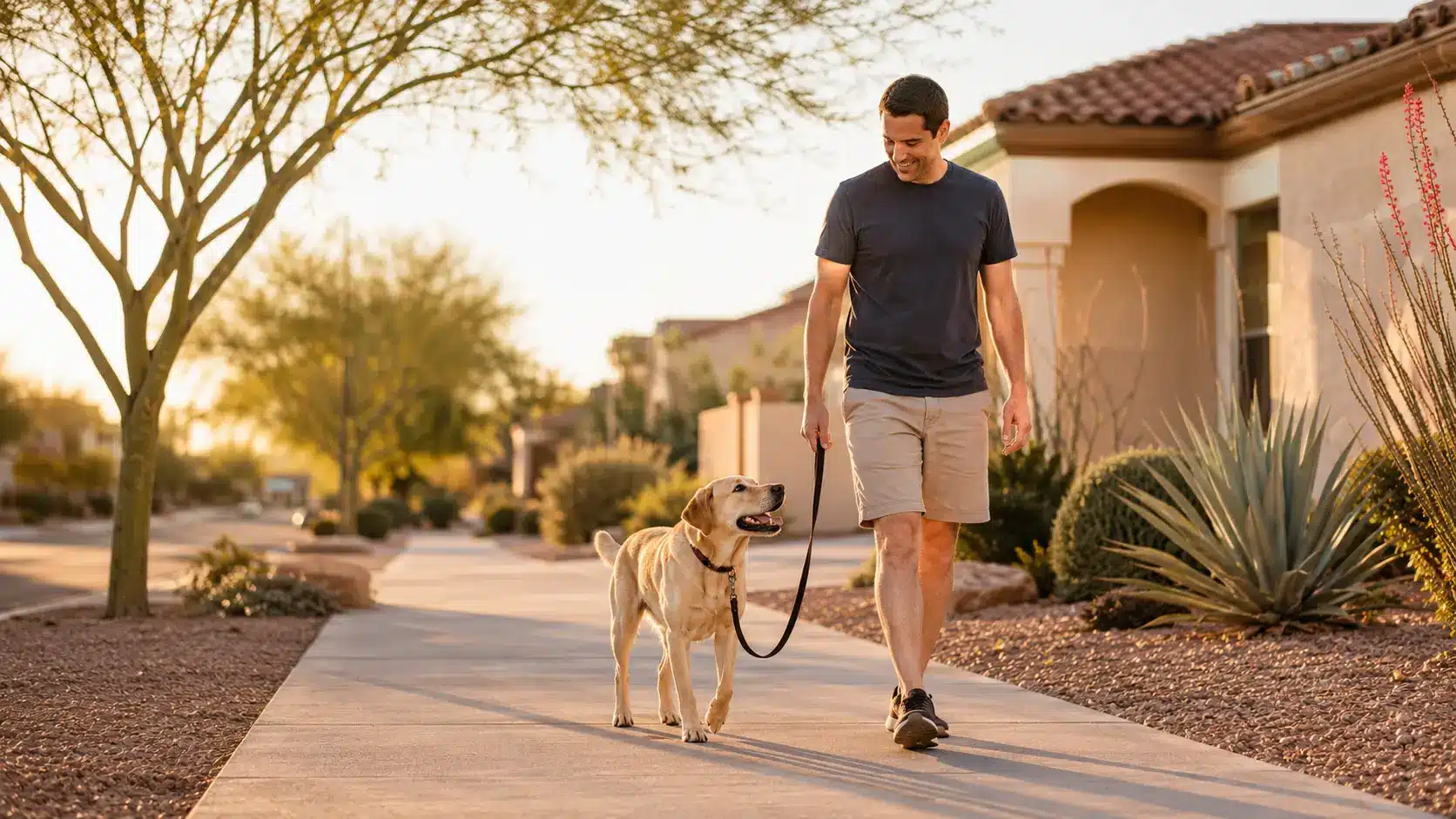
A quiet-room sit-stay is only the beginning. The real test is whether your dog can respond when the doorbell rings, another dog walks by, guests arrive, the kids are active, or you are halfway down the block with your hands full.
Most pet parents reach out for the same reasons. Their dog listens at home but not outside. Walks have stopped being enjoyable because the leash pulling is too much. Guests come over and the dog launches into them. Barking becomes the fastest way to get attention. Cues work when life is calm, then disappear the moment something more interesting happens.
None of that means your dog is bad, dominant, stubborn, or beyond help. It means the skills have not yet been taught in a way that holds up under real-life conditions.
That is a training problem, and training problems respond to the right teaching.
Who Dog Obedience Training Is For
This page is for pet parents whose dogs are not showing serious aggression, intense fear, panic, or separation distress, but still need better manners, better listening, and more reliable everyday behavior.
In practice, that usually means dogs around five to six months and older who need help with foundation obedience, nuisance behaviors, leash skills, recall, impulse control, household routines, and responding around distractions.
This is a good fit if your dog needs help with loose-leash walking, coming when called, sit, down, stay, wait, place, jumping on guests, barking for attention or excitement, door manners, polite greetings, focus around distractions, or calmly settling instead of reacting to every movement in the house.
If your dog is still a young puppy, start with puppy training. If your dog is growling, lunging, snapping, biting, guarding, panicking when alone, or reacting with intense fear or aggression, that is behavior modification, and the next section points you to the right place.
When Your Dog Needs Behavior Modification Instead
Not every problem is an obedience problem. If your dog is growling, lunging, snapping, biting, guarding food or objects, panicking when left alone, or reacting with intense fear to people, dogs, or sounds, then teaching more obedience cues is usually not enough.
These behaviors are typically driven by fear, anxiety, frustration, or emotional conflict, not by a missing cue. They call for a structured behavior modification plan that addresses the emotional response driving the behavior, not just what the dog does on cue. That is a different service, and starting in the right place saves you time and money.
Dog Aggression Training
For dogs who growl, lunge, snap, bite, guard resources, fight with another dog in the home, or create safety concerns around people or animals.
Dog Aggression TrainingDog Anxiety, Fear & Phobia Training
For dogs who panic, hide, tremble, avoid people, react to sounds, or struggle with confidence.
Dog Anxiety TrainingSeparation Anxiety Training
For dogs who bark, howl, pace, drool, destroy things, or become distressed when left alone.
Separation Anxiety TrainingNot sure which one fits your dog? That is exactly the kind of thing we sort out together in your consultation.
What Dog Obedience Training Includes
Every plan is customized, because every dog and every household is different. One family needs loose-leash walking and a reliable recall. Another needs door manners, polite greetings, and a dog who can settle when guests arrive. Many need help with several things at once.
We build the plan around the behaviors that are actually causing friction in your home, not a generic checklist.

Here are the skills we most often teach:
Loose-Leash Walking
Walking with you instead of dragging you, so walks stop being a workout.
Come When Called
A recall your dog actually responds to, built up until it holds under distraction.
Sit, Down, Stay & Wait
The foundation cues, taught to be reliable rather than half-remembered.
Place / Settle on a Mat
Going to a bed or mat and staying relaxed there through meals, visitors, and busy moments.
Polite Greetings
Saying hello to people with four paws on the floor, no jumping or mouthing.
Door Manners
Waiting calmly at thresholds instead of bolting, for safer entries and exits.
Attention & Focus
Checking in and responding to their name even when the environment gets interesting.
Leave It & Drop It
Practical safety cues that help prevent grabbing, stealing, chewing, or holding onto things your dog should not have.
Impulse Control
The ability to pause and think instead of reacting to every distraction, movement, or opportunity.
Distraction, Distance & Duration
The three things that turn a cue your dog "knows" into a cue your dog can actually perform out in the real world.
We teach the skill first in a way your dog can succeed at, then gradually raise the difficulty until it works where you need it. Knowing a cue in the living room and performing it on a busy sidewalk are two different things, and bridging that gap is most of the job.
What Phoenix Pet Parents Say
Pet parents across the Phoenix metro trust Phoenix Dog Training for private, in-home help with obedience, manners, leash skills, and real-life results. Here is what they have to say, in their words and in their dogs.
Posted on Google delphine valentin129 days ago
Trustindex verifies that the original source of the review is Google.
We are so grateful we found Will Bangura and Phoenix Dog Training. After working with multiple dog trainers in Phoenix for our dog’s aggression and reactivity issues, nothing was truly helping because nobody was addressing the underlying fear and anxiety driving the behavior. Our veterinarian recommended working with a certified dog behaviorist, and that is when we found Will. Our German Shepherd had severe leash reactivity toward other dogs and strangers, and we were honestly afraid we might eventually have a bite incident. From the very first behavior consultation, Will was incredibly thorough, professional, and compassionate. He took the time to explain canine body language, stress signals, trigger stacking, and why punishment-based training can actually make aggression worse. What really stood out was that this was not just obedience training. This was real behavior modification based on science and positive reinforcement. Within a few weeks, we started seeing dramatic improvement. Our dog became calmer, more confident, and far less reactive on walks. If you are searching for a dog behaviorist in Phoenix, dog aggression training in Phoenix, or help for a reactive dog, we cannot recommend Phoenix Dog Training enough. Will Bangura is truly an expert in dog aggression, fear, anxiety, and reactivity. We finally feel hopeful again, and more importantly, our dog is happier and less stressed. Thank you, Will, for changing our lives and helping us better understand our dog.Posted on GoogleTzivia Masliansky153 days ago⭐⭐⭐⭐⭐ If you have a dog who’s been struggling — behaviorally, emotionally, or both — Will is your person. My dog Hank came to him as a genuinely difficult case, and the progress has been remarkable. Will doesn’t just address surface behaviors but gets to the root of the issue. He’s even collaborated with Hank’s vet to make sure his medication is properly equilibrated, understanding that behavior and biology aren’t separate conversations. That integrative, science-based approach is rare and makes a real difference. Will’s method is thoughtful and effective. He’s opened my eyes to how much sniffing can help a dog’s nervous system relax which has been critical to Hank’s progress. The results speak for themselves. Hank is less reactive, handles guests without going off the rails, is far easier to calm down when he gets overstimulated, and the humping situation is significantly more civilized. Will took all of it seriously without judgment and tackled each issue methodically. I’m excited to continue working with Will to help Hank keep making progress.Posted on GoogleMark Meyers184 days agoI have had pet dogs for for decades and have experienced several trainers. Lexi my Sheltie is a reactive dog and other trainers were unable to make much progress with her. One even suggested she be euthenized! Will has turned out to be the most knowledgeable and patient canine behavior expert/trainer I have met and has been successful in helping Lexi. He provided me with verbal, written and, at times, recorded instructions as well as videos all of which were very helpful. Will is genuinely concerned with his canine students as evidenced by his calls to check and see how Lexi was doing. Lexi's behavior is much improved as is her quality of life. I highly recommend him if your dog has a behavior problem.+0Posted on GoogleVicki Hayes342 days agoWill is amazing! He really knows what he’s talking about and what he’s doing. He’s very passionate about guiding you to train your dog with positive reinforcement and love. Our reactive Springer Millie has come a long way with Will’s guidance. Even though we are not always as consistent as we need to be, we/she have learned a lot and we will continue to implement all of the great stuff Will has taught us. He is accessible and cares about your dog. I highly recommend Will. We have used 2 other trainers in the valley that don’t even come close to Will! I am so glad I reached to him. 😊+0Posted on GoogleMitzi Krockover390 days agoDr. Will Worked with me for about two hours. He did a thorough interview and observed Maggie my dog. At the end of the session, I had insights about potential health challenges, ways to change her behavior and I felt hopeful that we were on the right track. Maggie was comfortable with Dr. Will and I feel like it was a great session. I look forward to putting into practice his suggestions.Posted on GoogleMegan W419 days agoWill helped us to train our young, reactive rescue dog. He taught us so many different ways to handle the issues we were experiencing, as well as recommended resources to help us better understand her behavior. It is obvious that Will is an expert in dog behavior and passionate about what he does. There isn’t a doubt in our minds that if we hadn’t reached out to and worked with Will that we wouldn’t be where we are today with our dog. We are grateful for his direction, dedication, and commitment to helping us. Thank you, Will!Posted on GoogleJulie Davis500 days ago⭐⭐⭐⭐⭐⭐⭐⭐⭐⭐ If I could give 10 stars, I would! Will Bangura at Phoenix Dog Training is hands down the best when it comes to dog aggression positive based training in Phoenix. I met Will when I needed assistance with a difficult dog training situation that required a behaviorist. I was looking for a dog/canine training behaviorist in our area, that supported anxiety and aggression cases leveraging a positive approach. That was the start of a wonderful mentorship and ultimately friendship that has grown out of mutual respect and admiration. Will goes above and beyond in everything he does, is a wonderful human, willing to jump in and help at a moment’s notice. If you're looking for help with dog aggression training in Phoenix, I can't recommend Will Bangura at Phoenix Dog Training highly enough. He is a certified professional dog behaviorist in Phoenix with deep expertise in working with dogs that have reactivity, separation anxiety, fears, and phobias. His approach for behavior modification and training is rooted in science-based dog training and he uses only positive reinforcement and force-free methods - something that was incredibly important to me when choosing a behavioral trainer. He is an expert who changes lives—for dogs and their people. If you're struggling with serious behavior challenges, he’s the professional you want in your corner.Posted on GoogleSharon Winters542 days agoI needed a mobility-balance dog, but $50,000.00 was not in the budget. We went to Maricopa County Care and Control and found a large but skinny dog. He was at least nine-years old and looked into my eyes with kindness. I wanted him. At home we fed him Farmers Dog and treats of meat. In eight weeks he gained twenty pounds. His veterinarian pronounced him to be a good weight and healthy. He was a happy boy and ready for training. We hired Phoenix Dog Training to train him. Charley was ready to work in four months and didn’t have to leave home for his training. He was trained with kindness and love. It’s been three years since we took Charley home. Charley helps me navigate outside my home, up and down curbs, stairs, over cracked parking lots, and bumpy sidewalks. He is welcomed in every office, store, and restaurant. He never barks (except at home), obeys his twenty-three commands, and understands twelve hand signs. He went to a concert today with us. We couldn’t love him more. A trained service dog is a blessing.Posted on GoogleNathaniel Shepherd719 days agoI just recently meet with Will for an in-person appointment and couldn't be happier with my experience. Will’s knowledge with canine behavior is beyond exceptional leaving me feeling confident in training my dog. If you ever want knowledge and training from the best of the best Will is your guy.Posted on GoogleDillon Denney774 days agoI can’t recommend Will Bangura enough! My dog had severe fear aggression, as well as crippling anxiety and separation anxiety. After trying several other trainers with no success, I found Will, a certified dog behaviorist, and our lives have changed completely. He truly understands the complexities of dog aggression and anxiety and works from a science-based approach that made all the difference. Within just a few sessions, Will helped my dog feel more confident and less reactive. He taught me how to read my dog’s signals and how to manage situations that would usually trigger fear or anxiety. Now, my dog is much calmer and happier, and the fear-based aggression is significantly reduced. His separation anxiety, which used to cause so much stress for both of us, is no longer a major issue. Will’s expertise in dealing with aggressive dogs with anxiety is unparalleled, and I’m so grateful for his guidance. If you’re dealing with dog aggression or a dog with anxiety, I highly recommend working with Will Bangura. His professionalism, knowledge, and care for both the dog and the pet parent are outstanding.Posted on GoogleOdalys Garcia820 days agoBella, our Chihuahua, had intense fear and aggression towards other dogs. We were recommended to Will Bangura at Phoenix Dog Training by a friend. Will's approach was gentle yet effective. Through consistent positive reinforcement training, Bella gradually became less fearful and more sociable. We saw a dramatic change in her behavior. Bella can now interact with other dogs without fear or aggression. Will is an exceptional dog aggression trainer in Phoenix, and his dedication to his work is evident in the results.Posted on GoogleKayla Marsteller826 days agoLife-Changing Dog Training, Will Bangura and Phoenix Dog Training Transformed Our Aggressive French Bulldog I can't say enough about the incredible experience we had with Phoenix Dog Training and Certified Dog Behaviorist Will Bangura. We brought our 4-year-old French bulldog, Max, to Will because of severe aggression and reactivity towards people and other dogs, as well as debilitating separation anxiety. From the very first consultation, it was clear that Will's expertise and compassionate approach set him apart. He took the time to thoroughly understand Max's history, behavior triggers, and our concerns as pet parents. His knowledge and experience were evident as he explained the science-based techniques he would use to help Max. Will implemented a comprehensive behavior modification plan tailored specifically to Max's needs. His step-by-step guidance and positive reinforcement strategies made a world of difference. Within a few sessions, we noticed a significant reduction in Max's aggression and reactivity. Will's methods not only helped Max become more relaxed and confident around people and dogs but also strengthened our bond with him. One of the most challenging issues was Max's separation anxiety. Will provided us with practical and effective strategies to ease Max's anxiety when left alone. His approach was gradual and thoughtful, ensuring that Max was comfortable every step of the way. Thanks to Will, Max can now stay calm and relaxed even when we're not home, something we never thought possible. What truly sets Will apart is his dedication and genuine care for his clients. He was always available to answer our questions and provide support throughout the process. His passion for helping dogs and their families is evident in every interaction. If you're looking for a certified dog behaviorist who delivers real, lasting results, look no further than Will Bangura at Phoenix Dog Training. He has transformed our lives and given Max the chance to be a happy, well-adjusted dog. We highly recommend Will to anyone struggling with dog behavior issues. Thank you, Will, for your outstanding work and for giving us the gift of a harmonious life with Max!Posted on GoogleYolanda Smith827 days agoOur Pitbull Sasha suffered from debilitating separation anxiety and reactivity. We were at our wits' end until we found Will Bangura at Phoenix Dog Training. Will's expertise in positive reinforcement was exactly what she needed. He taught us how to create a safe and calm environment for Sasha reducing her anxiety significantly. She was able to stay alone without panic, and her reactive behavior has diminished greatly. Will is a certified dog behaviorist who truly cares about the dogs he works with. We can't thank him enoughPosted on GoogleViviana garcia832 days agoWill Bangura at Phoenix Dog Training was a lifesaver for our husky Ivy. Ivy had severe dog aggression issues that made walks and social outings a nightmare. Will's positive reinforcement methods worked wonders. He crafted a personalized training plan that helped Ivy overcome his aggressive tendencies. Now, Ivy can walk calmly by other dogs and even enjoy playdates. Will is, without a doubt, the best dog behaviorist in Phoenix. We highly recommend his services to anyone struggling with dog aggressionPosted on GoogleIsaiah Ishmail834 days agoI can't thank Will Bangura and Phoenix Dog Training enough for the incredible work they did with my dog, Poolie. Poolie struggled with severe dog aggression, anxiety, and was a very fearful dog. Will, as a top-notch behaviorist, provided a comprehensive behavior modification plan that truly transformed Poolie's behavior. From the first consultation, Will's expertise in training for an aggressive dog was evident. He was patient, understanding, and used evidence-based techniques that catered specifically to Poolie's needs. The improvement in Poolie's anxiety and fearfulness was remarkable, and I now have a much happier and more confident dog. The personalized training sessions were highly effective, and Will's dedication to Poolie's progress was unwavering. If you're facing challenges with dog aggression or have a fearful dog, I highly recommend Will Bangura and Phoenix Dog Training. Their approach to behavior modification and training for an aggressive dog is truly exceptional.Posted on GoogleLoren Miller1401 days agoHad such an amazing experience with Phoenix Dog Training and Jordan! We rescued a wild and high energy husky that is now a lot more calm and listens to others than just myself. Jordan was great to work with an accommodated for our work schedule. I would highly recommend them in the future!Posted on GoogleJessie Bolz1404 days agoWe reached out to Phoenix Dog Training to help with our 5-year-old rescue, Saint. Saint was a stray before we rescued him from the county shelter where he was set to be euthanized for uncontrollable anxious behavior. Because of this, he had severe anxiety and his reactivity to other dogs, people, cars, loud noises, large objects, etc. and it was only getting worse. Taking Saint to the vet, on a walk, or outside of the house for any reason brought so much stress and anxiety not only on us, but of course him as well. Thankfully, we found Phoenix Dog Training and our trainer Jordan helped us work through all of our issues with Saint. Phoenix Dog Training offers a full service approach and trains not only your dog, but teaches you so much as well so you can fully understand your dog and make both of your lives better. Jordan was extremely thorough and worked with our veterinarian to rule out any underlying health conditions that could possibly explain Saint's prior behavior. Once we started training with Jordan, Saint became a totally different dog. It has changed our life to have Saint turn into this relaxed, calm, obedient dog. Now, anyone who meets Saint cannot believe it when I tell them about his past or that he was an anxious dog. Everyone who meets him says they wish he was their dog and that he's the best and sweetest dog they've ever met! That would not have been possible without the help of Phoenix Dog Training, especially Jordan. Don't give up on your dog or their potential, if you need help, don't hesitate to reach out to Phoenix Dog Training ASAP!Posted on GoogleSarah Bodnar1409 days agoAmazing experience!Posted on GoogleJa Na1574 days agoSo proud of our boy Rocky. He finished his last training and his aggression and people skills gotten so much better! Rocky (Husky and German shepherd) has high energy, anxiety, aggression, he’s stubborn, lunges, and likes to nip a lot. Went through 4 different places with numerous trainers. At 4 months, we were warned he is going to be a handful and we’ll have to pretty much turn our lives around if we decided to keep him. We tried all kinds of training from group classes, personal training, 30 day boot camp which they end up just keeping the deposit and didn’t want to take the rest of our money because they couldn’t train him. Another place advise us to euthanize him. He was 11 months at that time 😭😡. We felt hopeless. Did some research on dog aggressive trainers and found phoenixdogtraining.com. They talked about board/training, anxiety, fear, aggression and what really popped out was their quote, “PLEASE BEFORE YOU PUT YOUR DOG DOWN CONTACT US. WE CAN HELP WHERE OTHERS CAN’T” Got introduced to Jordan and been working with him since June 2021. He gave us hope. We did half training at home and the other half at the park. Rocky is so much better and we’re not afraid to bring him around people. We know how to train people to be around him and what not to do around him. We just had to find the right trainer that deals with these kind of dog personality/behaviors, take what we learned, train him, and give him lots of love!! Still need some work and consistent training but he’s a good boy. Proud of Rocky 🐾 🤍🤎🖤+0Posted on GoogleSpencer Andrews1616 days agoThank you, Jordan, for helping us train our German Shepherd, Cookie. We have learned a lot.Posted on GoogleVenetzia Madison1665 days agoListen to Will and Jordan's show every Saturday and you will completely understand why they are the best in the business. Interesting topics and great advice for pet parents no matter what your geographical location. By listening to one show on a Saturday morning and calling in, I was able to learn enough about my dog's behavior to correct it. Now Ms." Gimme your sammich" no longer begs or throws a tantrum. Sometimes pet parents need training too.+0Posted on GoogleTrevor Campbell1677 days agoPhoenix Dog Training was excellent to work with. Both Will and Jordan were great at explaining what we needed to do to work with our dog and provided plenty of resources for us to better understand how to read our dog. I would highly recommend them to anyone who wants to learn how to work with their own dog.Posted on GoogleSergiy Kostenko1720 days agoPosted on GoogleNicole Lucas1726 days agoJordan has been a god sent. I uprooted my puppy from SC to AZ when my husband deployed. She regressed immensely and became dog aggressive to boot. I was overwhelmed and felt like a dog mom failure for putting her through this. It’s been four months and my girl is still this wild crazy lab, but she’s seen so much positive improvements since we started training. She’s listening, obedient, her anxiety has decreased, and we were able to walk the park this week. Jordan’s been amazing and responsive with all my questions when I’m at home and training. I cannot wait to see where Sesi is at in another 3 months.+1Posted on Googlekinzie teixeira-farmer1749 days agoJordan was such a help with my puppy, Roscoe! He explained how I could stop my puppy from jumping all the time and even helped me with potty training by sending a very detailed course on how to properly potty train my dog. I cannot explain how helpful this radio show is and how professional they are and how much they know about dog behavior.Posted on GoogleAnne Van Leeuwen1751 days agoDuring our first meeting with Will and Jordan we were very impressed with how attentively they listened to our concerns and issues. After our first meeting we felt confident that the goals we set for our dogs would be achieved. Our dogs have exponentially exceeded our expectations. The knowledge and tools that Jordan provided have not only made us better pet owners but we now have a much deeper understanding of animals and their behaviors. The training REALLY works! But you have to own the tasks, take the time, and put the work in (we know it's easier said than done!). Occasionally when things didn't come together, Jordan and Will always took took the time to formulate a new and successful plan. Jordan always had time to listen, was always present, and never made our training sessions feel rushed. Had we only known Will and Jordan a couple of years ago, we would not have lost a precious young dog. We have worked (unsuccessfully) with other trainers and have never met a more caring, compassionate, understanding, and effective trainer as Jordan. Highly recommend Phoenix Dog Training. Can't say enough good things...as you can see 🙂Posted on GoogleTammy Marsteller1786 days agoPhoenix Dog Training has some of the most knowledgeable trainers I’ve ever interacted with. Will and Jordan really understand the behavior behind why my dog kept barking and whining all the time. With their help I was able to let my elderly mother walk in my home again without the fear of my dog jumping on her.Posted on GoogleRubyan Rodriguez1788 days agoPosted on GoogleTodd Palmo1799 days agoBill came out and met with 15 week old puppy, Koda and I. I was amazed right from the start at how he was able to get Koda to do things very quickly and easily within the first 15 minutes. Bill was very knowledgeable and gave me some homework to work with Koda on. I followed his instruction. Upon Bills return I came to the conclusion the one who needs the most training is me. I was once again impressed at the way Bill seems to be able to communicate with Koda. I am truly impressed and feel I made a great decision in calling Phoenix dog training. I think we have a dog whisperer right here in our home state. Watch out Cesar Millan :-) Thank you so much for your help with Koda and I. Sincerely, ToddPosted on GoogleCody W1833 days agoWill has been an incredible resource for me and my wife when it came to training our new puppy. He was extremely knowledgeable and provided insight into psychological and behavioral issues that my wife and I didn’t even realize were concerns. He had great communication, set clear expectations and goals that we could track, and provided resources and videos for the many questions we had. He has an easy to imitate hands on approach and does the training sessions during in home visits to make sure our puppy was learning in the environment it will always be in. And to top it all off, Will stayed over an hour longer than our last expected appointment time because of questions and training struggles that we were having. It was obvious that he really cared about our success and making sure we understood all the information he provided, which just meant so much to us. If you are looking for someone to help guide you and your dog through training, Will is your best chance at success!Posted on GoogleGACMA Artists and Events1844 days agoAs a disabled Vietnam Vet and American Patriot who has owned several dogs, (raised from 4month old puppies) I decided to contact these folks to help me with a new dog, when I saw they were veteran owned! She is a 2yr. old Greaat Dane who is very friendly and lovable, but has "dog aggression" issues. Will and Jordan have gone above and beyond to make sure I get the help I need to make her not only a well behaved Great Dane, but a well trained great dog. I spend my money wisely and always look for the best value for my dollars. These folks know their stuff and are a credit to the profession.Posted on GoogleJohn Smith2029 days agoI can't recommend Phoenix Dog Training LLC enough. We have had at least 10 dogs over the years but this last shepherd that we bought was more than we could handle so we reached out and started training under the expertise of Phil Behun. We tried several trainers from other companies before Phil, none of which were satisfactory. Working with Phil has been a pure joy, he really knows what's going on inside the dog's head which makes him such a valuable trainer. There is no situation that surprises Phil and you can tell that he's lived through every possible dog scenario that could possibly happen which gives us as dog owners the confidence we need to overcome all types of difficult situations, especially when my dog shows aggression. I want to thank PDT and especially Phil for all they have done to help my dog and my family.Posted on GoogleRobert Santana2036 days agoI can't give this guy enough credit. I was a frustrated first time dog owner and I was that annoying client that sent him novels of complaints about my dog. I feel like a dog training apprentice after working with him. get compliments on my dog's behavior everywhere I go now. I walk an 18 month old pitbull around Old Town Scottsdale without a leash and no issue and have been doing so since she was 12 months. The real challenge came at my girlfriend's house. My girlfriend had two untrained, misbehaved adult dogs. One is a 4 year old Boston Terrier and one is an 8 year old French Bulldog/Boston Terrier mix. Will, as well as several trainers I shopped when I found him, explicitly told me that all dogs must be trained to get the desired behaviors and all humans must be on the same page about expected dog behavior. I got my dog to the point where she was well trained everywhere except my girlfriend's house, where she would turn into a Tasmanian devil. I did everything I could to try and avoid training the other two dogs. I ended up trying to board and train them elsewhere only to find mistakes in the training with my now trained eye and ended up having to pull up my bootstraps and put the work in. The house is much more peaceful now and the dogs are behaving much better and I could not be more thankful. He will make you work but by damn he gives you some life skills that I'm not sure you will find elsewhere. Will is a very gifted trainer and I hope that he forgives me for harassing him so much in the early months!Posted on GoogleNancy Townsend2095 days agoI am very pleased with the training of my German Shepard. The best part for me is that I'm able to txt or call Mr. Zorn with questions about my dog. And the answers are always professional and helpful!Posted on GoogleKristin Buchanan2109 days agoSteve Zorn, of Phx Dog Training is amazing. He helped us adopt the sweetest husky/shepherd mix. He’s worked with us on helping her overcome her anxiety and is teaching us to teach her basic commands. He knows a lot about dog behavior, is responsive if we ever have questions or concerns, and our dog Rocky absolutely loves him. I’ve already recommended him to several friends and if you want a well trained, well adjusted, and happy dog, I recommend him to you too!Posted on GoogleBobbi Dosher2135 days agoIf I could give Steve 20 stars, I would! He was absolutely amazing with my puppy. My dog is so well behaved and, most importantly, HAPPY. I would recommend him to anyonePosted on GoogleAshley Newell2269 days agoPhoenix Dog Training is absolutely worth every penny! Our trainer, Phil, was incredibly knowledgeable and taught us so much about our puppy's behavior and our own! He really listened to what we wanted with training our puppy and tailored each lesson to exactly what we wanted. We are thrilled with our puppy Westley's progress after 3 lessons with Phil. We also have some tips and tricks in our back pocket from talking with Phil as we move forward continuing to train Westley. Highly recommend!Posted on GoogleLucile Henderson2271 days agoSteve did a wonderful job training our Australian Shepherd (Maverick). Maverick had some opportunities when it came to aggression and recalls. Post training he is no longer aggressive, great with recalls, and we have no behavioral concerns. Steve did a great job at sharing his knowledge and expertise towards dog training to help us achieve the behaviors we were looking for. Steve was always timely for our sessions and very enthusiastic to see Maverick. Steve really is passionate about dogs and training them. We would recommend Phoenix Dog Training to all those looking for her with dog training.Posted on Googlesusan2285 days agoWe got a puppy two weeks ago. And from the first night, I realized how ill equipped i was to handle it. I was so very frustrated and tired the first few days, I seriously wanted to give her back. But because I am stubborn and i want this to work, i knew I needed someone's help. I contacted another trainer that blew me off, so I called phoenix dog training and had an appointment and some hope within 20 minutes. I have only had one session from Phil so far, and it was only 3 days ago, but I already am so happy and have so much more hope for our puppy and family. The biggest thing he said that stuck was that I had to stop thinking that a dog thinks like a human, so I had to shift my thinking about it. I learned that I can't correct before or after she does something wrong because she won't know why she is in "trouble." I learned that in order for her to learn anything, it just needs to be done over and over. And while it is tedious and takes a lot of time, it will ultimately be the best for her and for our family. Phil has responded to texts and given great advice. It is WELL worth the money. And that is coming from one session. I can't wait to see how much more my puppy progressesPosted on GoogleDan Dever2564 days agoThe perfect combination of knowledge, professionalism and kindness to both animals and people alike. The instruction that Will has provided to us has been the single most productive thing that we have ever done for any dog that has been in our family. Would give the highest possible recommendation!!!Posted on GoogleChawka2623 days agoPosted on GoogleDuke x2783 days agoYuk and Yak are totally brand new dogs since I took them there.Posted on GoogleAllan Buenaventura2783 days agoPosted on GoogleT Gant2783 days agoI would highly recommend to any dog lover! He’s the best.Posted on GoogleMarilyn Knapp2785 days agoAwesome caring wonderful experience!! The best there is for dog whisper!!! Highly recommend would not go to anyone else to train a problematic dog!!Posted on GoogleAmadu basse2785 days agoBill is an expert in his field and I highly recommend himPosted on GoogleHannah Bangura2786 days agoHe is knowledgeable very professional. I highly recommend himPosted on GoogleRobert Weedman2788 days agoI own vizsla and he was more than rambunctious at only 4 months. After training with Phoenix dog training he is now good in public and in dog parks off leash. I never knew I could have a dog be so obedient and loving. Thank you for making my pet a full time best friend for life.Posted on GoogleCarol Peck2824 days agoBill did a terrific job training our little rescue dog and us! Ziggy was about a year old when he was dumped in neighborhood and hadn't even been house trained. He's come a long way thanks to Bill.Posted on GoogleAshley Katers2844 days agoPosted on GoogleMelinda McClean3059 days agoMy wife and I are more than happy with the work that Bill did for us, and our dog. We reached out to him for one-on-one training, frustrated and concerned about her reactive behavior. His knowledge of dog behavior is extensive, and his ability to impart that knowledge was exceptional. We learned more in one day, than we did in 6 months of group training with another organisation. Bill guided us through the training, and explained how we should progress through to maintenance, so that our dog's progress could continue. We've received many positive comments about our dog's improved behavior and we highly recommend Bill. He's given us the knowledge and confidence that we need to work with our dog.Posted on GoogleLinda Shoemaker3073 days agoMy husband, our Great Dane Misty, and I are so glad we signed up for training. We so appreciate all the training we received to help us better manage our girl. So much better but still a ways to go and now we have the knowledge and help we needed. We also know that anytime we have a question or issue that Bill will be there to help. Highly recommend. Jack, Linda, and Misty ShoemakerPosted on GoogleJamie Janofsky3197 days agoSuch a great service, knowledgeable & easy to work with. Highly recommend!Posted on GoogleKeri Grunert3197 days agoPhoenix Dog Training is Phenomenal!! From the very beginning we knew we were in good hands. They worked so well with our whole family. Getting the kids involved in the training was brilliant. We would definitely recommend this company.Posted on GoogleBernard Wunder3317 days agoHiring a dog trainer you can trust in Phoenix is not easy. Phoenix Dog Training was recommended by my Veterinarian who has referred their clients to Phoenix Dog Training for years. I called, spoke to the owner, set up a assessment and evaluation, and a training program was customized to my dogs challenges and my goals. Today I have the perfect trained dog because of Phoenix Dog Training. I recommend Phoenix Dog Training to anyone who wants a super well behaved and trained dog.Posted on GoogleNumb Brrr3317 days agoPhoenix Dog Training is AMAZING! They rehabilitated my aggressive PitBull when 3 other trainers failed and told me the only option was to euthanize my dog. Boy am I glad I did not listen to the other trainers and hired a real Dog Behaviorist. It is very different working with a professional Dog Behaviorist than just a Dog Trainer. It was worth the money and the time to save my dogs life. Definitely hire Phoenix Dog Training.Posted on GoogleLisa Stone3317 days agoI want to give a big thank you to Bill, and Phoenix dog training. Bill was our dog behaviorist. Our shih Tzu, Loki was very fearful and would not respond to commands, walk on a leash, and would not learn to go potty outside. Phoenix Dog Training did an excellent job explaining to me exactly what I needed to do to help Loki be calm, relaxed, and listen to me. It has been 2 months now and Loki is doing great. Thank you again for the great service.Posted on GoogleParas Dhankecha3318 days agoI really want to thank you guys. Phoenix Dog Training has made my dogs life and my life so much better. I get to finally enjoy my dog. Walks are now a pleasure. She sits and stays when I tell her. When I call her to me, now she comes. I love the "place" command and that seems to be her favorite command too. I'm looking forward to the Polishing and Maintenance classes that Phoenix Dog Training offers after our completion of our private at home dog training lessons. Thank you again.Posted on GoogleB B3320 days agoI am so grateful I found Phoenix Dog Training. I live up in North Scottsdale and have a large yard. We get a lot of wild animals that come onto our property. Coyotes, Havelina, Bob Cats Mountain Lion, you name it. The problem I was having was my dog Skip would not come when called. No matter what we did he would not come when called. He would call me when there were no distractions. He would come when nothing was going on. But up another dog or another person or another animal is there, he will not come for anything! I have tried several other dog trainers in Scottsdale. They all promised me they could get my dog to come, and they did a great job getting my dog to listen to me when there were no distractions. But if there's another animal, they were not able to get my dog to come when called. Out of frustration and skeptical, I called Phoenix dog training. They said they had a money back guarantee. I figured if there was ever a time they would have to honor their money back guarantee it would be with myself and my dog Skip. To my absolute amazement, the dog trainer from Phoenix Dog Training was able to get Skip to come with the distraction of another dog he brought with him within about 3 minutes! It was absolutely crazy!!! No one had been able to produce any results, and here they have skip coming when called with another dog around, skip would normally go crazy. But this time he was coming when called! I would definitely recommend Phoenix Dog Training!!! They saved my dog from being eaten from a Mountain Lion I'm sure!!!Posted on GoogleMark Ashton (Paint by Numbers)3323 days agoPhoenix Dog Training literally saved me from having to put my dog down. My dog Sophie, is a rescue dog, and we believe she had been previously abused. She had severe fear aggression, as well as other severe phobias such as thunderstorms, she could not ride in the car, and she would not let us put a leash on her or take her for a walk. The Dog Behaviorist Phoenix Dog Training sent, was incredibly knowledgeable and compassionate. It took a lot of work, but it was worth it to be able to keep Sophie. Today Sophie can enjoy being a normal dog. I would definitely recommend Phoenix Dog Training.Posted on GoogleJose Rivas3374 days agoMy wife and I highly recommend Phoenix Dog Training. Our dog, a Labrador Retriever/German Shepard Mix, (Mr. Pickles) was trained last summer and we could not be more happy with the results. Mr. Pickles has been an excellent dog ever since his training. Everyone that comes in contact with our dog is amazed by his obedience and uncanny maturity even though he is not even three years old. He has acted perfectly on an international flight in-cabin, in the grocery store, restaurants and practically any situation one can imagine. My wife and I have Phoenix Dog Training to thank for training our dog to be the most well behaved dog we have ever seen or met. Phoenix Dog Training understands dog behavior and knows how to train a dog to meet the needs of their owners. Phoenix Dog Training utilizes empathetic, efficient, and effective methodologies in training dogs and we give them an emphatic recommendation!Posted on GoogleJudith MAKOWSKI3392 days agoNOW THAT WE ARE TRAINED, WE GO FOR PEACEFUL WALKS. IT IS LIKE A MIRACLE! BILL IS WONDERFUL AND MAGICAL! HE PROVIDES EXCELLENT CUSTOMER SERVICE AND SINCERELY CARES. I AM THRILLED WITH THE RESULTS.Posted on GooglePolly Laubach3450 days agoPhoenix Dog Training is a miracle worker! Soon after we purchased our sibling Jack Russell puppies, we discovered one of our puppies, Sophia, was completely deaf. We were dedicated to keeping her, but knew we were going to need help training a deaf dog. Not only did our trainer train Sophie, he trained us! We implemented the training techniques we learned with our other puppy, Walter, and now our 7 month old puppies are better trained than our 10 year old Jack Russell. Because of Phoenix Dog Training, we are able to communicate effectivey with all of our dogs and the bond we have with our deaf dog Sophie is just as strong as with our dogs. Thank you Phoenix Dog Training, you have changed the quality of all of our lives!Posted on GoogleSabrina Bonar3456 days agoI am so thankful that I found Phoenix Dog training!! We got my daughter a multipoo for her birthday and let's just say it has been years since we had a puppy! The trainer that came out was fantastic!!! He had our little pup listening in no time and the best part was he was more than happy to work with our daughter too!! I am so happy I had them come out! He also is very helpful in all the other puppy questions I have along the way!! Thanks again Phoenix Dog training!!Posted on Googlekathie howard3456 days agoWhen our puppy was three months old we knew we needed a trainer. Phoenix Dog Training worked magic on the very first visit and it has given us such relief. In a short time, our Aussie Doodle has become a well trained, mannerly dog. We are hoping that she will one day become a therapy dog and Phoenix Dog Training is working with us towards that goal. We could not be more pleased with the training that we have received. Mack and Kathie HowardPosted on GoogleEsther McCue3457 days agoWorking with Phoenix dog training was absolutely amazing. The trainer was very professional. I now have an amazing service dog. I couldn't have asked for anything better.Posted on GoogleStacy L. Libricz3462 days agoWe have a two-year old rescue dog who had aggression and behavior issues, specifically with men and children. We wanted to have children but knew our dog may have to rehomed. PHOENIX DOG TRAINING allowed us to keep our dog and have children. They use an e-collar that is water proof. I was skeptical of this at first, but then tried it on my self, and even at high settings does not hurt, is just an annoyance. With the behavioral modification techniques we learned we now have of the best behaved dogs around. We can have people over without them fearing for life! Our dog actually cries in excitement when Bill, the dog trainer, comes to our house. He went above and beyond to teach us how to train our dog to pay attention to us, techniques to control her anxiety, and ways to have an all around well bahved dog... she sits, stays, down, and also walks not only obedient but as happy healthy relaxed dog. Thank you PHOENIX DOG TRAINING!!Posted on GoogleRitchie Miller3471 days agoMy experience with Phoenix Dog Training was very good. The trainer was very good at his job. My 15 month old Rottweiler has over the past 5 weeks has become different dog. I appreciate the fact that the trainer was very good, prompt and straight forward. I would recommend this company to anyone. In need this service.Posted on GoogleJ C (Thealmostfitpilot)3476 days agoWorking with phoenix dog training has been nothing but wonderful. Phoenix dog training took 4 of my pups from horrible walkers to masters, took my 6 week old pup from being afraid of the leash/collar to loving it. Phoenix dog training took the time to educate me, give me resources, and kept in communication even after the training was done. Phoenix dog training in home Bootcamp was the greatest investment I've made for my pups and even after 6 months of watching/researching other companies/people, phoenix dog training was simply the best choice of them all.Posted on Googlerobert ferrante3688 days agoIn working with Phoenix Dog Training I found the results better than I expected. My dog has much less anxiety than when we started. He follows my commands with little effort on my part. The training is less complicated than I thought it would be. What a relief.


Start the Conversation
Begin Your Training Consultation
Tell us what’s going on with your dog. The first step is not a commitment, it is a conversation. Start with a free 15-minute call, or schedule a full behavior consultation, and you will get an honest, science-based read, along with a clear path forward.
No shock. No prong. No fear.
Or call (602) 769-1411 and talk it through with me directly.
Prefer to Send a Message?
Tell me a little about your dog and what you are dealing with, and I will get back to you personally.
Tell Me About Your Dog.
What kind of training are you looking for?
Why Private, In-Home Training Works So Well
Almost none of the behavior you want to improve happens in a training facility. It happens at your front door, in your kitchen, on your couch, when the leash comes out, when guests arrive, and on the actual streets where you walk your dog. So that is where we train.
Instead of teaching skills in a generic room and hoping they survive the drive home, we work in the place where the behavior is already breaking down. The plan gets built around your real routines, your real distractions, your home's layout, and the specific people your dog needs to listen to.
That is also why private coaching is often a better starting point than a group class for many dogs. Your dog is not competing with a roomful of strangers for attention, and the session is shaped entirely around your goals.

Private in-home vs. the alternatives
Private In-Home Training
Best when you want a plan customized to your dog and your house, hands-on coaching for the whole family, and skills that apply to daily life immediately.
Group Classes
Useful later, once a dog already has foundation skills and is ready to practice around controlled distractions. A tough place to learn a skill for the very first time.
Board-and-Train
Can look convenient when life is busy, but the dog still comes home to the same people, the same routines, and the same household patterns. If the family is never coached on how to maintain the behavior, the results are hard to sustain.
Obedience is not really finished when your dog can perform in a quiet room. It is finished when your dog responds in the real situations you live in every day. That is the entire point of training in your home.
Science-Based, Force-Free Dog Training
We train using modern, reward-based methods grounded in behavior science. The approach is simple to say and harder to do well: teach the dog what to do, reinforce it clearly, and build it step by step until it is reliable. We do not manufacture obedience through fear, pain, or intimidation.
What we never use: shock collars, prong collars, choke chains, harsh leash corrections, alpha rolls, or dominance-based methods.
This is not a soft or permissive approach. It is structured, clear, and practical.
Dogs learn more effectively when expectations are clear, the timing is sharp, the reinforcement matters to them, and the steps are small enough to succeed. Punishment can suppress a behavior in the moment, but suppression is not the same thing as learning.
Teaching your dog what works builds genuine cooperation and reliability without damaging trust. The goal is never short-term compliance. It is lasting behavior that holds because the dog understands it.

Our approach lines up with the position of the American Veterinary Society of Animal Behavior, which recommends reward-based training as the standard for teaching dogs and improving behavior. It is not a fringe philosophy. It is where the science and the veterinary behavior community already point.
Read the AVSAB Position StatementWhy You Work Directly With Will Bangura
When you hire Phoenix Dog Training, you get Will Bangura. Not an assistant, and not whoever is on the schedule that week. Will personally runs every session.
Will Bangura, M.S., CAB-ICB, CBCC-KA, CPDT-KA, FDM, FFCP, is a Certified Professional Dog Trainer with more than 35 years of experience, along with advanced training in psychology, learning, and canine behavior. That depth matters even when the goal is everyday obedience and manners.
A dog who pulls, jumps, barks, or tunes you out is not a list of commands waiting to be installed. Every dog brings its own learning history, motivation, stress threshold, and relationship with the people at home. Reading that dog accurately, understanding why the behavior is happening, adjusting the plan in real time, and coaching your family clearly enough that the training holds after the lesson ends, that is what separates results that last from results that fade. It comes from experience, education, and professional judgment, not a weekend course.
Choose Your Obedience Training Program
Some families need focused help with a few specific goals. Others want a fuller plan with more time to build real-world reliability, troubleshoot, and make the behavior stick. Both programs are private, in-home, and customized around your dog, your home, and the behaviors that matter most to you.
Foundation Obedience & Manners
4 private in-home lessons
$1,950
Built for pet parents who want focused help with foundation obedience, everyday manners, and common nuisance behaviors, when the concerns are real but not severe, dangerous, or driven by fear or aggression.
Best for: dogs who need a solid handle on the core skills, such as loose-leash walking, recall, jumping, barking, stay, place, polite greetings, door manners, and attention.
You get a clear foundation across the core obedience skills, hands-on coaching, and a customized plan for the goals that matter most in your home, plus the beginning stages of proofing those skills against distraction, distance, and duration.
Start With the Foundation ProgramReal-Life Reliability
8 private in-home lessons
$3,840
Built for pet parents who want the fuller plan, with more time for practice, proofing, troubleshooting, and real-world application. This is usually the better choice when your dog has several goals at once, long-standing habits, or listening that falls apart the moment there is competition for attention.
Best for: dogs who need stronger reliability, more practice around real distractions, and more support carrying the training into daily life.
You get everything in the Foundation program, plus deeper work on real-world recall, leash skills around genuine distractions, longer and steadier stays, place and greetings with actual guests, full distraction, distance, and duration proofing, impulse control, settling, family consistency, and troubleshooting between sessions. The aim is not a dog who simply knows the cues. It is a dog who responds when it counts.
Start With the Reliability Program0% financing available, on approved credit. You do not have to pay all at once. Spread the cost over time with Affirm, Klarna, or Afterpay, and start your dog's training now.
Not sure which program fits your dog? We will help you decide during your consultation.
What Working Together Looks Like
Your plan starts with a real conversation about your dog, your goals, your household, and what is actually going wrong. We talk through what is happening, where it happens, what you have already tried, and what your dog responds to. From there, Will builds a plan that fits your dog and your daily life, and in your sessions you learn exactly what to do, when to do it, how to reinforce the right behavior, and how to practice between lessons.
Understand the Behavior
We identify what is happening, when it happens, and which skills your dog needs most.
Teach the Foundation
We teach the core behaviors in a way your dog can actually succeed at.
Practice in Real Life
We apply the training to your home, your walks, your doorway, your guests, and your routines.
Build Reliability
We gradually add distraction, distance, and duration so the behavior holds up in everyday life.
Coach the Family
We help everyone in the home use the same cues, reinforcement, and expectations so the training sticks.
Serving Phoenix and the Surrounding Metro
Phoenix Dog Training provides private, in-home dog obedience training across Phoenix and the surrounding metro area. We come to your home, so your dog learns its manners, leash skills, and obedience in the same place you actually need them to hold up.
Outside our in-home service area? Virtual coaching is available for some obedience and manners goals. Just ask.
Not Sure Which Service You Need?
The right starting point depends on your dog's age, behavior, and emotional state. If your dog is younger than about five months, start with puppy training. If your dog is dealing with aggression, fear, anxiety, or separation distress, the behavior modification services below are the right path.
Still unsure? We will help you find the right fit during your consultation.
Dog Obedience Training FAQ
What is the difference between obedience training and behavior modification?
Obedience training teaches skills: leash walking, recall, sit, down, stay, place, polite greetings, and household manners. Behavior modification addresses more serious, emotionally driven problems like aggression, reactivity, severe fear, panic, phobias, resource guarding, and separation anxiety. Those need a different kind of plan, because the goal is to change how the dog feels, not just what it does.
Do you offer private in-home dog training in Phoenix?
Yes. We provide private, in-home obedience training throughout Phoenix and much of the surrounding metro area, with virtual coaching available for some goals outside that range.
Can you help my dog stop pulling on the leash?
Yes. Loose-leash walking is one of the most common things we teach. The goal is a dog who walks with you instead of dragging you, so walks are calm instead of exhausting.
Can you help my dog stop jumping on guests?
Yes. Jumping is usually handled through polite-greeting training, impulse control, reinforcing a better behavior in its place, and cleaning up the routine around how guests come in.
Do you use shock collars, prong collars, or choke chains?
No. We never use shock collars, prong collars, choke chains, harsh leash corrections, intimidation, or dominance-based training. Our methods are science-based and force-free.
How many sessions will my dog need?
It depends on your goals, your dog's learning history, and how much reliability you want to build. The four-session Foundation program suits focused goals. The eight-session Real-Life Reliability program suits dogs with multiple goals or behaviors that need more proofing and support. We will recommend the right fit during your consultation.
Is my dog too old for obedience training?
No. Adult dogs learn new skills well. We may adjust the plan for age, health, and history, but plenty of adult dogs make real progress.
What age should obedience training start?
This page is geared toward dogs past the early puppy stage, generally around five to six months and up. Younger puppies are better served by our puppy program, which focuses on socialization and early foundations.
Can obedience training help with barking?
Sometimes, depending on the cause. Barking for attention, excitement, or routine frustration often responds to obedience and manners work. Barking driven by fear, territorial aggression, or separation distress usually needs behavior modification instead.
Do all family members need to participate?
It helps a great deal. Dogs learn most consistently when everyone in the home uses the same cues, the same reinforcement, and the same expectations, so we coach the whole family.

Ready to Start Dog Obedience Training in Phoenix?
If you want calmer walks, better manners, more reliable listening, and a dog who knows what to do in everyday life, we can help. You will work directly with Will Bangura on a plan built for your dog, your home, and your goals.
No shock. No prong. No choke. No fear. Just clear, humane, science-based training made for real life.
Or call Phoenix Dog Training at (602) 769-1411.