
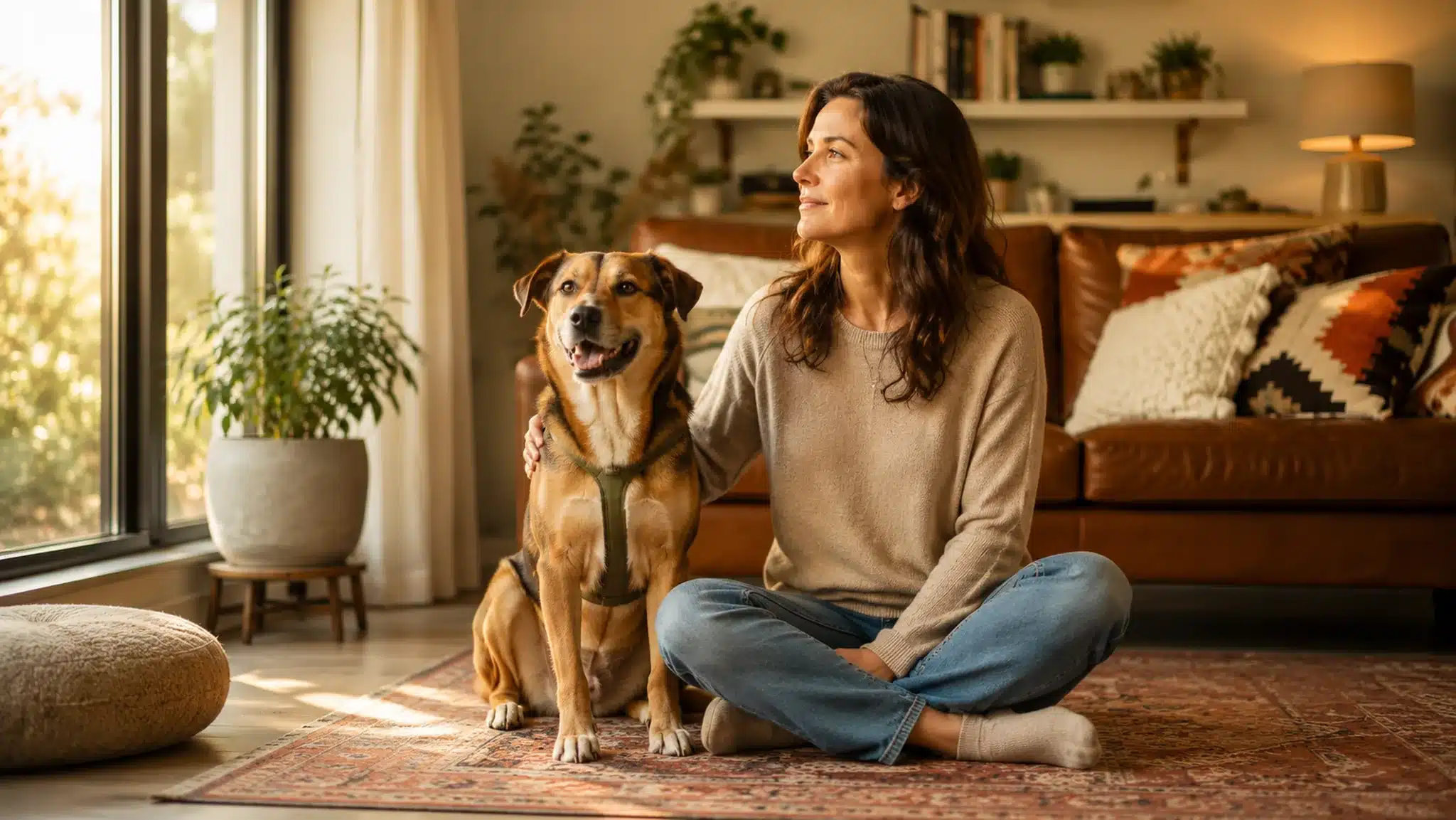
Certified Canine Behaviorist · Virtual Consultations Nationwide
Dog Aggression Training and Behavior Help From a Certified Canine Behaviorist
Force-free, science-based behavior modification for dogs who growl, lunge, snap, bite, guard resources, or fight with other dogs. Virtual consultations available nationwide.
Will Bangura, M.S., CAB-ICB, CBCC-KA, CPDT-KA, FDM, FFCP · More than 35 years working with serious aggression, anxiety, and reactivity cases
No shock collars. No prong collars. No intimidation. Safety-first behavior modification.
If you are searching for dog training for aggression because your dog is growling, lunging, snapping, biting, guarding food or toys, or fighting with another dog in your home, you are in the right place, and you are not a bad pet parent. Aggression is the most misunderstood behavior problem in dogs, and the most mishandled. It is not defiance. It is not dominance. It is almost always fear, anxiety, frustration, or pain wearing a frightening disguise.
That distinction matters, because it changes everything about how aggression gets resolved. Serious aggression does not improve through obedience commands, corrections, intimidation, or shock collars. It improves when you change how your dog feels about the situations that trigger it. That is behavior modification, it is what I do every day, and it works whether you live here in Arizona or anywhere else in the country through a virtual behavior consultation.
On This Page
Understanding the Problem
What Dog Aggression Really Is
Dog aggression is a set of distance-increasing behaviors, growling, snapping, lunging, and biting, that a dog uses when they feel threatened, trapped, or forced to defend something they value. It is a survival response driven by emotion, usually fear or anxiety. It is not a character flaw, and it is not a bid for dominance.
Pet parents tell me the same things over and over. I am scared of my own dog. We can't have anyone over anymore. He is a completely different dog on leash. She was fine for years and then bit out of nowhere. If any of that sounds familiar, I want you to hear something first: your dog is not broken, and neither are you. Aggression is your dog's emergency communication system. It appears when a dog believes, rightly or wrongly, that something bad is about to happen and that they have no other way out.
And it almost never actually comes out of nowhere. Long before a growl or a bite, most dogs send quieter signals that something is wrong: a lip lick with no food around, turning the head away, going suddenly still, a stiffening body, the whites of the eyes showing. Families miss these signals not because they don't care, but because nobody ever taught them the language. Learning to see them is often the first thing that makes a home feel safer, because it gives you time to act before your dog feels forced to escalate.
Early Warning Signs Most Families Miss

Lip Licking

Whale Eye

Freezing

Body Stiffening
Most dogs warn long before they growl or bite. Learning these early signals is the first step in preventing aggression.
The Most Common Dead End
Why Obedience Alone Does Not Resolve Serious Aggression
Obedience training teaches a dog what to do. It does not change how a dog feels. Aggression is an emotional problem, so a dog can hold a flawless sit, know every command, and still bite, because the fear underneath was never addressed. That is why obedience classes and board-and-train programs so often fail aggressive dogs.
Most families who reach me have already tried something. A group class. A board-and-train. A trainer who promised results with an e-collar. When it didn't hold, many of them concluded that they failed, or worse, that their dog is beyond help. Neither is true. They were simply handed the wrong tool for the job. Teaching commands to an aggressive dog is like teaching multiplication tables to a child having a panic attack. The skill isn't the problem. The emotional state is.
Resolving aggression requires working at the level where aggression actually lives: the emotions of fear, anxiety, and frustration, the situations that trigger them, and the learning history that taught your dog that aggression works. That is a fundamentally different discipline from obedience training, and it is the discipline this page is about.
Where Aggression Shows Up
Types of Dog Aggression I Help With
Behavior help and training for aggressive dogs is never one-size-fits-all, because aggression is not one thing. The plan for a dog guarding a food bowl looks nothing like the plan for two dogs fighting in the same household. These are the case types I work with most, locally in the Phoenix area and nationwide by virtual consultation.
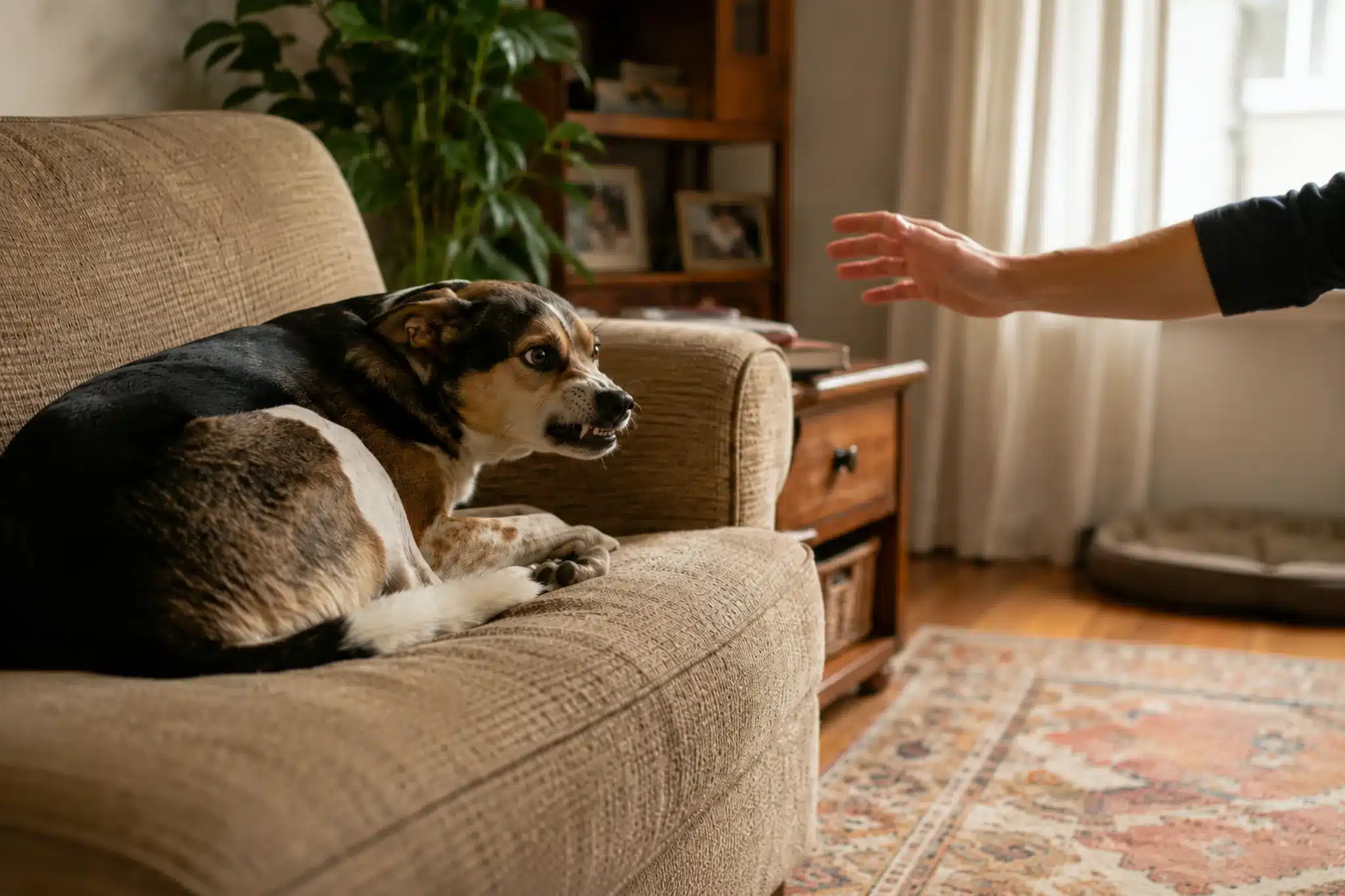
Aggression Toward Family Members
Growling, snapping, or biting directed at the people your dog lives with, often around handling, being moved off furniture, being approached while resting, or interactions with children. Frequently the most heartbreaking and the most misread form of aggression.
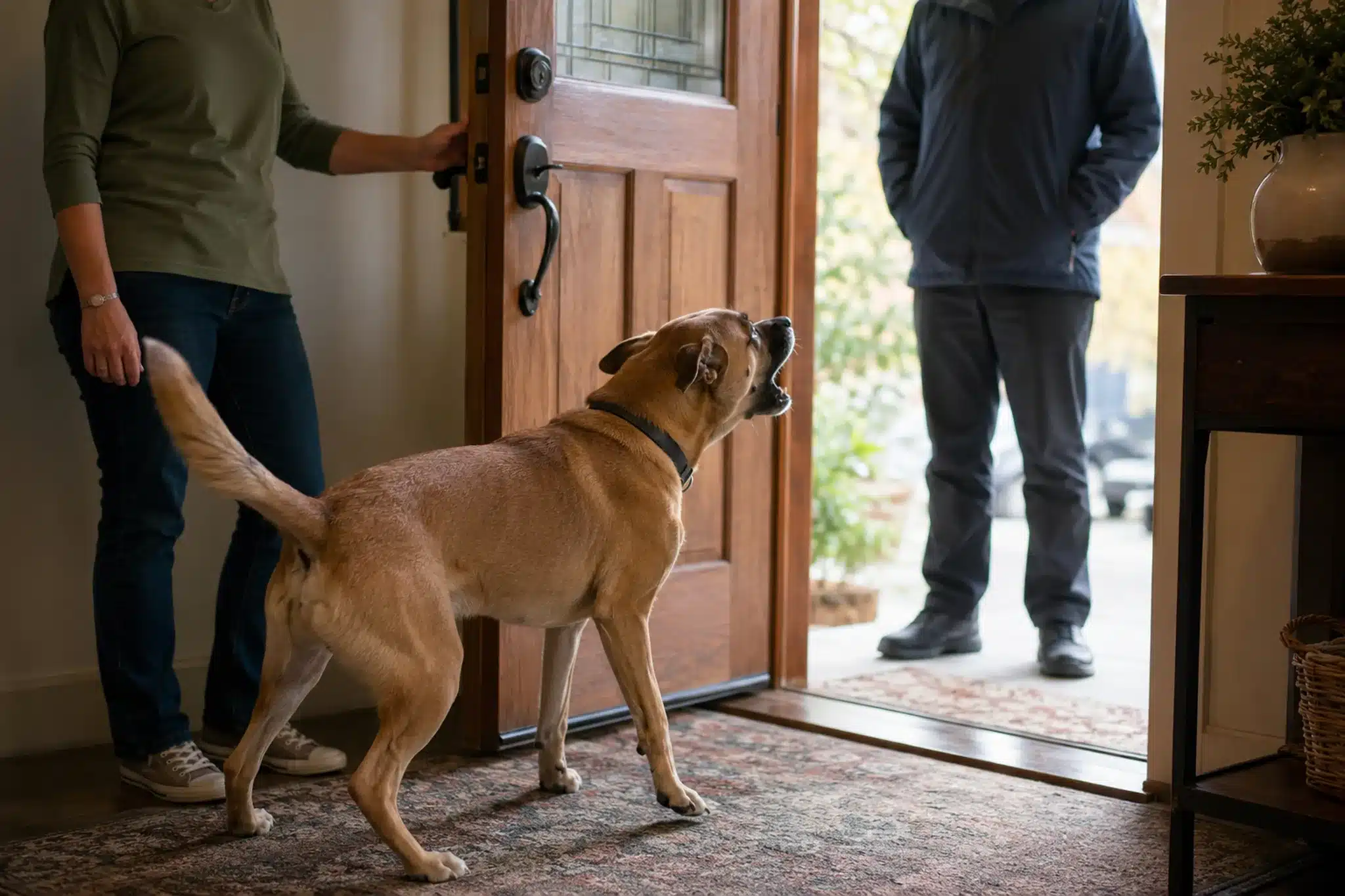
Aggression Toward Strangers and Visitors
Dogs who charge the door, can't settle with guests in the home, or target unfamiliar people on walks. Usually fear-based, even when it looks confident, and highly responsive to structured behavior modification.
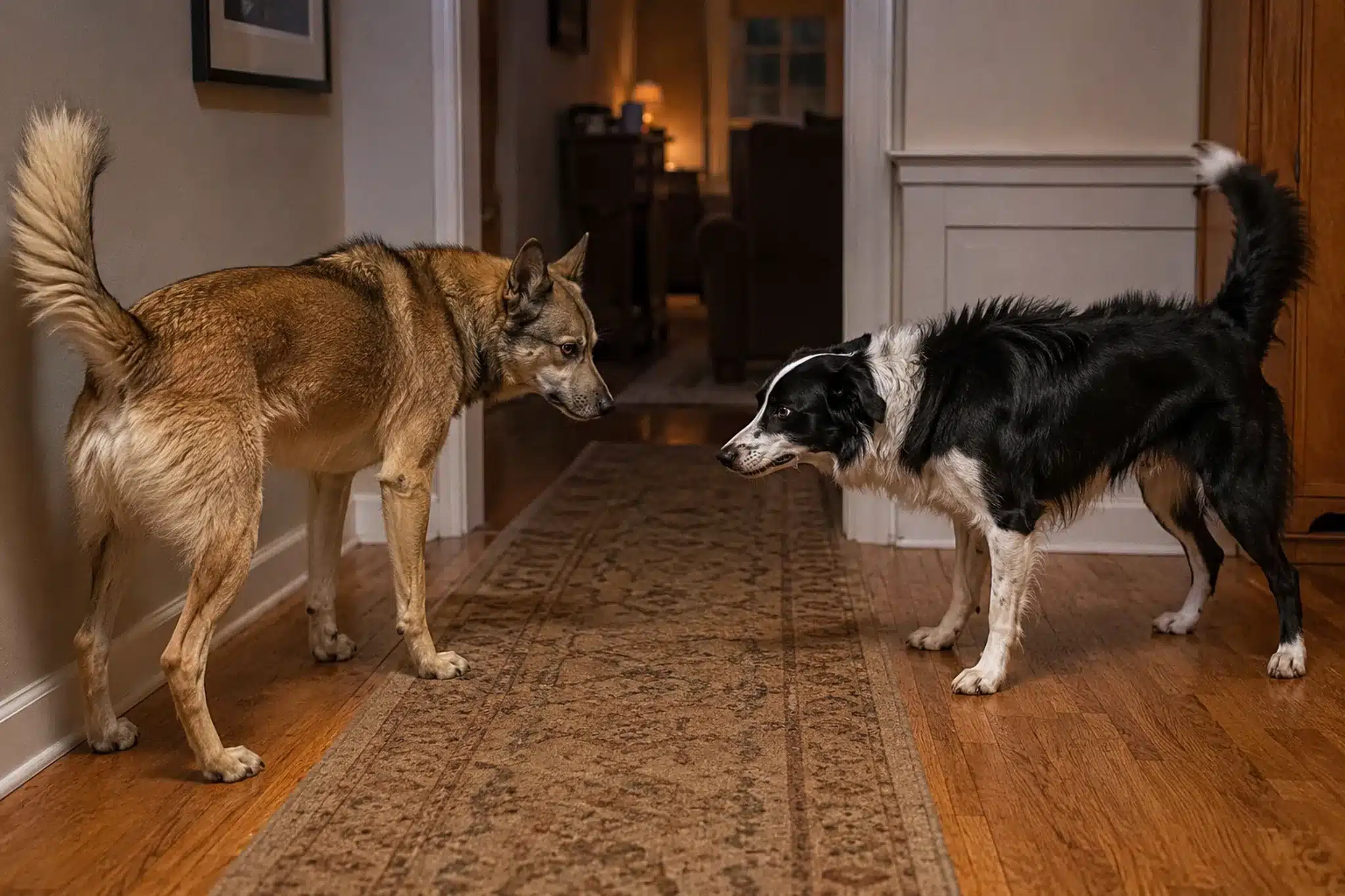
Dog-to-Dog Aggression and Dogs Fighting at Home
Conflict with unfamiliar dogs, or repeated fights between dogs in the same household, one of the most stressful situations a family can live with. These cases demand careful assessment, management, and a staged reintroduction plan.
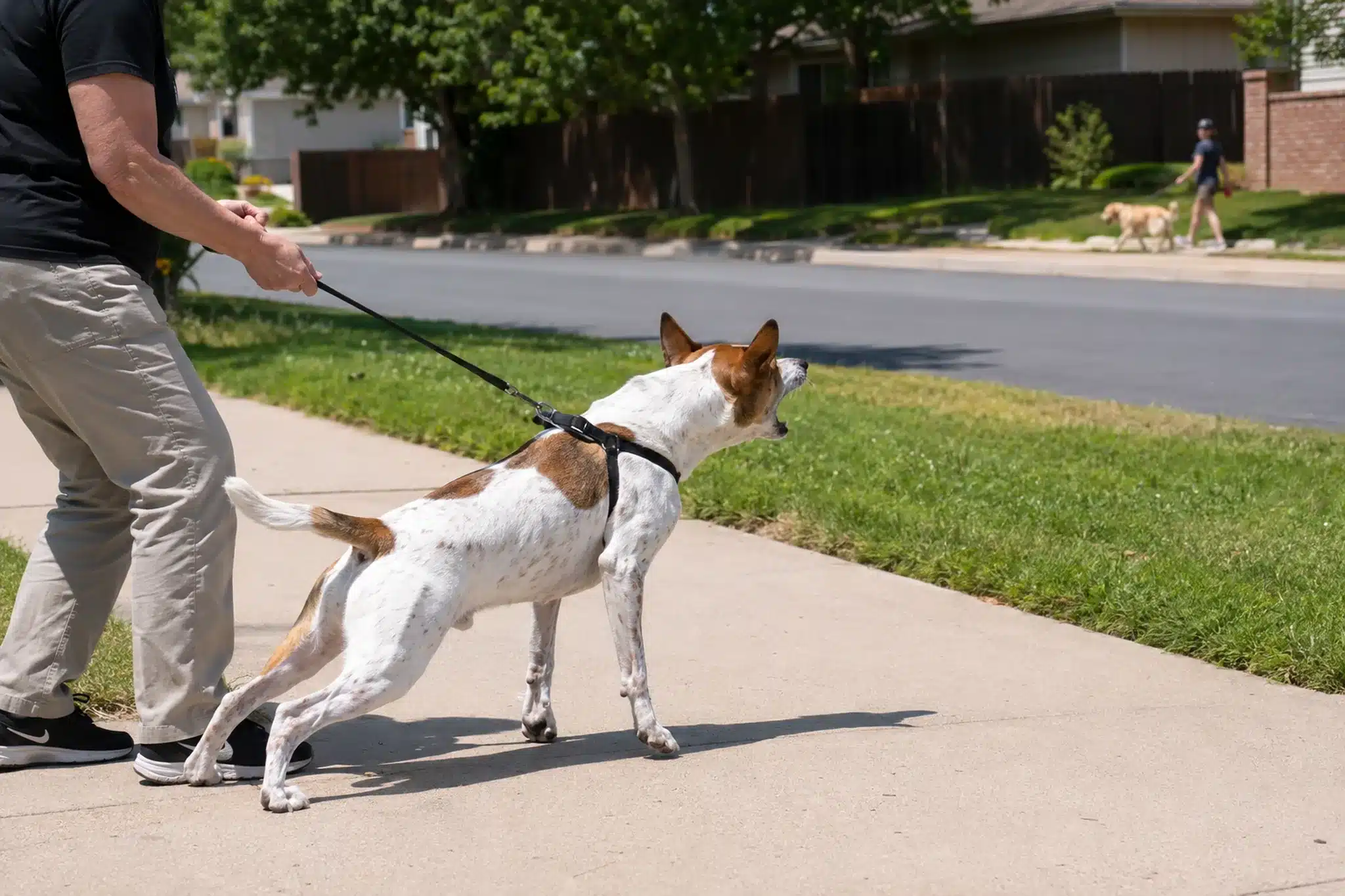
Leash Reactivity and Leash Aggression
The dog who is friendly off leash but explodes at the sight of another dog or person on walks. Frustration and fear on a leash look frightening, and they respond well when the work happens under threshold instead of through confrontation.
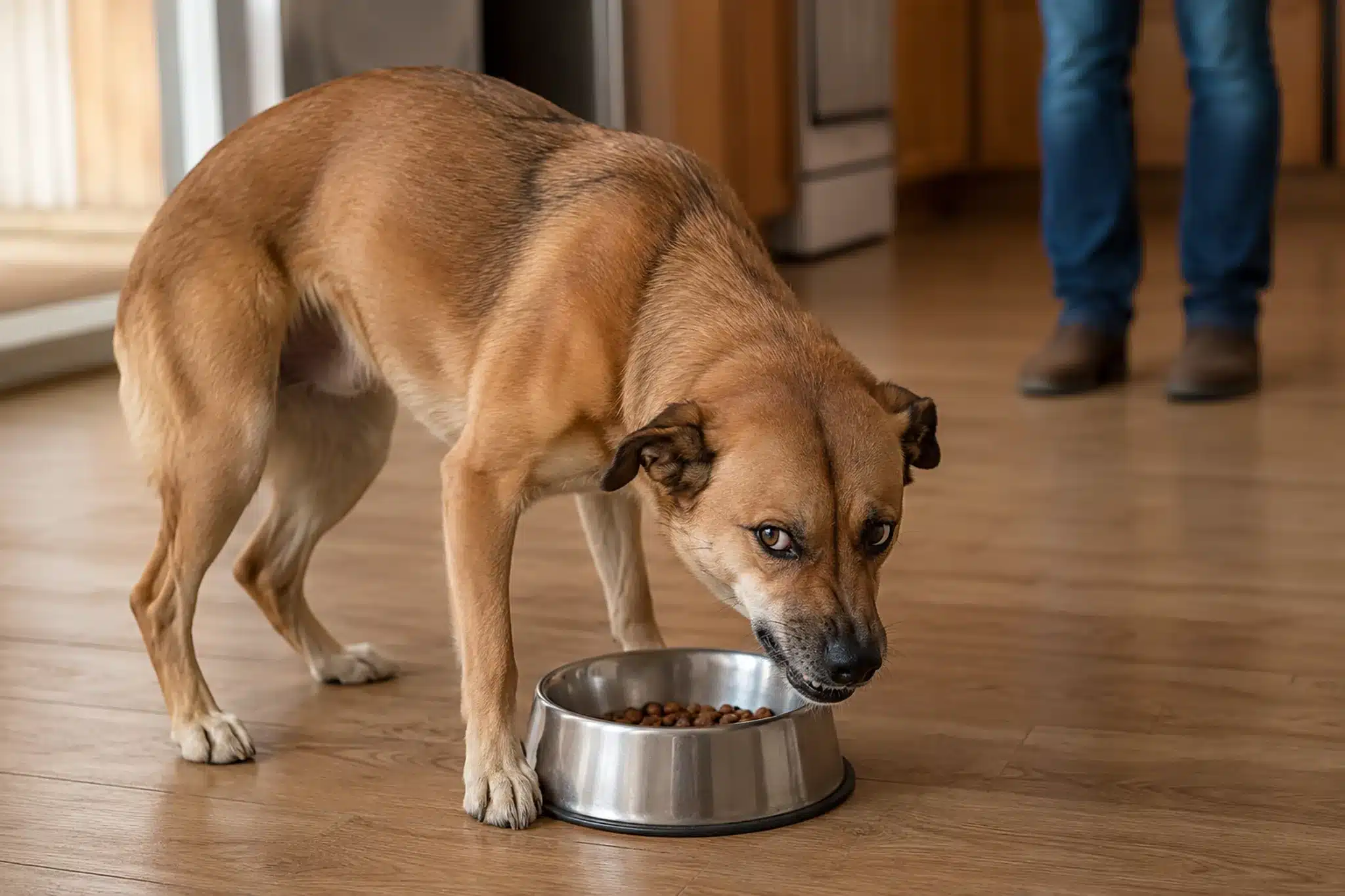
Resource Guarding
Stiffening, growling, or biting around food, bones, toys, stolen items, resting spots, or even a favorite person. Guarding is a normal canine behavior that has crossed a safety line, and it is one of the most treatable forms of aggression when handled correctly.
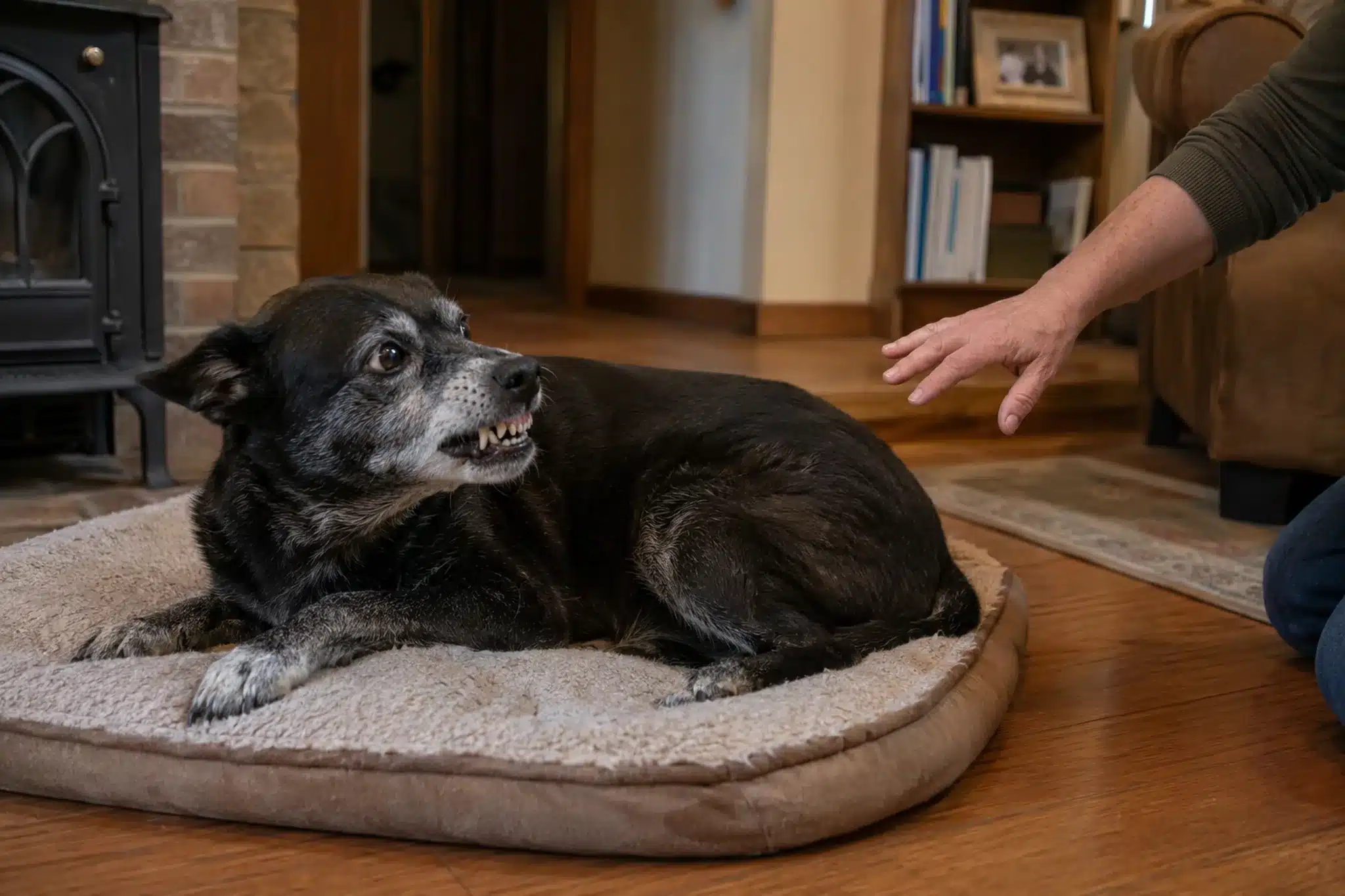
Sudden and Pain-Related Aggression
When a previously easygoing dog changes quickly, pain and medical factors move to the top of the list. These cases begin with veterinary collaboration to rule out or treat what the body may be contributing to the behavior.
What Not to Do
Why Punishment, Shock Collars, and Board-and-Train Can Make Aggression Worse
Punishment can suppress the warning signs of aggression, the growl, the stiffening, the hard stare, without changing the fear underneath. The dog looks better and feels worse. That is how families end up with a dog who bites without warning. Research links confrontational and aversive methods to increased aggressive responses, fear, and stress in dogs.
Here is the honest mechanics of it. Shock collars, prong collars, and corrections work, when they work at all, by making your dog feel pain or fear at the exact moment they were already afraid. You cannot punish fear out of a dog. You can only teach the dog to hide it. Suppressing a growl is like taking the batteries out of a smoke detector: the house is still on fire, you just lost the alarm.
There is a simple logic test I ask every pet parent to hold onto. Either a tool is aversive, meaning it works through pain, discomfort, or fear, and carries the welfare costs and aggression risks that come with that, or it is not aversive, in which case it is not what changed the behavior. There is no third option, no matter how the marketing describes it.
Board-and-train programs deserve their own caution for aggression cases. Aggression lives in specific relationships, triggers, and environments, which is exactly what a facility removes. Many dogs behave differently in a kennel setting, appear improved, and resume the old behavior within weeks of coming home, sometimes with new fears attached, because you cannot see what methods were used behind closed doors. For aggression, the work has to happen where the problem happens, with the people it happens to.
The Path That Works
How Force-Free Behavior Modification Works
Effective aggression treatment follows a clinical sequence: a functional behavior assessment to identify why the aggression happens, immediate management and safety planning so nobody gets hurt and the behavior stops being rehearsed, skill building to give your dog better options, and systematic desensitization with counterconditioning to change the emotion driving it all.
It starts with a functional behavior assessment
Before anything gets trained, the behavior gets understood. A functional behavior assessment maps exactly what happens before, during, and after your dog's aggressive episodes: the triggers, the distances, the body language, the outcomes that have been reinforcing the behavior, and the medical questions that need a veterinarian's eyes. Aggression always has a function. Once I know what your dog is trying to accomplish, growling to make the stranger back away, guarding to keep the resource, I can build a plan that gives your dog a better way to get safety.
Management and safety come before training
The fastest change in an aggression case is not training at all. It is arranging life so the aggression stops being practiced: managing distance, gates, and routines so your dog isn't pushed past their limit while you and I work. Every rehearsal of aggression strengthens it, and every peaceful week weakens it.
This is also where I will talk with you about muzzle training, and I want to reframe it now, because most families flinch at the word. A well-fitted basket muzzle, taught with treats until your dog is genuinely happy to wear it, is not a mark of a bad dog and not a punishment. It is a seatbelt: a safety tool that makes it possible to train in real situations sooner, protects everyone while your dog learns, and takes the fear out of the room for you, which your dog can feel.

Then the emotion changes, not just the behavior
The heart of the work is systematic desensitization and counterconditioning. In plain language: I coach you through exposing your dog to their trigger at a distance or intensity low enough that they notice it but stay calm, what behavior professionals call staying under threshold, and pairing that safe version of the trigger with things your dog genuinely loves. Repeated correctly, the trigger's meaning changes at the emotional level. The stranger stops predicting danger and starts predicting good things. When the fear shrinks, the aggression it powered shrinks with it. Alongside that, you'll reinforce the calm, alternative behaviors you actually want, so your dog has a practiced answer that isn't aggression.

An honest word about timelines and outcomes
Anyone who promises to cure aggression in a weekend is describing suppression, not change. Real behavior modification is measured in weeks and months, with clear criteria for each step forward. And honesty matters here: serious aggression is managed and improved, often dramatically, rather than erased with a guarantee. Most families see meaningful change, a safer home, a calmer dog, and confidence in handling situations that used to end badly. What you will always get from me is a truthful assessment of your dog's case, including the hard conversations if they're ever needed, delivered without judgment.
Help Wherever You Live
Do Virtual Consultations Work for Dog Aggression?
Yes, and for aggression they are often the better format, not a compromise. Your dog behaves naturally at home instead of reacting to a stranger in the room, nobody is put at risk, and aggression work is primarily coaching you, the person who lives with the dog, which video does exceptionally well.
Families are often skeptical of this until they experience it, so here is why it works. In an aggression case, a new person entering your home is not a neutral event, it is often the trigger itself. On video, I can watch your dog's real behavior in the real environment, review footage of past incidents frame by frame, see the exact hallway or gate or food bowl where things go wrong, and coach you through the protocol live, with your dog fully under threshold because I am not physically there to push them over it.
It also means geography stops deciding what help your family gets. Qualified aggression specialists are rare, and for many families the nearest one is hundreds of miles away. Virtual consultations bring the same assessment, the same behavior modification planning, and the same follow-up support to your living room, wherever in the country that is. Phoenix-area families can also choose an in-home consultation, and many of my local cases combine both.

Your First Step
What to Expect in a 90 to 120 Minute Initial Behavior Consultation
The initial consultation is a working clinical session, not a sales call. You and I go through your dog's complete history: the incidents, the triggers, the early signals you may not have known to look for, the medical picture, and everything that has been tried before. If you have video of the behavior, we review it together. From there I conduct the functional behavior assessment, and you leave the session with three things in hand: an honest read on what is driving your dog's aggression, an immediate safety and management plan you can start the same day, and the beginning of your structured behavior modification plan, with follow-up support mapped out.
Two things I want you to know before you book. First, nothing you tell me will shock me, and nothing will be met with judgment; after more than 35 years of aggression cases, I promise your situation is not the worst I've seen, and feeling embarrassed has kept too many families from getting help too long. Second, you do not need to wait for the next bite to act. The best time to start is before the incident that forces the decision, whether that is a baby on the way, a letter from the landlord, or simply being tired of living on edge.
Evidence, Not Opinion
The Science and Standards Behind This Approach
Force-free is not a philosophy or a branding choice. It is the position of mainstream behavioral science. The American Veterinary Society of Animal Behavior states that reward-based methods should be used for behavior modification and that aversive methods are unnecessary for treating behavior problems. Decades of peer-reviewed research converge on the same conclusions: confrontational and aversive methods increase aggressive responses and stress, while reward-based work changes behavior without the fallout.
AVSAB Position Statement on Humane Dog Training

"...no evidence that aversive training is necessary for dog training or behavior modification." (AVSAB, 2021)
Download the Position Statement (PDF)2009
Herron, Shofer & Reisner · Applied Animal Behaviour Science
Confrontational techniques, including hitting, alpha rolls, and growl corrections, elicited aggressive responses in a quarter or more of the dogs they were used on.
doi.org/10.1016/j.applanim.2008.12.0112014
Casey et al. · Applied Animal Behaviour Science
Dogs trained with punishment-based methods had significantly higher odds of aggression toward both family members and unfamiliar people.
doi.org/10.1016/j.applanim.2013.12.0032020
Vieira de Castro et al. · PLOS ONE
Dogs trained with aversive methods showed higher stress behaviors and cortisol, and more pessimistic emotional states that persisted outside of training.
doi.org/10.1371/journal.pone.02250232020
China, Mills & Cooper · Frontiers in Veterinary Science
Reward-based training outperformed electronic collar training even for the off-leash problems e-collars are marketed for.
doi.org/10.3389/fvets.2020.00508This is a small sample of a much larger body of converging evidence across studies, countries, and methodologies. You can explore the full research library on this site for the extended citation set, including the complete policy paper, studies playbook, and jurisdiction record.
Meet Your Behaviorist
Meet Will Bangura, M.S., CAB-ICB

Will Bangura, M.S., CAB-ICB, CBCC-KA, CPDT-KA, FDM, FFCP, is a Certified Canine Behaviorist specializing in severe aggression, anxiety, fear, reactivity, phobias, and compulsive disorders. Accredited through International Canine Behaviourists, he is one of only three ICB-certified canine behaviorists in the United States and the only one in Arizona, per the ICB public member directory. For more than 35 years he has worked with the cases many trainers turn away, collaborating with veterinarians when pain or medical factors play a role. He is the author of Sniff to Soothe, with a foreword by Emma Parsons, and the host of the Dog Training Today podcast, with listeners in more than 100 countries.
Praise From the Field's Leading Experts
What Leading Behavior Experts Say About Will Bangura's Work
"Will Bangura has nailed the WHY and the HOW of using scent exercises to help fearful and/or reactive dogs... it's going to be a classic, and it's going to help thousands of dogs and the people who love them."
Dr. Patricia McConnell, PhD, Emeritus CAAB · Certified Applied Animal Behaviorist, author of The Other End of the Leash
"Sniff to Soothe is a remarkable contribution to the field of applied animal behavior."
Dr. Christopher Pachel, DVM, DACVB · Board Certified Veterinary Behaviorist, Animal Behavior Clinic, Portland, Oregon
"From the moment I read the title of this book, Sniff to Soothe, I knew it was going to be revolutionary."
Emma M. Parsons, BA, KPA-CPT, CBDC · Author of Click to Calm: Healing the Aggressive Dog
Straight Answers
Frequently Asked Questions
Can aggressive dogs be helped?
Yes. The large majority of aggression cases improve meaningfully with a proper functional behavior assessment, management, and systematic behavior modification. Improvement means fewer incidents, lower intensity, more warning, and a safer, calmer home. Honest framing matters: aggression is managed and improved rather than cured with a guarantee, and any professional promising a guaranteed cure is describing suppression.
Is dog aggression the same as dominance?
No. The dominance explanation of aggression has been rejected by mainstream behavioral science. Aggression is almost always driven by fear, anxiety, frustration, pain, or learned defensive strategies, not a bid to rule the household. This matters practically, because dominance-based confrontation is precisely the approach research links to increased aggression.
Do you use shock collars, prong collars, or corrections?
Never. All of my work is force-free and evidence-based. Aversive tools work through pain and fear when they work at all, which suppresses warning signals, increases stress, and raises the risk of aggression. The behavior change I build with you comes from changing your dog's emotional response and reinforcing better options, which is safer and more durable.
Does virtual dog aggression training really work?
Yes, and for aggression it is often the safer and more effective format. Your dog stays under threshold because no stranger enters the home, I see the real behavior in the real environment, and the person who most needs coaching, you, gets coached directly. Families nationwide complete full behavior modification programs by video.
What happens during the first 90 to 120 minute consultation?
A complete history, video review when available, a functional behavior assessment, and a same-day safety and management plan, followed by the start of your structured behavior modification plan and a follow-up path. It is a working clinical session, and you leave with things you can do immediately.
Should I see a veterinarian or a veterinary behaviorist?
Often, yes, and I will tell you plainly when. Sudden behavior change, aggression with a possible pain component, and cases that may benefit from behavior medication all call for veterinary collaboration. I work alongside veterinarians and veterinary behaviorists routinely, and ruling out medical contributors is a standard early step in my assessments.
What if my dog has already bitten someone?
You still have good options, and acting now is what matters. A bite means the behavior has been rehearsed to its endpoint, so I prioritize immediate management and safety planning first, then address the underlying emotion driving the behavior. Many of my most successful cases began after a bite. Bring the details to a free call and I will give you an honest read.
How long does behavior modification take?
Most families see early wins within weeks, from management and the first protocol steps, while durable emotional change typically unfolds over a few months, depending on the dog's history, the triggers, and consistency between sessions. Anyone quoting a fixed number of sessions before assessing your dog is guessing.
Can you help with dogs fighting in the same home?
Yes. Household dog-to-dog aggression is one of my most common case types. The work involves careful assessment of both dogs, strict management to stop rehearsal, individual work with each dog, and a staged, criteria-based reintroduction. These cases are stressful and very workable, and they respond poorly to punishment and forced togetherness.
Can you help with resource guarding?
Yes, and resource guarding is among the most treatable forms of aggression when handled correctly. The approach is counterintuitive for most families: you stop taking things away, the confrontation that fuels the guarding disappears, and your dog learns through structured protocols that people approaching their valuables predict good things, not loss.
Take the First Step Today
Get Help for Your Dog's Aggression
Start with a free 15-minute call, no judgment and no pressure, and get an honest read on your dog's situation. Or book your initial behavior consultation now, virtually from anywhere in the country, or in your home in the Phoenix area.
Behavior consultations are educational and behavioral in nature and are not a substitute for veterinary care. When pain, illness, or medication questions may be involved, I will refer you to, and collaborate with, your veterinarian or a veterinary behaviorist.