
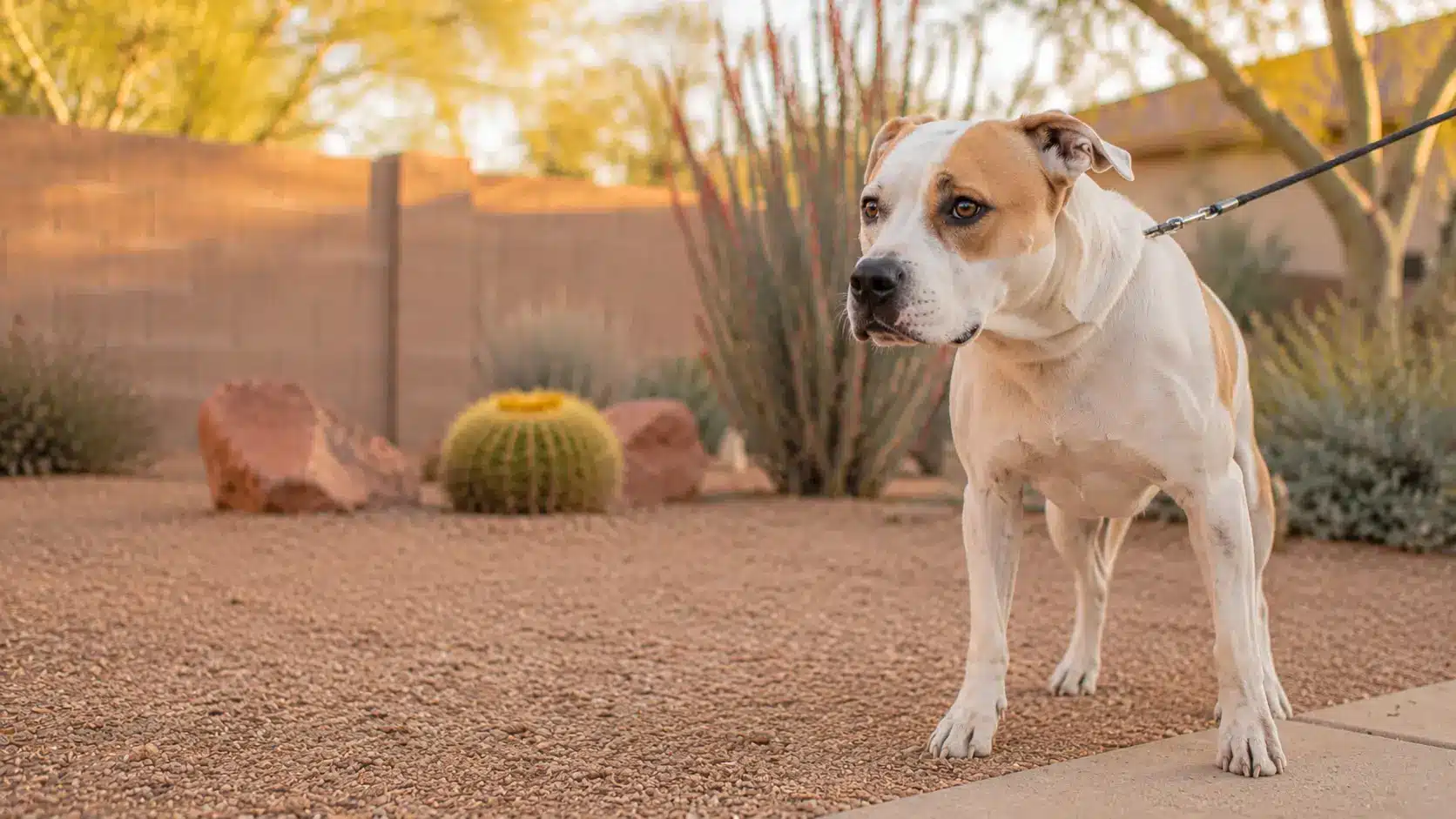
Aggressive Dog Training in Phoenix with Certified Canine Behaviorist Will Bangura
If your dog lunges, growls, snaps, bites, or shows other aggressive behavior, you are living with a kind of stress most people never see. Most aggression is driven by fear, anxiety, or frustration, not defiance, and that means it can be changed. As a Phoenix dog aggression specialist, I help pet parents find the real cause and build a calmer, safer life with their dog, using evidence-based, force-free aggression training and behavior modification.
No shock. No prong. No fear.

Will Bangura, M.S., CAB-ICB
CBCC-KA, CPDT-KA, FDM, FFCP
Arizona's only CAB-ICB Certified Canine Behaviorist through International Canine Behaviourists, and one of only three in the United States, with more than 35 years of experience working with severe aggression, reactivity, and complex canine behavior cases.
By identifying the underlying causes of aggression and other behavior problems and improving emotional regulation, Will helps pet parents across Phoenix build safer, calmer, and more predictable relationships with their dogs.
M.S.
Psychology, Behavioral Focus
CAB-ICB
Certified Canine Behaviorist
CBCC-KA
Certified Behavior Consultant Canine
CPDT-KA
Certified Professional Dog Trainer
FDM
Applied Ethology / Family Dog Mediation
FFCP
Fear Free Certified Professional


Types of Aggression and Reactivity We Treat
Aggression is not one thing. It shows up in distinct patterns, each with its own triggers and its own path to change. These are the ones we see and treat most often.
Fear-Based Aggression
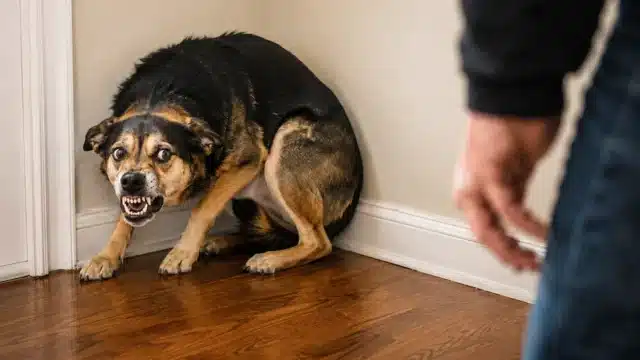
The most common root of them all. A frightened dog uses distance-creating behavior, growling, snapping, lunging, to make a perceived threat go away. It can look like confidence, but underneath it is almost always fear.
Leash Reactivity
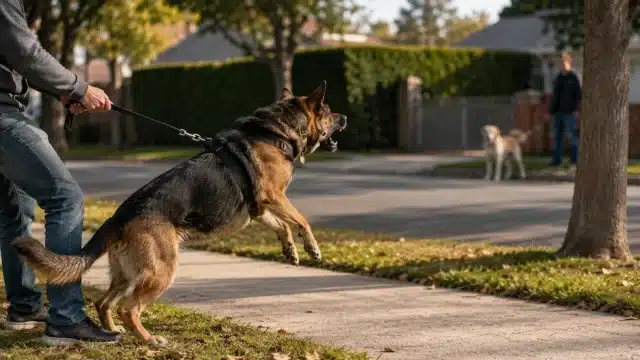
Barking, lunging, and straining at the sight of another dog or a person while on leash. The leash takes away your dog's ability to create distance, and that trapped feeling turns into an explosive display.
Aggression Toward Other Dogs
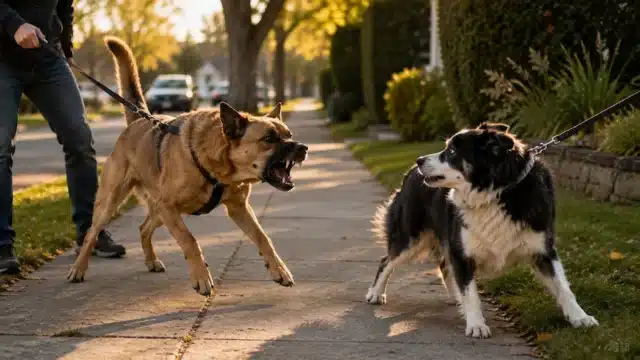
Tension, threats, or fights with other dogs, on walks, at the park, or between dogs in the same home. It is usually driven by fear, frustration, or past bad experiences, not by a dog simply being mean.
Aggression Toward People
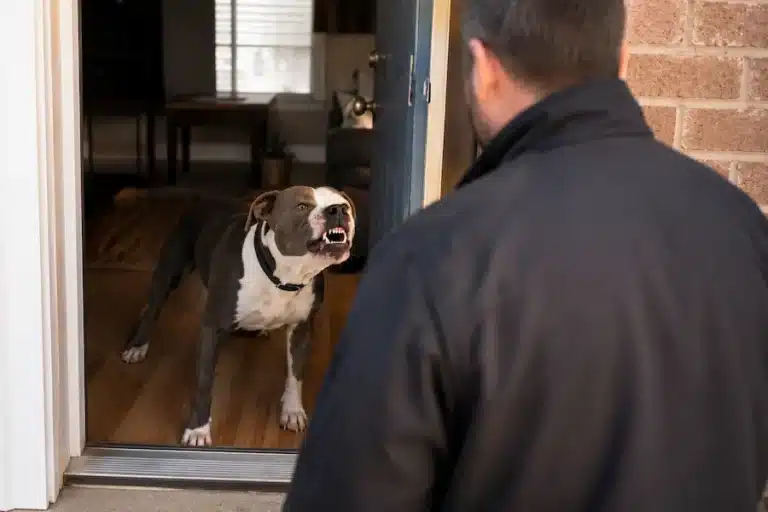
Growling, snapping, or biting aimed at strangers, guests, the mail carrier, or even family. Most often it is rooted in fear or in guarding territory, and punishment almost always makes it worse.
Resource Guarding
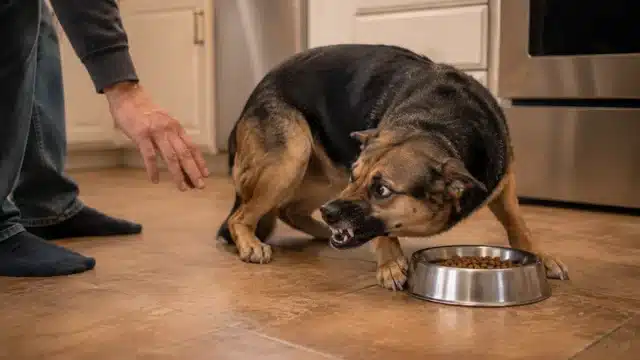
Stiffening, growling, snapping, or biting to protect food, toys, chews, resting spots, or a favorite person. It is a normal canine instinct that has tipped into a problem, and it responds well to the right resource guarding protocol.
Dogs Fighting at Home
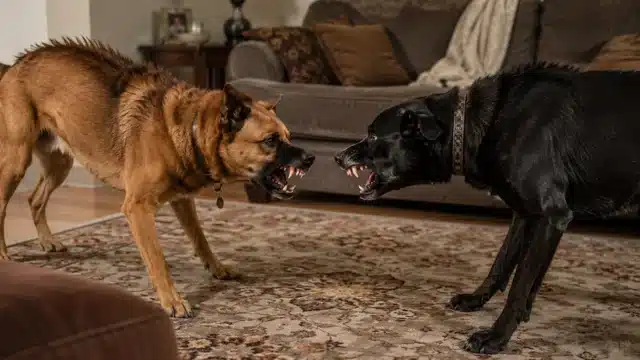
Two or more dogs in the same home who fight, threaten, or can no longer safely share space, sometimes littermates, sometimes dogs who once got along. It usually traces to guarding between them, tension over space, or arousal that spills into a fight, and the pattern tends to escalate without a structured plan.
We also work with territorial, predatory, redirected, pain-related, and compulsive presentations. If your dog's behavior does not fit neatly into one box, that is normal, and the assessment is exactly where we pin down what is driving it.
Which Situation Sounds Most Like Yours?
Aggression and reactivity rarely look the same from one dog to the next. See which of these sounds most like what you are living with, and jump straight to how we help.
My dog lunges and barks on walks
Walks have become something you brace for. The moment another dog, or a person, comes into view, your dog erupts, lunging, barking, and spinning at the end of the leash, and nothing you say seems to reach them.
See how we help →My dog goes after other dogs
Whether it happens on leash, at the park, or even with another dog in your own home, your dog escalates fast, and you live with the fear that next time it ends in an injury.
See how we help →My dog is aggressive toward people
Guests, strangers, the mail carrier, sometimes even family. Your dog growls, snaps, or lunges at people, so you are always managing who comes near and quietly bracing for what might happen.
See how we help →My dog guards food, toys, or space
Your dog stiffens, growls, or snaps when anyone gets close to their food, a favorite toy, a spot on the couch, or a person they have claimed, and you have learned to move carefully around it.
See how we help →Not sure, or seeing more than one of these? That is common, and we will sort out exactly what is going on in your consultation.
When Should You Seek Professional Help?
If you landed here right after something happened, a bite, a fight, a moment that scared you, take a breath. Recognizing that something is wrong is the hardest and most important step, and you have already taken it.
It is time to bring in a professional if any of these sound familiar:
And if none of these fit exactly but something still feels off, trust that instinct. You don't have to wait for a serious bite or a bad incident to ask for help. A behavior consultation can tell you how serious this really is, and exactly what to do next.
Aggression, Anxiety, and Reactivity, Explained
A few minutes with Will Bangura, M.S., CAB-ICB, on what is actually driving your dog's behavior, and what it takes to change it.
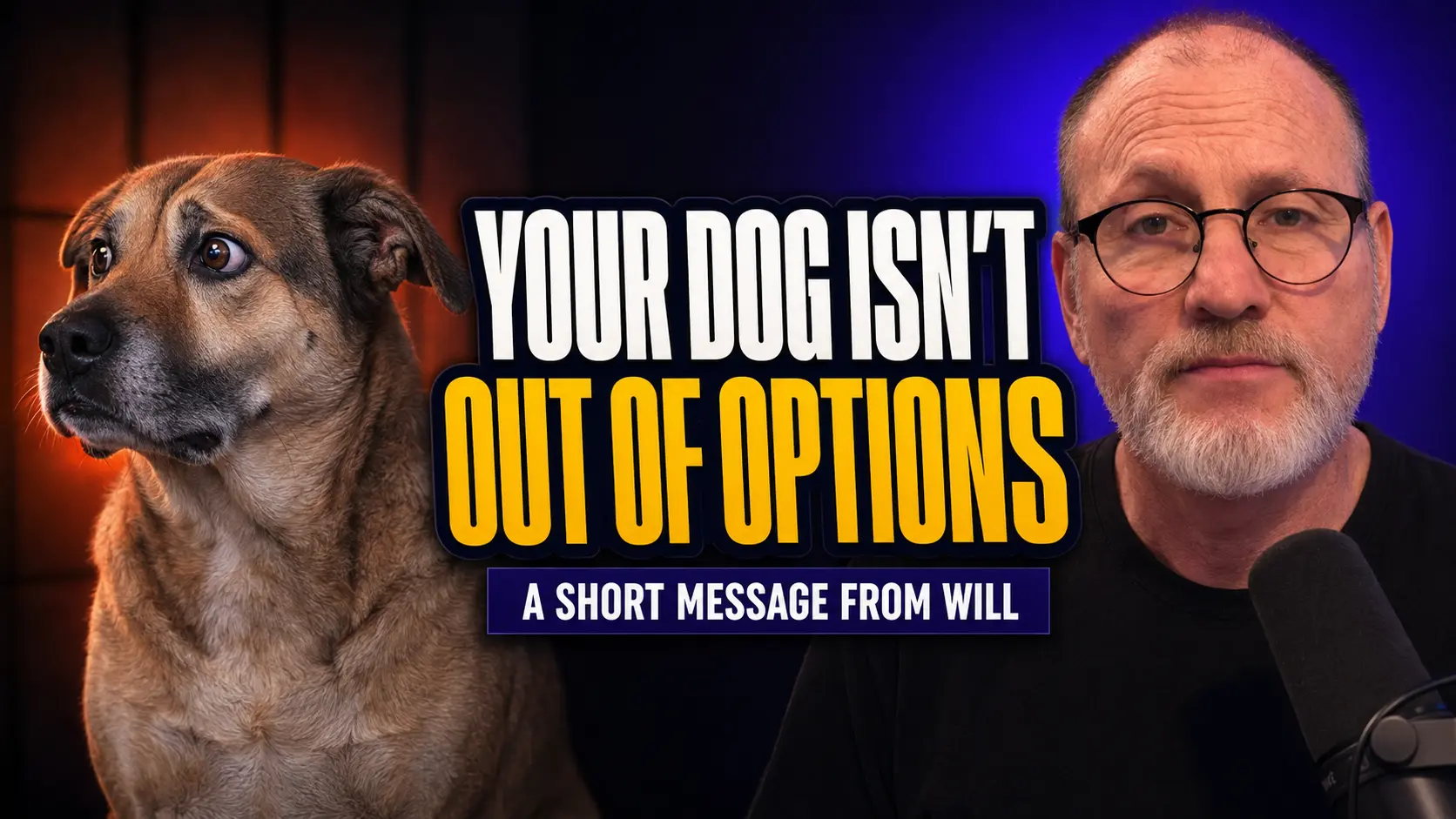
The 3 Things to Understand About Aggression and Reactivity
Before you begin any training, take a few minutes for this. I walk through the three things that matter most about reactivity and aggression, and why understanding them first changes how everything else works.
Press play below. It runs about 14 minutes, and it is the best place to start.
Why Dogs Become Aggressive
Aggression is rarely random, and it is almost never about dominance. It follows a chain. Something triggers your dog, that trigger produces an emotion, and the emotion drives what your dog does next. Once you can see the chain, the behavior stops looking like defiance and starts looking like what it actually is: a response your dog cannot yet control.
The Trigger
Something sets your dog off
Every episode starts with a trigger, something in the environment your dog reads as threatening, unsafe, or frustrating. To your dog it is real, even when it looks harmless to you.
Common triggers: a stranger reaching toward them, another dog appearing on leash, a hand near the food bowl or a favorite item, being cornered or restrained, or pain and discomfort.
The Emotion (the part you can't see)
The brain's alarm system fires
That trigger sets off the threat and stress systems in your dog's brain and body. In a fraction of a second your dog feels fear, anxiety, frustration, or the sense of being trapped. This is the part you cannot see, and it is the part that decides what happens next.
Underneath it all: fear, anxiety, frustration, panic, the feeling of being cornered.
The Behavior (what you see)
Your dog acts to make the threat go away
What you finally see is your dog doing whatever has worked before to create distance or end the threat. It is not defiance and it is not dominance. It is the visible result of the emotion underneath.
What it looks like: freezing, hard staring, growling, snarling, snapping, lunging, or biting.
Most Aggression Is Not About Dominance
One of the most damaging myths in dog training is that aggression comes from a dog trying to be dominant. It does not. The science on this is settled, a conclusion echoed by the American Veterinary Society of Animal Behavior, and getting it right changes everything about how you help your dog.
Outdated
The Old Story: Dominance
Evidence-Based
What the Science Shows: Emotion
Your dog is not trying to dominate you. Your dog is trying to feel safe. Once you treat the emotion instead of fighting for control, real and lasting change becomes possible.
Watch: Fear, Not Dominance
In the short video below, I explain why aggression toward people that looks like dominance is almost always fear, and why punishing the growl or the lunge can backfire: silence the warning signs without changing the fear underneath, and you risk a dog that bites without warning.
Why Aggression Needs a Behaviorist, Not Just a Trainer
Aggression isn't an obedience problem. It's an emotional one.
Most training teaches a dog what to do: sit, stay, heel, come. That work matters, and for manners and obedience a good trainer is exactly right. But aggression isn't a dog who never learned the rules. It's a dog who feels afraid, anxious, or cornered, and no amount of obedience changes how a dog feels.

A Dog Trainer
Teaches your dog what to do, sit, stay, heel, recall, the manners of everyday life.
Right for obedienceA Certified Canine Behaviorist
Finds the emotion driving the behavior, the fear, the trigger, the stress underneath, and changes it.
Right for aggressionFor aggression, that difference is everything. You don't need your dog drilled on commands. You need someone who can reach what is actually fueling the behavior.
Why Punishment and Aversive Tools Make Aggression Worse
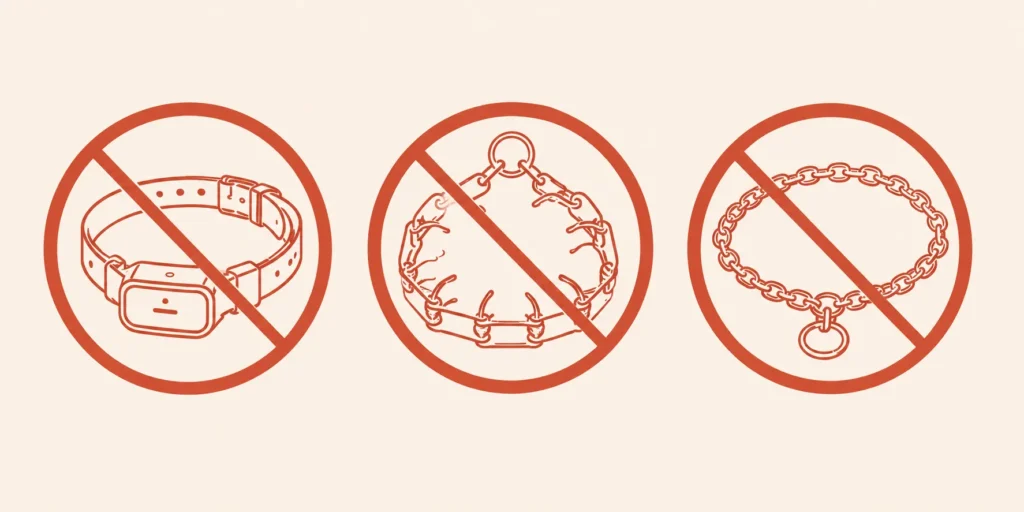
When your dog reacts, you can respond in one of two ways, and they could not be more different. One silences the behavior. The other changes the reason it is happening. Only one of them actually helps your dog.
Suppression
Punishment and Aversive Tools
Shock, prong, choke, and harsh corrections
These work by adding pain, fear, or discomfort until the behavior stops. The outburst goes quiet, but the fear, anxiety, or frustration driving it is still there, and often stronger.
Worse, when you punish the growl and the early warnings, many dogs stop giving them, so the next bite arrives with no warning at all.
Behavior Modification
Changing How Your Dog Feels
Desensitization and counterconditioning
This works by keeping your dog under threshold and pairing the trigger with safety and things your dog values, so the underlying emotion shifts from fear toward calm.
As the feeling changes, the aggression fades, because the reason for it is gone. Warning signals and trust stay intact.
Here is what matters: if a shock, prong, or choke collar truly stops the behavior, it does so by causing enough fear, pain, or discomfort to be worth avoiding. That is exactly what makes it aversive. There is no version that changes behavior without it. Lasting change comes from changing the emotion, never from punishing the symptom.
Watch: Behavior Modification vs Corrections
In the video below, I break down why correction-based plans usually just suppress a behavior, how punishing a growl can teach a dog to bite without warning, and what real behavior modification does instead: change the emotion driving it rather than clamp the lid down.
How Our Aggressive Dog Training and Behavior Modification Process Works
Aggressive dog training, done properly, is behavior modification: a structured process of assessment, management, desensitization, and counterconditioning that changes the emotion driving the behavior, not just the behavior you can see.
Living with an aggressive dog is frightening and exhausting, and if you are reading this, you are probably scared, frustrated, and worn down. Here is what matters: aggression is almost always driven by emotion, fear, anxiety, frustration, or stress, not dominance or defiance, and it responds to a structured behavior modification process that changes those emotional drivers, not a quick fix.
Assessment
We start by listening, to you and your dog. As a behaviorist, I take an in-depth, eclectic approach, because aggression rarely has a single cause, and what starts a behavior is rarely all that keeps it going. A full functional behavior assessment then looks at the whole dog: developmental history and trauma, the critical developmental and socialization windows, genetics, temperament, environment, the antecedents and consequences holding it in place, and any medical or pain factors checked with your veterinarian, all converging on the real emotional drivers underneath: fear, anxiety, frustration, or stress.
Behavior Modification Plan
From there, we develop your dog's customized behavior modification plan, and by design it is multifaceted. This written treatment plan maps out how we will change the behavior, the techniques, the order, and the goals, all aimed at the emotional drivers we found, while meeting your dog's needs across the board: emotional, mental, physical, nutritional, and enrichment. It is built around your dog, your home, and your life, not pulled off a shelf, so you finally have a real path forward instead of guesswork.
Management and Safety
Before any training begins, we put management in place so your dog stops rehearsing the aggression, because every rehearsal makes the pattern stronger. This is also where you get to breathe again: a safer home, fewer frightening moments, and the stable conditions real change depends on.
Skill Building
We teach your dog the foundational skills that make change possible: focus, engagement, impulse control, and a calm alternative behavior to offer instead of reacting. Just as important, we teach your dog how to relax, how to regulate their own emotions, and how to bring an over-aroused nervous system back down, the difference between a dog who is only managed and a dog who can truly settle on their own.
Desensitization
We reintroduce the triggers gradually and always below threshold, the point where fear, anxiety, stress, frustration, or over-arousal would take over, because a brain in any of those states cannot learn. Working at your dog's pace and never flooding, each exposure starts to feel predictable and safe, which is what lets new, calmer responses take hold.
Counterconditioning
We pair those triggers with things your dog loves, so the trigger that once predicted threat begins to predict something good. Step by step, the experience itself becomes predictable: positivity, safety, and well-being in place of fear. Together with desensitization, this is the heart of true behavior modification, the point where the feeling behind the aggression actually changes, and where many pet parents first feel real hope.
Generalization
We take the new responses into your real life, the walks, the doorbell, the visitors, proofing them across places, people, and situations while building your dog's confidence. Calm that only works in a training room is not real change, so we practice where your life actually happens.
Maintenance
We build the long-term habits, follow-up, and relapse prevention that keep the gains in place, adjusting the plan as your life and your dog change. Behavior change is maintained, not finished, and you will not be left to figure it out alone, we stay in it with you.
Thinking About a Board-and-Train for Aggression?
Sending an aggressive dog away to be 'fixed' is one of the most common, and most disappointing, detours a pet parent can take. The behavior often looks better at the facility and then comes right back at home, because the emotion underneath was never changed and you were never made part of the process. This video explains why, and I have written a full breakdown if you want to go deeper.
Trainer, Behaviorist, or Veterinary Behaviorist?
"Dog trainer" covers a wide range of training and expertise, and for aggression that difference matters. Here is how the three kinds of professionals compare, so you can choose the right level of help for your dog.
Typical Dog Trainer
Specializes In
Basic obedience and manners, like sit, stay, leash walking, and recall.
Training & Credentials
Varies widely. The field is unregulated and no certification is required.
Approach to Aggression
May take it on, often without a behavior-science foundation.
Prescribes Medication
No
Best Fit For
Puppies, basic obedience, and everyday manners.
Certified Canine Behaviorist
Specializes In
Behavior problems, including aggression, reactivity, fear, anxiety, and compulsive disorders.
Training & Credentials
Advanced education plus accredited behavior certifications such as CAB-ICB, CBCC-KA, and CPDT-KA.
Approach to Aggression
A functional assessment, then desensitization and counterconditioning to change the emotion driving the behavior.
Prescribes Medication
No, but coordinates with your veterinarian when medication is needed.
Best Fit For
Most aggression, reactivity, fear, and anxiety cases.
Veterinary Behaviorist
Specializes In
Behavior problems that call for medical or medication management.
Training & Credentials
A veterinary degree plus board certification in behavior (DACVB).
Approach to Aggression
The same behavioral approach, with medication when it is medically indicated.
Prescribes Medication
Yes
Best Fit For
Cases needing medication or a medical workup, often alongside a behaviorist.
For most aggression and reactivity cases, a certified canine behaviorist is the right level of help. When medication is part of the plan, we coordinate with your veterinarian or a veterinary behaviorist.
A Specialist for the Aggression Cases Others Refer Out

Will Bangura
M.S., CAB-ICB, CBCC-KA, CPDT-KA, FDM, FFCP
Aggression is not a beginner problem, and it is rarely solved by general obedience training. It calls for someone who works in this area every day, understands the science driving the behavior, and regularly takes the cases other professionals refer out. That has been Will Bangura's focus for more than 35 years.
For his full background as a Phoenix dog behaviorist, with complete credentials and clinical approach, see the behaviorist page.
CAB-ICB Certified Canine Behaviorist
One of only three in the United States
Professional Credentials & Affiliations
Science-based training, behavior expertise, continuing education, and professional membership, all grounded in the credentials and experience Will Bangura brings to every case.
Certifications




Continuing Education


Professional Memberships


What to Expect During Your Initial Behavior Consultation

If you're considering a behavior consultation, you're likely facing something that has become stressful, frustrating, or even frightening. Your dog may be growling, lunging, snapping, biting, fighting with other dogs, guarding resources, struggling with severe anxiety, or reacting aggressively in situations that feel harder and harder to manage.
Many of the pet parents I work with have already tried classes, videos, books, or trainers, often with conflicting advice. Unlike a typical dog training lesson, the initial behavior consultation is a comprehensive behavioral assessment designed to identify the underlying causes of your dog's behavior and build a customized treatment plan around your dog's specific needs.
We Begin by Understanding the Whole Picture
Behavior problems rarely develop in isolation. We go through your dog's behavioral history, medical history, daily routine, environment, and past training, along with the specific triggers, emotional responses, stress levels, and learning history behind the behavior you're concerned about. This surfaces patterns that aren't always obvious and points us toward the right behavior modification plan.
My goal is not simply to understand what your dog is doing. My goal is to understand why.
A Professional Behavioral Assessment
From there, I walk you through my assessment of the behavior, the factors most likely driving it, why earlier approaches may not have worked, and the evidence-based strategies that fit best moving forward.
A Customized Behavior Modification Plan
No two dogs are alike, and there is no one-size-fits-all solution for aggression, fear, anxiety, or reactivity. Based on the assessment, you'll receive individualized recommendations built around your dog, your family, and your goals, which may include management, safety protocols, skill-building, desensitization, and counterconditioning.
Clear, Practical Next Steps
Most pet parents leave relieved, finally understanding what is happening and holding a practical roadmap, knowing what to change right away and what to focus on first. Behavior change does not happen overnight, especially when aggression, fear, anxiety, or reactivity have been building for months or years, so the consultation begins a structured process built for lasting change while keeping everyone safe, with my support the whole way.
Initial behavior consultations typically last approximately two hours and include a comprehensive behavioral assessment, individualized recommendations, and a customized behavior modification plan tailored specifically to your dog and family.
Your Role as the Pet Parent
Lasting change does not happen in a single session, and it does not happen to your dog while you watch. It happens through you. The single biggest factor in your dog's progress is the consistency of the people who live with them.
My job is to hand you a precise plan and the coaching to carry it out. Your job is the daily practice, the management, and the small, repeated moments that teach your dog they are safe.
You will not be doing it blind, and you will not be doing it alone. But you will be doing it, and that is exactly why the results hold.
Serving Phoenix and the Valley
Aggressive Dog Training Across Phoenix and the East Valley

We provide aggressive dog training and aggressive dog rehabilitation to pet parents across the Phoenix metro, from Phoenix and Scottsdale to Mesa, Tempe, Chandler, and Gilbert. Aggression and reactivity do not wait for a convenient time or place, so we bring aggression training to where the behavior actually happens: in your Phoenix-area home, across the East Valley communities below, or virtually if that suits your dog and your schedule better. If you have been searching for aggressive dog training near me anywhere in the Phoenix metro, this is the area we cover, in your home or virtually.
In-home dog aggression training sessions run about two hours and let me assess your aggressive or reactive dog in the exact Phoenix-area environment that sets off the behavior, which often reveals what a screen cannot. Virtual aggression consultations cover the same ground and are open to families anywhere, in or out of the Valley.
Not sure whether your Phoenix-area neighborhood is in our service area? Call (602) 769-1411 or book a free 15-minute call about your dog's aggression and we will sort it out together.
Recognized and Accredited
Questions and Answers
Frequently Asked Questions About Dog Aggression
Straight answers to what pet parents ask most about aggression, reactivity, and how this work actually plays out. If your question is not here, reach out and ask me directly.
Understanding Aggression and Reactivity
Choosing the Right Professional
Your Role as the Pet Parent
Getting Started and Cost
Ready to Help Your Dog Feel Safe Again?
If your dog's behavior has left you anxious, worn down, or unsure where to turn, you are exactly who this work is for. The first step is not a commitment, it is a conversation. Start with a free 15-minute call, or schedule a full behavior consultation, and you will get an honest, science-based read on what is driving the aggression, along with a clear path forward.
No shock. No prong. No fear.
Or call (602) 769-1411 and talk it through with me directly.