Will Bangura Phoenix Dog Training Schedule a Consultation 602-769-1411

Dog Scared of Fireworks? Certified Canine Behaviorist Will Bangura’s Survival Guide for the Fourth of July

A frightened dog hiding under an armchair during fireworks on the Fourth of July, showing classic signs of canine noise phobia and fear

A Pet Parent’s Fourth of July Field Guide When the Sky Explodes: Helping a Dog Terrified of Fireworks The complete science-based guide to noise phobia and the Fourth of July. How to desensitize and counter-condition your dog to the sounds that frighten them, what to do when there is not enough time, and exactly how to get your dog through the night. By Will Bangura · Behavior & Training · Updated May 28, 2026 · 15 min read For a sound-sensitive dog, the Fourth of July is not a celebration. Introduction For sound-sensitive dogs, the Fourth of July is an …

Read more

Counterconditioning and Desensitization for Dog Anxiety, Reactivity & Aggression

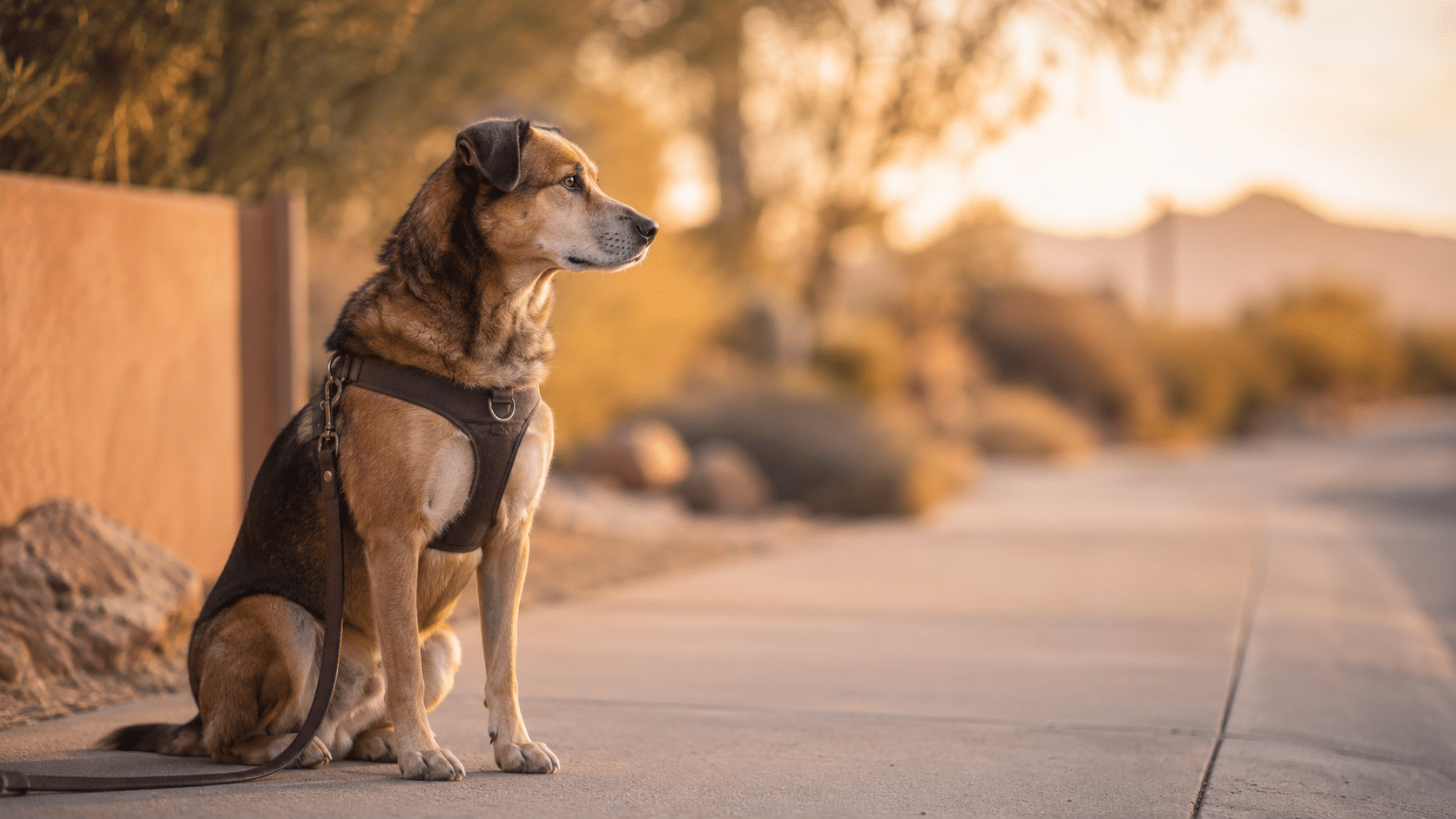
Calm dog wearing harness sitting on Phoenix sidewalk during force-free counterconditioning and desensitization training

  A Pet Parent’s Field Guide How to Change How Your Dog Feels The complete guide to classical counterconditioning and desensitization for reactive, aggressive, fearful, and phobic dogs. Will Bangura, M.S. · Certified Canine Behaviorist · CAB-ICB · CBCC-KA · CPDT-KA · FDM · FFCP Behavior modification done right is not a quick fix. It is a slow rebuild. Let me start with something you probably need to hear, even if no one else has said it to you yet. If your dog is reactive, aggressive, fearful, or phobic, you are not failing your dog. Your dog is not broken. …

Read more

Fear-Based Dog Aggression Toward People | Signs, Causes & Help

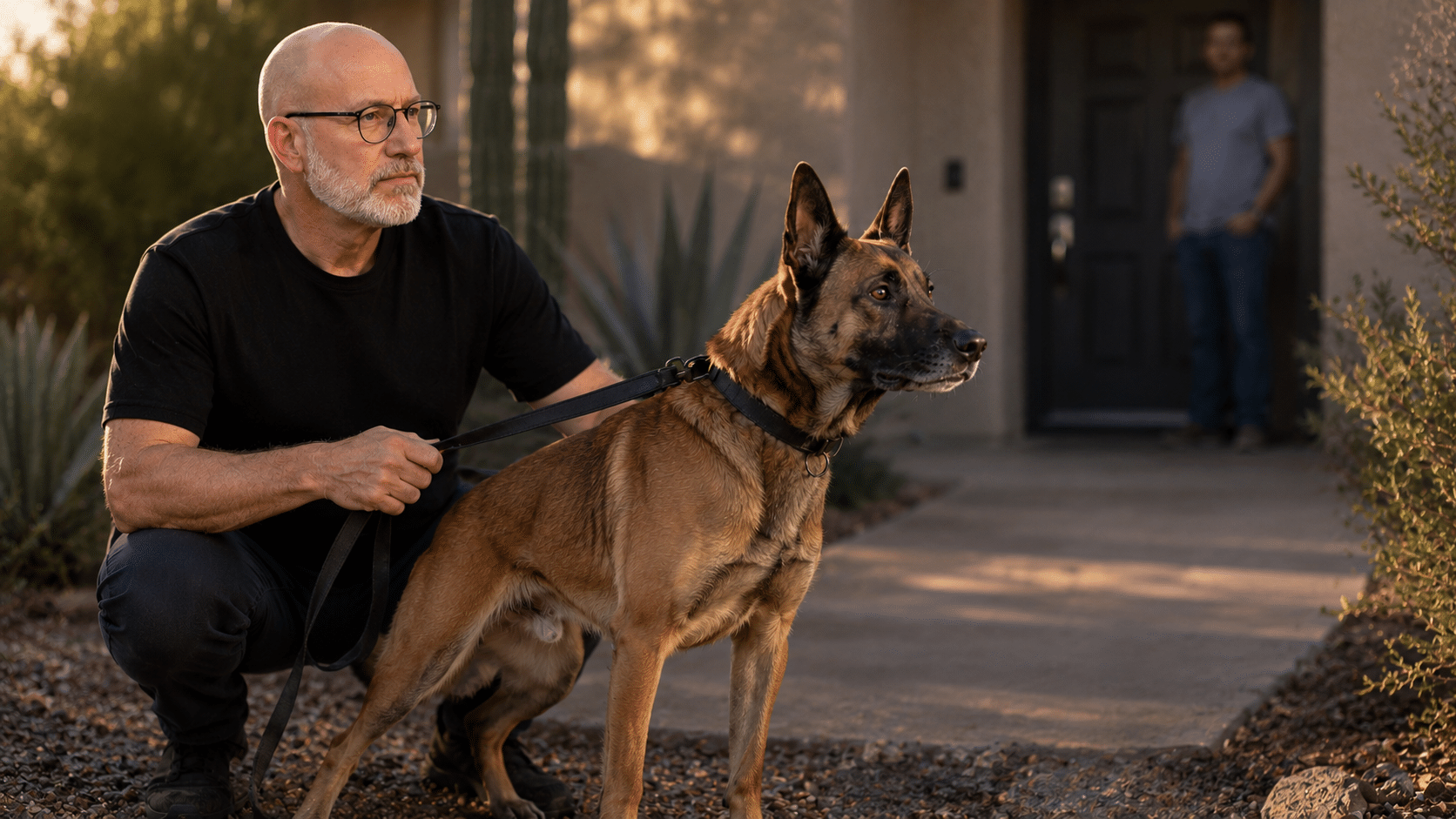
Professional dog behaviorist Will Bangura calmly handling a fearful reactive Belgian Malinois showing defensive aggression toward a stranger near a Phoenix home entrance.

A Pet Parent’s Field Guide Fear-Based Dog Aggression: Early Warning Signs Most Owners Miss Fear is the most powerful driver of canine behavior. Learn to read the signals long before a bite ever happens. By Will Bangura · Behavior & Training · Updated May 14, 2026 · 12 min read Fear-based defensive body language in a Phoenix residential front yard. Introduction Why fear is the most powerful driver of canine behavior Fear is the most powerful driver of canine behavior. When a dog feels threatened and cannot escape, the body shifts into a defensive state designed to protect itself. That …

Read more

Are Low Level E-Collars Safe? 2026 Brain Science Says No

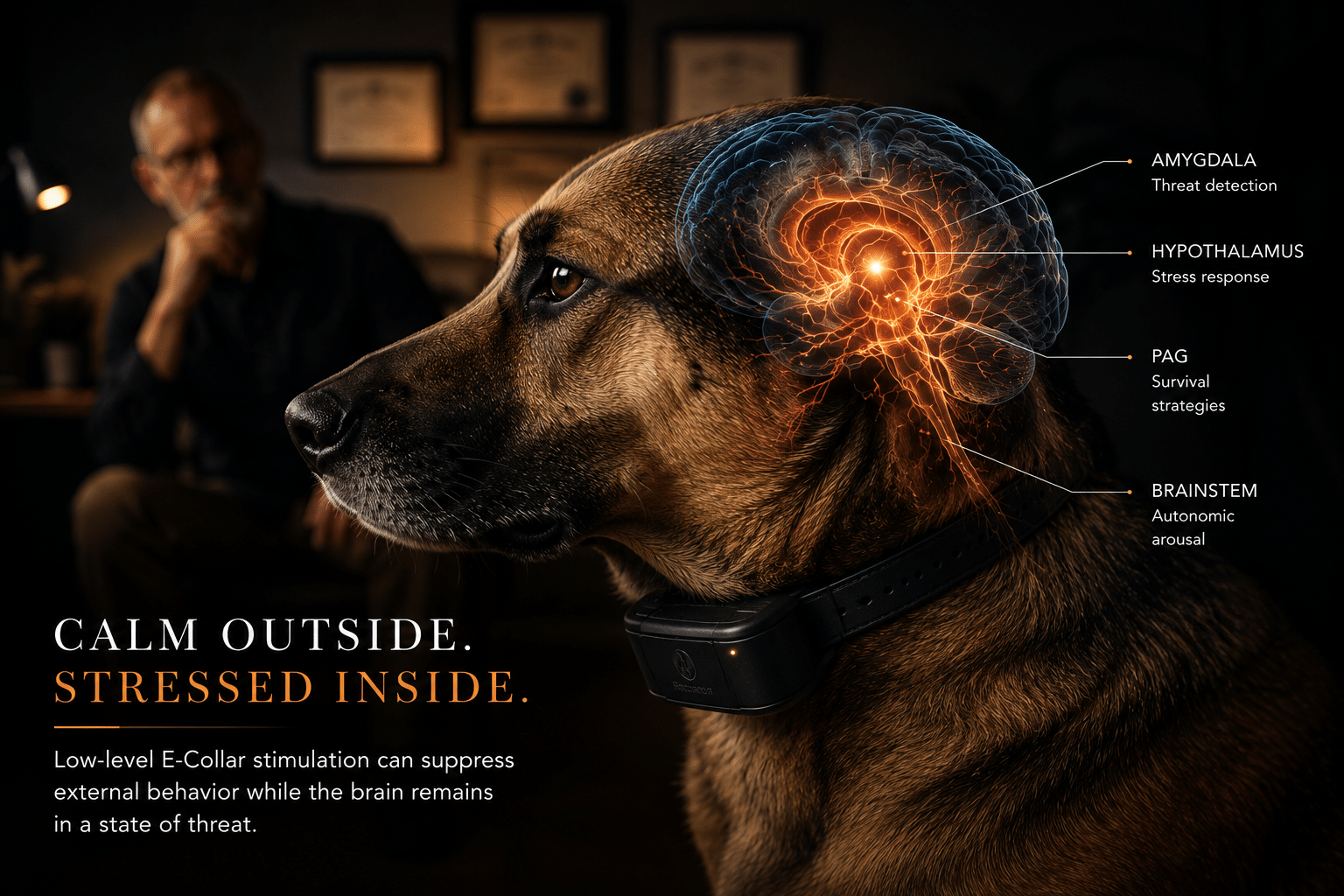
Hyper-realistic image of a dog wearing a low-level e-collar with a neurological brain overlay illustrating stress and threat processing, created for an educational article by Will Bangura, certified canine behaviorist in Phoenix, Arizona.

Are Low Level E-Collars Safe? What 2026 Brain Science Reveals | Will Bangura, Certified Canine Behaviorist | Phoenix Dog Training Phoenix Dog Training® The Evidence What It Means FAQ Get Help 602-769-1411 Schedule Consultation Behavior Science Explained Are Low Level E-Collars Safe? What 2026 Brain Science Reveals New peer-reviewed neuroscience confirms what force-free trainers have been saying for years. Will Bangura, M.S. · Certified Canine Behaviorist · CAB-ICB · CBCC-KA · CPDT-KA · FDM · FFCP What the 2026 evidence actually shows. Last week, a pet parent called me in tears. She had hired a “balanced” trainer six months ago …

Read more

Resource Guarding a Pet Parent: Why Dogs Guard People From Other Dogs or Family Members

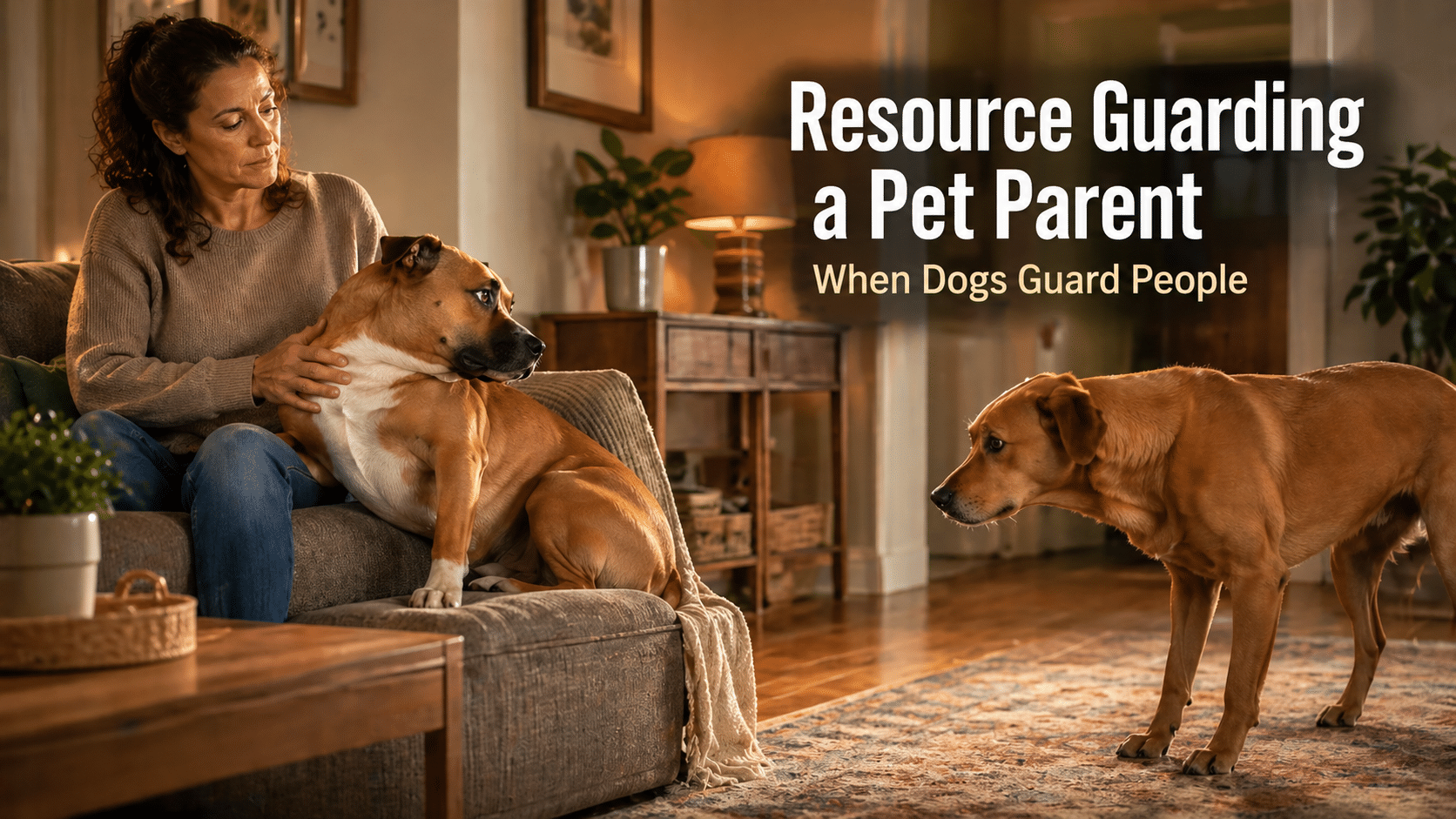
Dog sitting with a pet parent on a couch while watching another dog approach, illustrating resource guarding of a person at home.

Resource Guarding a Family Member or Pet Parent: Understanding When a Dog Guards Access to a Person A dog can resource guard more than food, toys, bones, beds, or stolen objects. In some cases, a dog may guard access to a family member, pet parent, resting location, social interaction, or a preferred person. This can happen when another dog, visitor, child, spouse, partner, or unfamiliar person comes within a certain distance of the individual the dog values. At first, the behavior may be subtle. The dog may become still. The mouth may close. The eyes may harden. The dog may …

Read more

Sniff to Soothe Forage Five: Pattern Game for Reactive Dogs

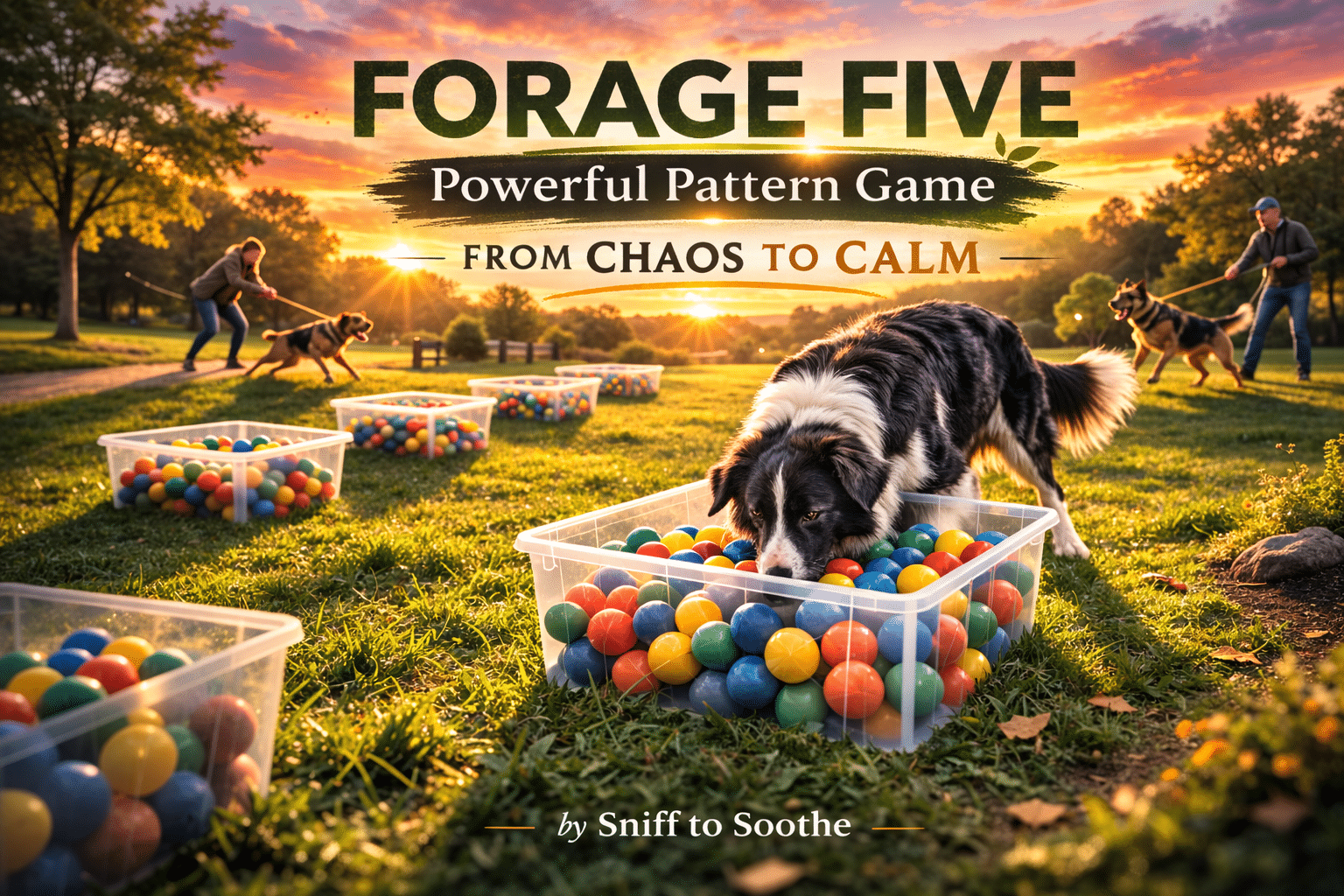
Sniff to Soothe Forage Five pattern game, a dog searches treats in a ball-filled bin while a reactive dog on leash calms in a park before-and-after scene.

A Pet Parent’s Field Guide Sniff to Soothe Forage Five Pattern Game for Reactive, Fearful, and Aggressive Dogs A scent-led pattern game that helps dogs shift from chaos to calm. Will Bangura, M.S. · CAB-ICB · CBCC-KA · CPDT-KA · FDM · FFCP From chaos to calm, the seeking state is where learning becomes possible again. Introduction Sniff to Soothe Forage Five Before we talk about bins and balls, I want to give credit where it belongs. Pattern games have changed the dog training world in a way that is hard to overstate. Leslie McDevitt’s Control Unleashed work gave pet …

Read more

Behavior Modification for Dog Aggression and Reactivity | Phoenix

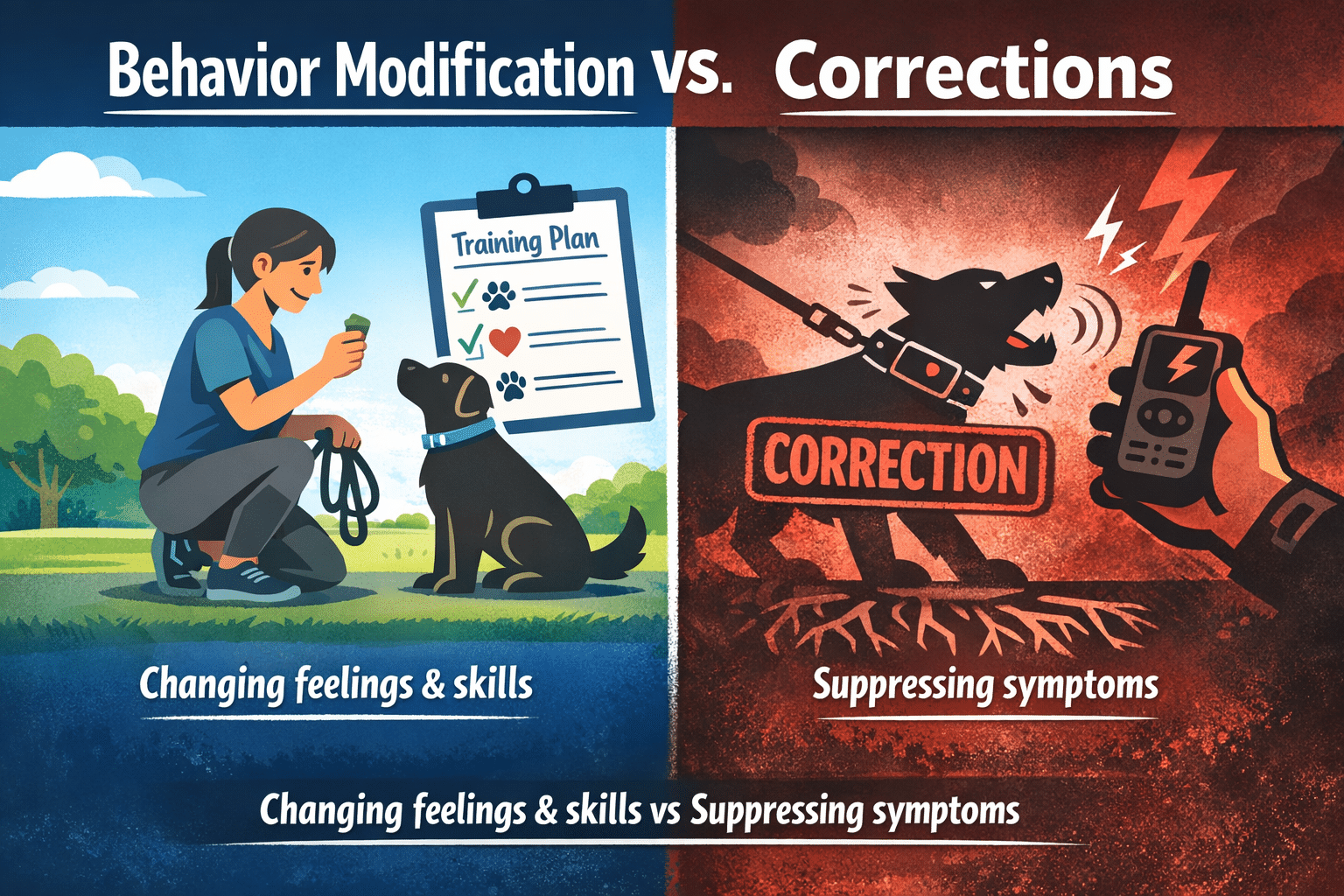
Illustration comparing behavior modification in dog training, changing feelings and skills, versus corrections using an e collar to suppress symptoms in a reactive dog.

What Behavior Modification Is and What It Is Not: A Phoenix Guide for Aggressive and Reactive Dogs What Behavior Modification Is and What Behavior Modification Is Not A practical, science based guide for pet parents trying to find the right help If you are dealing with dog aggression training in Phoenix, barking, lunging, growling, snapping, panic when left alone, resource guarding, chasing wildlife, or a dog who loses their mind around strangers, you have probably heard the phrase behavior modification. It gets thrown around like it is a magic credential. It sounds advanced, and it sounds like whoever says it …

Read more

The Use of Secondary Reinforcers in Canine Counterconditioning

Diagram illustrating secondary reinforcers in canine counterconditioning, showing a clicker as a predictive signal influencing emotional learning through the amygdala, medial prefrontal cortex, and hippocampus.

The Use of Secondary Reinforcers in Canine Counterconditioning: A Classical Conditioning Perspective By Will Bangura, M.S., CAB-ICB, CBCC-KA, CPDT-KA, FDM, FFCP Introduction Some professional guidance, including position statements by veterinary behavior organizations, has appropriately emphasized that secondary reinforcers are not required for counterconditioning and may be unnecessary or inadvisable in certain cases, particularly when working with noise-sensitive dogs or novice handlers (Todd, 2025). The present discussion does not dispute this position. Rather, it examines the conditional role secondary reinforcers may play when analyzed strictly through classical conditioning and affective neuroscience, particularly in applied contexts where perfect timing and stimulus control …

Read more

The Illusion of the Unfazed Dog: A Scientific Analysis of Shield K9’s High-Level E-Collar Demonstration

A man sitting in a car beside a Cane Corso dog, looking at each other closely, with overlaid text reading “Haz Othman Shield K9 Dog Training or Abuse? You Decide.”

Will Bangura, M.S., CAB-ICB, CBCC-KA, CPDT-KA, FDM, FFCP The Illusion of the Unfazed Dog: A Scientific Analysis of Shield K9’s High-Level E-Collar Demonstration A recent video featuring a trainer, Haz Othman,  from Shield K9 Dog Training in Canada shows a working-line German Shepherd performing precision obedience under repeated high-intensity e-collar stimulation, reportedly having two electronic collars on one collar strap on the dog’s neck at level 127, the collar’s maximum output. The trainer presents this as proof that such tools are not aversive, claiming the dog is working “happily in drive.” To many viewers, including professional trainers, including Haz himself, …

Read more

How to Help a Fearful Dog: Evidence-Based Training, Tools, and Support for Anxiety and Reactivity

Fearful dog showing anxiety with tucked body posture and wide eyes

By Will Bangura, M.S., CAB-ICB, CBCC-KA, CPDT-KA, FFCP Certified Canine Behaviorist | Dog Behavior Consultant | Author & Educator Helping Fearful Dogs: A Science-Based Guide to Understanding, Training, and Support Table of Contents   Introduction to Training Fearful Dogs Fear in dogs is far more than a passing emotion. For many, it is a life-defining experience that shapes how they interact with the world, their families, and even themselves. A dog who trembles at the sound of fireworks, hides from strangers, or growls when approached is not simply “misbehaving.” These are outward signs of an internal state, a nervous system …

Read more

Schedule a Behavior Consultation